

Your New Rabbit's First Week: Settling In Calmly
The first week sets the tone for your relationship with a new rabbit. As a prey animal, it needs quiet, safety, and patience, not handling and excitement. This step-by-step guide covers setting up, what to expect day by day, and the early health signs that mean a vet call.

Quick answer

Your New Rabbit's First Week: Settling In Calmly
In the first week, do less, not more. Your new rabbit is a prey animal in a strange place and needs quiet, a safe hideout, familiar food, and space to explore on its own terms. Resist picking it up. Let it come to you, keep noise low, and simply make sure it is eating and pooping normally , that is the real priority.
- Species
- rabbit
- Category
- life_stage
- Risk level
- low
- Content focus
- practical owner decisions + mechanism
- When to escalate
- same-day if pain, not eating, breathing issues, or rapid decline
Decide in 60 seconds
| Situation | Do now |
|---|---|
| Mild / stable at home | Follow steps in this guide and monitor for 12–24 hours |
| Not eating, hiding, or clear pain | Same-day vet (species-savvy if exotic) |
| Breathing hard, collapse, continuous distress | Emergency vet now |
| You are unsure after reading | Call a clinic with your notes rather than waiting days |
Before your rabbit arrives
Set everything up in advance in a quiet, low-traffic corner away from loud TVs and foot traffic. Provide a pen with a cardboard hideout, unlimited hay, fresh water, a litter tray, and a small amount of the same pellets the rabbit was already eating. A calm, ready space means your rabbit can retreat and settle the moment it arrives instead of facing chaos.
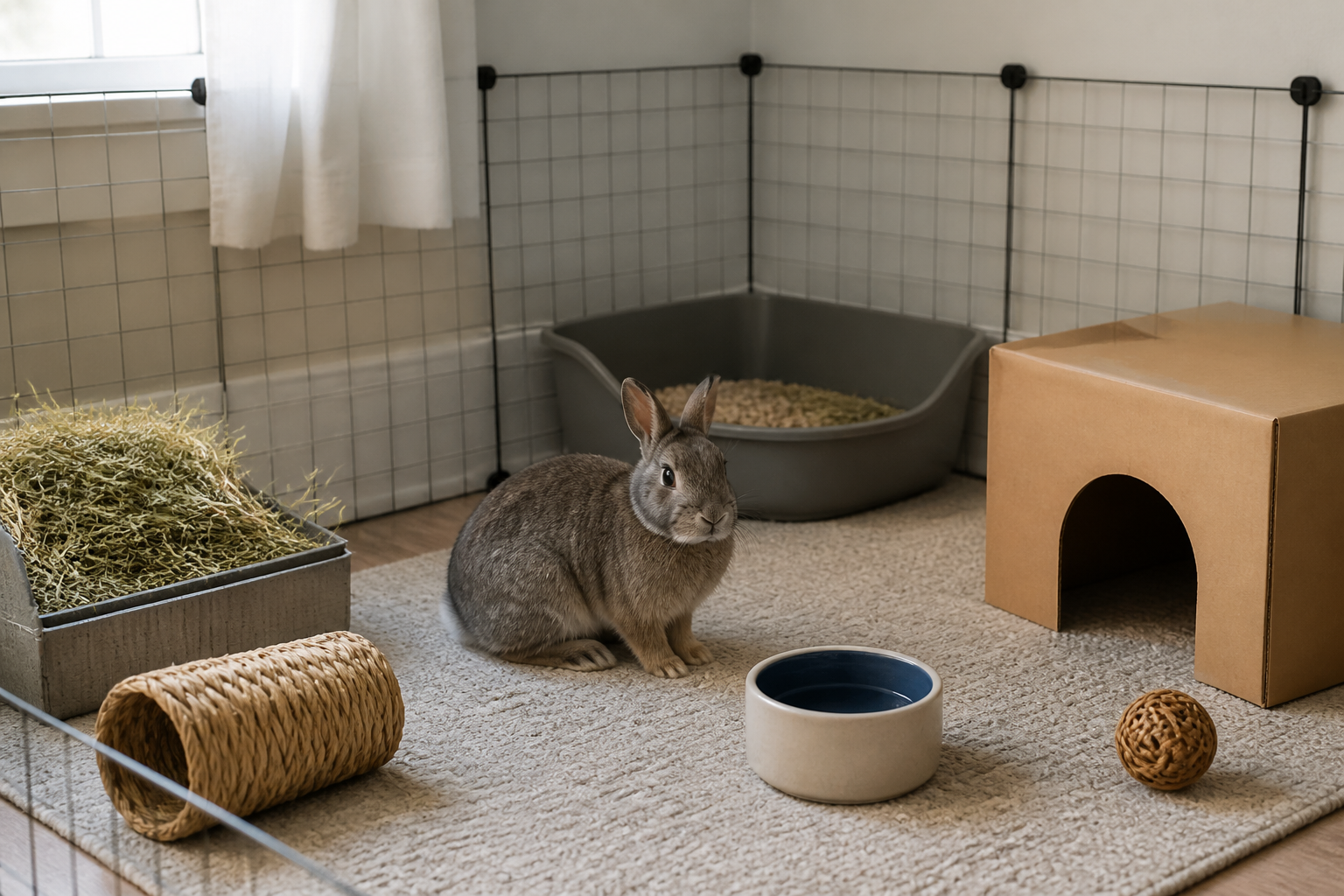
Set the pen up in a quiet corner before your rabbit arrives so it can hide and settle.
Day one to three: quiet and observe
On arrival, place the carrier in the pen, open it, and let your rabbit come out in its own time. Keep the room calm, lights soft, and children and other pets away. Sit nearby and talk gently but do not reach in or lift it. Your only jobs now are to keep the environment peaceful and watch that it eats hay and passes droppings.
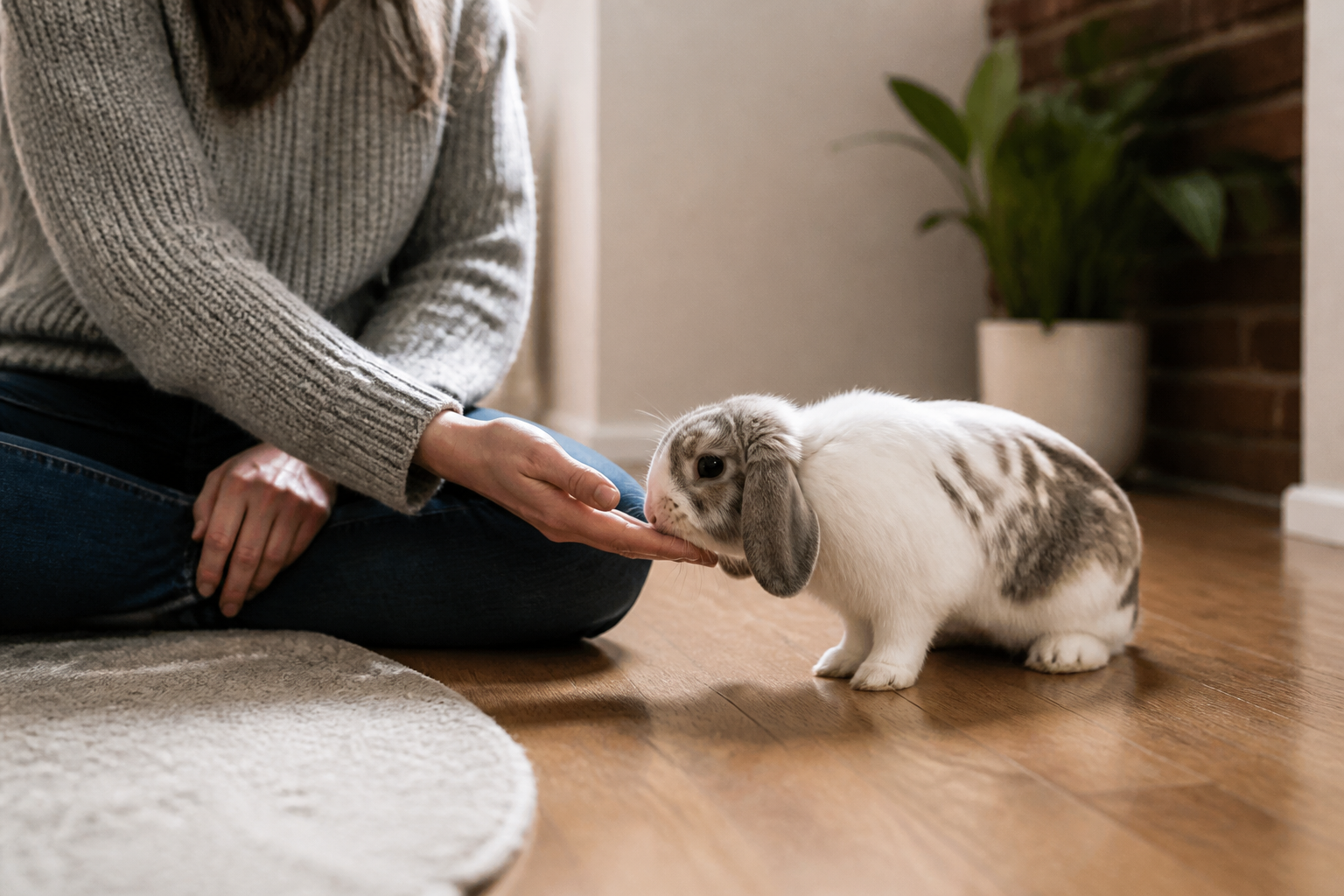
Let your rabbit come to you , sitting quietly nearby builds trust faster than reaching in.
Day four to seven: building trust
As your rabbit grows bolder, sit on the floor and let it investigate you. Offer a leafy green or a favourite herb from your flat hand. Let it climb on you if it wants , this is far better than being picked up, which feels like being caught by a predator. Trust in a rabbit is earned slowly and on its terms.
Keep the diet stable
Do not change the food this week. Feed the same pellets and hay the rabbit is used to, plus unlimited grass hay, which should always be the foundation of the diet. If you want to switch brands later, do it gradually over a couple of weeks once your rabbit is settled. Sudden diet changes are a common cause of gut upset in a stressed new rabbit.
If this is a house move
If you are moving home with a rabbit you already have, the same rules apply: recreate the familiar pen layout, keep the same food and litter routine, and give a quiet corner in the new flat. Bring familiar-smelling items rather than washing everything at once. Predictability is what reassures a rabbit far more than a new, clean setup.
Living context by region
This guide is written for multi-region English readers (US/UK/AU/NZ/CA/EU and more). Where climate, products, or vet access differ, prefer local veterinary advice and local product labels. Use metric first; keep °F/lb in mind for North American homes.
When to call your vet
-
Signs are getting worse over hours, not better
-
Pain, persistent vomiting/diarrhea, or neurological signs
-
You needed force or guesswork to keep going at home
Common mistakes
-
Waiting because the animal 'still looks okay' while prey species hide pain
-
Changing five variables at once so you cannot tell what helped
-
Copying drug doses from social media
-
Skipping species-appropriate husbandry while buying more gadgets
FAQ
Should I pick up my new rabbit to bond with it?
My rabbit is hiding constantly , is something wrong?
Can I change its food to a better brand right away?
When will my rabbit start to trust me?
My highlights & notes
This article is for general education and is not a substitute for professional veterinary advice. If your pet is unwell, please consult a veterinarian.
Worried about your pet?
Peqaboo’s AI helps you track symptoms, understand lab reports, and know when to see a vet.
Get the Peqaboo app