

Timothy, Orchard, or Meadow? A Guide to Rabbit Hay Types
Grass hay should make up most of a rabbit's diet, but the label choices are confusing. This guide compares timothy, orchard, meadow, and other grass hays on fibre, texture, and who each suits, plus why alfalfa is a treat and not a staple for adults.

Quick answer

Timothy, Orchard, or Meadow? A Guide to Rabbit Hay Types
For most adult rabbits, any good grass hay works , timothy, orchard, and meadow hay are all excellent staples, and the best one is simply the one your rabbit eats most enthusiastically. Grass hay should be available unlimited, all day. Avoid alfalfa as a staple for healthy adults, because it is a legume and far too rich in calcium and calories.
- Species
- rabbit
- Category
- nutrition
- Risk level
- low
- Content focus
- practical owner decisions + mechanism
- When to escalate
- same-day if pain, not eating, breathing issues, or rapid decline
Decide in 60 seconds
| Situation | Do now |
|---|---|
| Mild / stable at home | Follow steps in this guide and monitor for 12–24 hours |
| Not eating, hiding, or clear pain | Same-day vet (species-savvy if exotic) |
| Breathing hard, collapse, continuous distress | Emergency vet now |
| You are unsure after reading | Call a clinic with your notes rather than waiting days |
Why hay is non-negotiable
Hay is not a side dish; it is the foundation of rabbit health. The long fibre keeps the gut moving and prevents life-threatening stasis, and the constant chewing wears down teeth that grow continuously throughout life. A rabbit that eats plenty of hay is far less likely to develop dental disease or obesity. Pellets and greens are extras , hay is roughly 80% of what your rabbit should eat by volume.
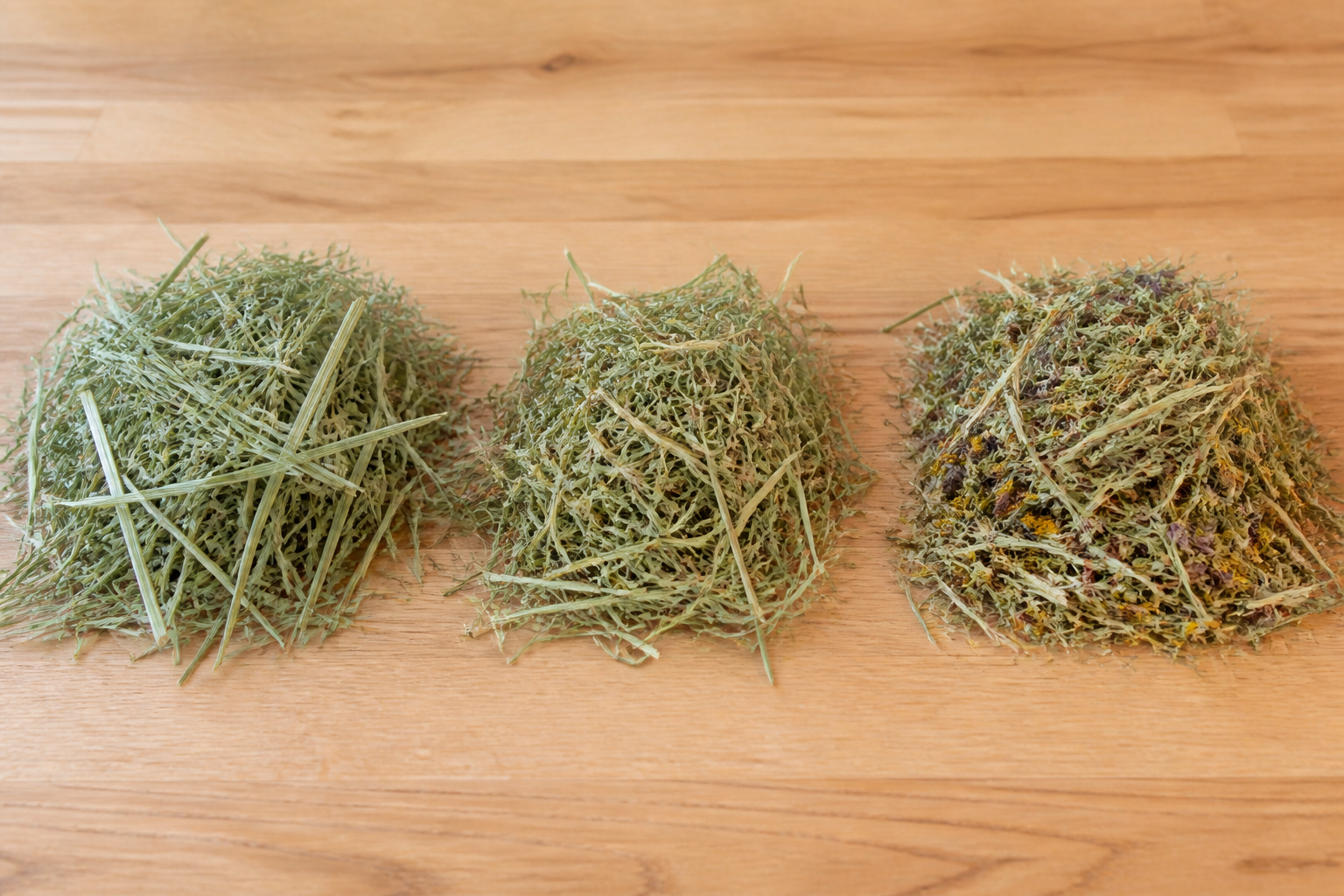
Timothy hay
Timothy is the classic, most widely recommended grass hay for adult rabbits. It is relatively coarse and stalky with a good balance of fibre and modest protein and calcium, which suits most healthy adults perfectly. Timothy is often sold by cut: first cut is stalkier and higher in fibre, second cut is softer and leafier, and third cut is softest. Fussy rabbits often prefer a softer second cut, while stalkier first cut gives the best dental workout.
Timothy is coarse and stalky, orchard is softer and greener, and meadow hay is a varied mix , texture matters as much as name.
Orchard grass
Orchard grass is softer, greener, and often sweeter-smelling than timothy, with a similar nutritional profile. It is an excellent choice for rabbits that turn their nose up at coarse timothy, and it is easier on the hands of owners with hay allergies, as it tends to be less dusty and less prickly. Nutritionally it is a fine one-for-one substitute for timothy.
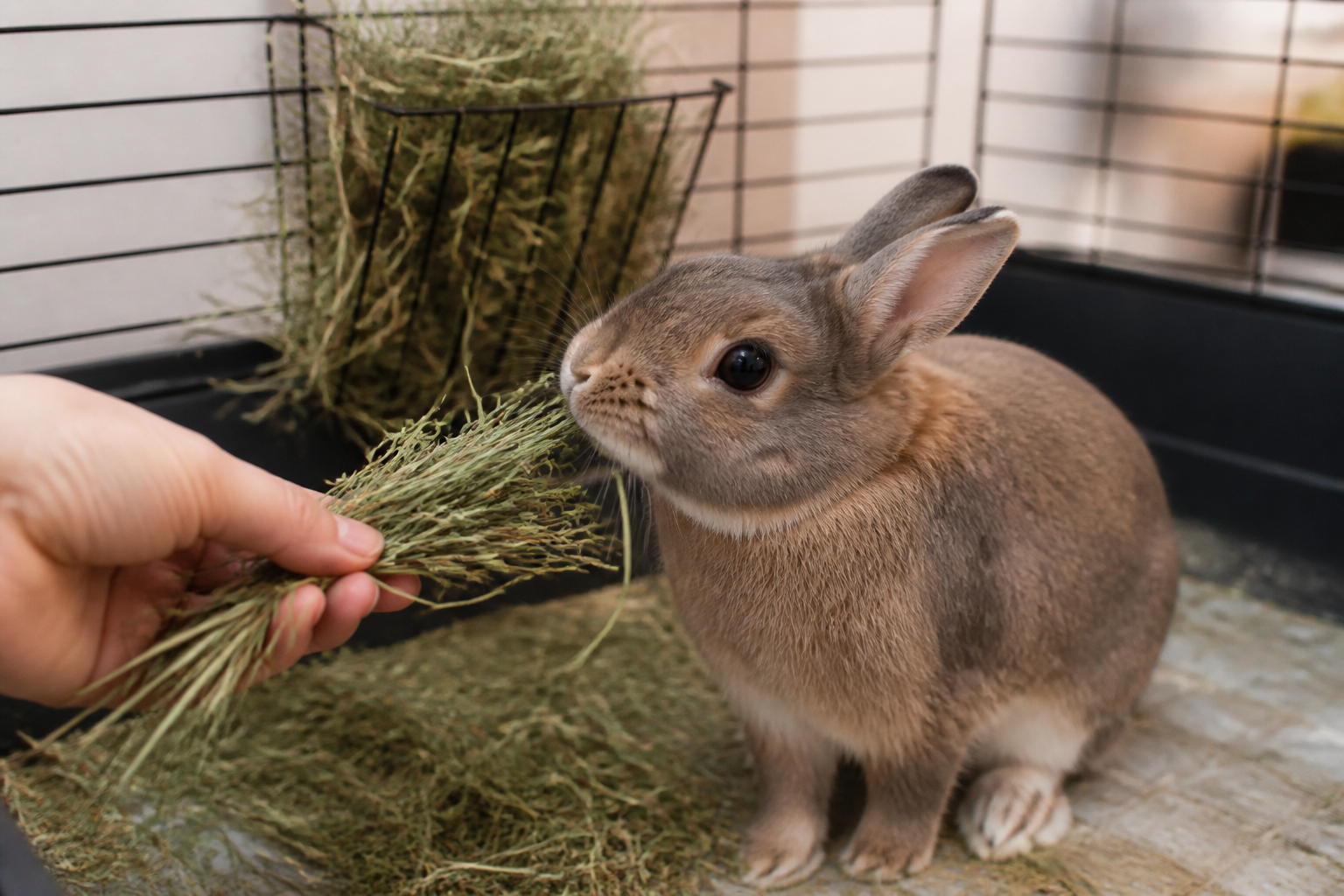
Meadow hay
Meadow hay is a natural mix of grasses, and sometimes a few dried wildflowers and herbs, harvested from pasture. Its varied texture and taste make it very appealing, and the variety encourages foraging behaviour. Quality varies more between batches, so check it is green, dry, and free of mould or weeds. Many owners mix meadow hay with timothy for interest.
Alfalfa and other hays
Alfalfa (lucerne) is a legume, not a grass. It is high in protein, calcium, and calories , appropriate for growing kits under about six months, pregnant or nursing does, or underweight rabbits a vet advises to fatten up, but not as a staple for healthy adults, where it promotes obesity and urinary sludge or stones. Oat and other cereal hays are fine as occasional variety but are lower in beneficial fibre. Botanical or herbal hays are essentially meadow hay with added dried plants , a nice enrichment, not a nutritional necessity.
Offer hay generously and let your rabbit choose , most eat more when it is fresh, fragrant, and easy to reach.
Storing hay well
Store hay somewhere cool, dry, and airy , a breathable bag or cardboard box, never a sealed plastic bin, which traps moisture and encourages mould. In humid climates, buy smaller quantities more often rather than one large bale that sits and degrades. Good storage keeps hay green and fragrant, which is the single biggest factor in whether your rabbit actually eats enough of it.
Living context by region
This guide is written for multi-region English readers (US/UK/AU/NZ/CA/EU and more). Where climate, products, or vet access differ, prefer local veterinary advice and local product labels. Use metric first; keep °F/lb in mind for North American homes.
When to call your vet
-
Signs are getting worse over hours, not better
-
Pain, persistent vomiting/diarrhea, or neurological signs
-
You needed force or guesswork to keep going at home
Common mistakes
-
Waiting because the animal 'still looks okay' while prey species hide pain
-
Changing five variables at once so you cannot tell what helped
-
Copying drug doses from social media
-
Skipping species-appropriate husbandry while buying more gadgets
FAQ
Which hay is healthiest for an adult rabbit?
Can I feed only alfalfa?
How much hay per day?
My rabbit won't eat hay , what now?
My highlights & notes
This article is for general education and is not a substitute for professional veterinary advice. If your pet is unwell, please consult a veterinarian.
Worried about your pet?
Peqaboo’s AI helps you track symptoms, understand lab reports, and know when to see a vet.
Get the Peqaboo app