

Building a Rabbit First-Aid Kit for Emergencies
A rabbit emergency moves fast, so the time to prepare is now. This checklist walks you through exactly what to stock in a rabbit-specific first-aid kit, why each item matters, and how to use the basics safely while you get your rabbit to a rabbit-savvy vet.

Quick answer

Building a Rabbit First-Aid Kit for Emergencies
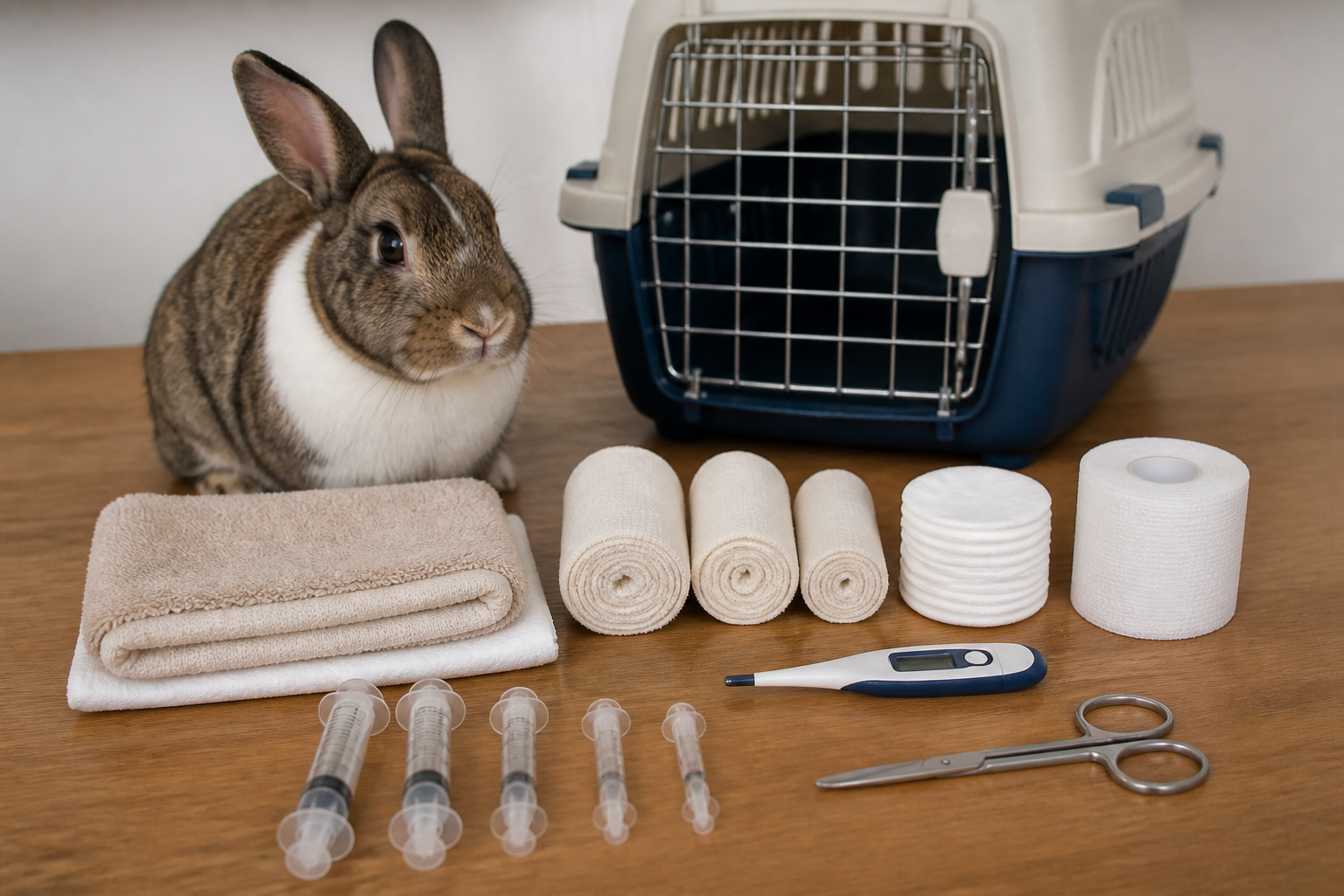
Build one clearly labelled box that holds a digital thermometer, blunt-tip scissors, gauze and self-adhesive bandage, feeding syringes, a soft towel, and your exotic vet's number. A rabbit first-aid kit is not for treating illness at home , it is for stabilising and safely transporting your rabbit while you reach a vet. Prepare it before you ever need it.
- Species
- rabbit
- Category
- first_aid
- Risk level
- medium
- Content focus
- practical owner decisions + mechanism
- When to escalate
- same-day if pain, not eating, breathing issues, or rapid decline
Decide in 60 seconds
| Situation | Do now |
|---|---|
| Mild / stable at home | Follow steps in this guide and monitor for 12–24 hours |
| Not eating, hiding, or clear pain | Same-day vet (species-savvy if exotic) |
| Breathing hard, collapse, continuous distress | Emergency vet now |
| You are unsure after reading | Call a clinic with your notes rather than waiting days |
Why rabbits need their own kit
Rabbits are prey animals that hide illness until they are seriously unwell, and they decline faster than cats or dogs. A gut that stops moving (GI stasis) can become life-threatening within hours. A standard human or dog kit misses the rabbit-specific items , syringe feeding, gut support, and safe restraint , that actually matter in those first frantic minutes.
What to put in the kit
Keep every item in one clearly labelled box so you can grab it in seconds during an emergency.
Stock these essentials and keep them in one place:
- Digital thermometer and a little water-based lubricant for taking temperature.
- Blunt-tip scissors and a comb to clear matted fur, plus a nail clipper.
- Sterile gauze, non-stick pads and self-adhesive bandage (never wrap sticky tape directly on fur).
- 1 ml and 5 ml oral syringes for hand-feeding water and recovery food.
- Recovery/critical-care herbivore food powder (the kind your vet stocks) , check the expiry date twice a year.
- Styptic powder for a bleeding broken nail.
- A soft towel for warmth and safe wrapping, and a small carrier lined and ready.
- Saline solution to flush a dirty eye or minor graze.
- A written card with your rabbit's weight, normal habits, and the number and hours of your nearest exotic/rabbit-savvy vet and emergency clinic.
How to use the basics safely
The most useful skill is calm restraint. Wrapping your rabbit snugly in a towel , a "bunny burrito" , keeps it still so you can check a wound, trim a nail, or offer a syringe without it kicking and injuring its spine.
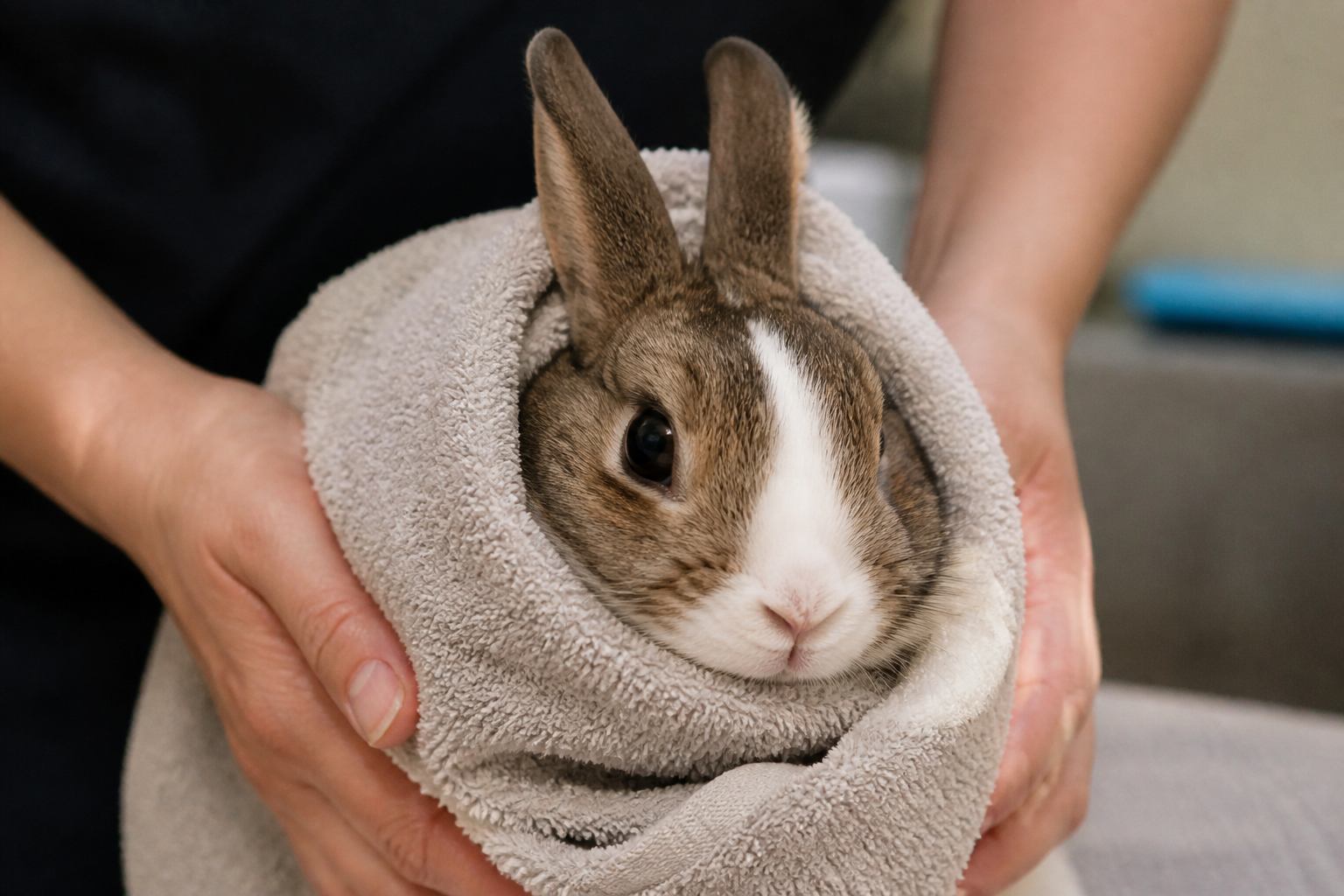
The towel wrap keeps a frightened rabbit secure so you can check it or give medicine safely.
For syringe feeding, place the tip at the side of the mouth behind the front teeth, give only small amounts, and let your rabbit chew and swallow between each. Never squirt liquid fast into the mouth , rabbits can inhale it. For a bleeding nail, press styptic powder onto the tip and hold gentle pressure.
Keep it ready and current
Store the kit somewhere everyone in the home can find it, not buried in a cupboard. Every six months, check expiry dates on saline and recovery food, confirm your vet's number and out-of-hours details are still correct, and re-read your rabbit's baseline card. Keep the carrier accessible so a trip to the vet never waits on hunting for it.
Living context by region
This guide is written for multi-region English readers (US/UK/AU/NZ/CA/EU and more). Where climate, products, or vet access differ, prefer local veterinary advice and local product labels. Use metric first; keep °F/lb in mind for North American homes.
When to call your vet
-
Signs are getting worse over hours, not better
-
Pain, persistent vomiting/diarrhea, or neurological signs
-
You needed force or guesswork to keep going at home
Common mistakes
-
Waiting because the animal 'still looks okay' while prey species hide pain
-
Changing five variables at once so you cannot tell what helped
-
Copying drug doses from social media
-
Skipping species-appropriate husbandry while buying more gadgets
FAQ
Can I treat GI stasis at home with my kit?
How often should I restock?
Should I keep painkillers in the kit for pain?
What's the single most important item?
My highlights & notes
This article is for general education and is not a substitute for professional veterinary advice. If your pet is unwell, please consult a veterinarian.
Worried about your pet?
Peqaboo’s AI helps you track symptoms, understand lab reports, and know when to see a vet.
Get the Peqaboo app