

E. cuniculi in Rabbits: The Hidden Parasite Explained
Encephalitozoon cuniculi is a common microscopic parasite that many rabbits carry silently, but in some it attacks the brain, kidneys and eyes. Learn the warning signs like head tilt and hind-leg weakness, how vets diagnose it, and why early treatment matters.

Quick answer

E. cuniculi in Rabbits: The Hidden Parasite Explained
Encephalitozoon cuniculi (E. cuniculi) is a microscopic parasite carried by a large share of pet rabbits, often with no symptoms at all. In some rabbits it damages the brain, kidneys or eyes, causing head tilt, wobbliness, hind-leg weakness or cloudy eyes. It is treatable but never a home-diagnosis , a rabbit showing signs needs a rabbit-savvy vet promptly.
- Species
- rabbit
- Category
- health
- Risk level
- high
- Content focus
- practical owner decisions + mechanism
- When to escalate
- same-day if pain, not eating, breathing issues, or rapid decline
Decide in 60 seconds
| Situation | Do now |
|---|---|
| Mild / stable at home | Follow steps in this guide and monitor for 12–24 hours |
| Not eating, hiding, or clear pain | Same-day vet (species-savvy if exotic) |
| Breathing hard, collapse, continuous distress | Emergency vet now |
| You are unsure after reading | Call a clinic with your notes rather than waiting days |
What E. cuniculi actually is
E. cuniculi is not a worm or a flea , it is a single-celled organism (a microsporidian) that lives inside cells. Rabbits shed hardy spores in their urine, and other rabbits pick them up by eating or drinking contaminated food and water. A pregnant doe can also pass it to her kits. Many rabbits carry the parasite for life and never get sick; the immune system usually keeps it in check.
The trouble starts when spores travel to the brain, kidneys or lens of the eye and trigger inflammation. This is why the illness looks so different from rabbit to rabbit.
Signs to watch for
Because the parasite targets the nervous system, the classic picture is neurological. Watch for a sudden head tilt, loss of balance, rolling, rapid flicking eye movements, or weakness and dragging of the back legs. Kidney damage can cause increased drinking and urination, weight loss and a poor coat. In the eye you may notice a white cloudy spot or a cataract, sometimes with redness.
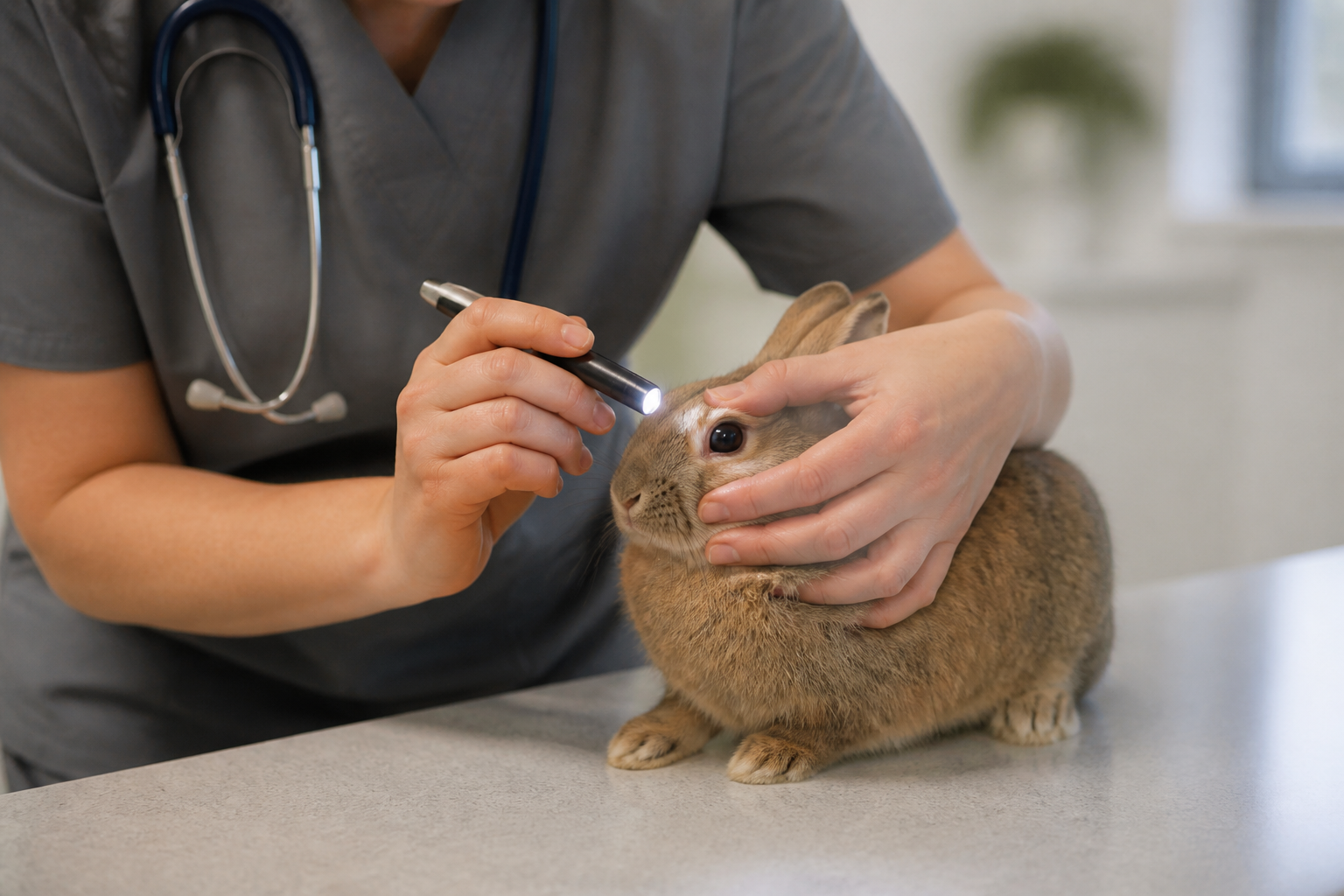
A rabbit-savvy vet checks eyes, balance and head position , key clues to E. cuniculi.
Signs can come on suddenly or creep up slowly. Any head tilt or hind-limb weakness should be treated as urgent , these overlap with other serious conditions such as inner-ear infection or stroke, which only a vet can tell apart.
How vets diagnose it
There is no single perfect test. Vets combine the clinical picture with a blood test that measures antibodies. A positive result confirms the rabbit has been exposed but not necessarily that E. cuniculi is causing the current signs, since so many healthy rabbits test positive. Paired samples taken weeks apart, urine tests, and ruling out other causes (dental disease, ear infection, trauma) all help build the picture. Your vet is essentially weighing probabilities, which is why experience with rabbits matters.
Treatment and recovery
Treatment centres on a course of an anti-parasitic medicine, usually given for around a month, alongside supportive care for inflammation and anything that keeps the rabbit eating and hydrated. Never medicate a rabbit yourself , doses are species-specific and the wrong product can be fatal.
Many rabbits improve significantly, but some are left with a permanent mild head tilt. That is not necessarily a poor quality of life: with a stable, padded environment, food and water within easy reach, and help staying clean, a tilted rabbit can live happily for years.
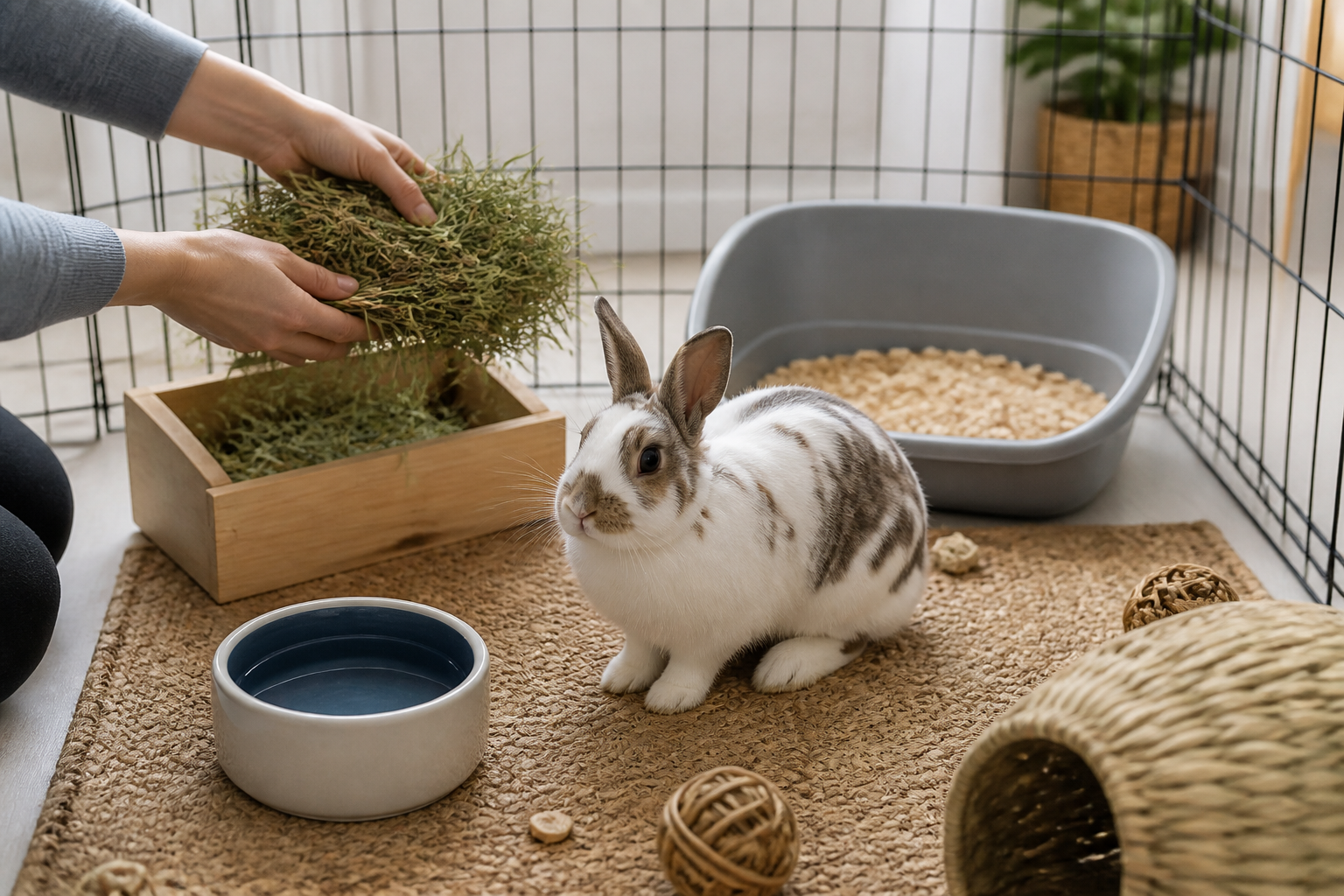
Good hygiene and fresh water help limit spore spread between rabbits.
Preventing spread
You cannot fully eliminate E. cuniculi from the environment, but you can lower the load. Clean litter trays daily, disinfect regularly (spores are killed by many standard disinfectants and by heat), and keep food off the floor of the enclosure. Quarantine and test new rabbits before introducing them to a bonded companion. In small high-rise flats, common in Hong Kong and Taiwan, good ventilation and daily spot-cleaning matter even more because rabbits and their urine share a compact space.
Living context by region
This guide is written for multi-region English readers (US/UK/AU/NZ/CA/EU and more). Where climate, products, or vet access differ, prefer local veterinary advice and local product labels. Use metric first; keep °F/lb in mind for North American homes.
When to call your vet
-
Signs are getting worse over hours, not better
-
Pain, persistent vomiting/diarrhea, or neurological signs
-
You needed force or guesswork to keep going at home
Common mistakes
-
Waiting because the animal 'still looks okay' while prey species hide pain
-
Changing five variables at once so you cannot tell what helped
-
Copying drug doses from social media
-
Skipping species-appropriate husbandry while buying more gadgets
FAQ
Is E. cuniculi contagious to humans?
Can a rabbit fully recover?
Should I treat a healthy rabbit that tested positive?
Does my whole bonded pair need treating if one is sick?
My highlights & notes
This article is for general education and is not a substitute for professional veterinary advice. If your pet is unwell, please consult a veterinarian.
Worried about your pet?
Peqaboo’s AI helps you track symptoms, understand lab reports, and know when to see a vet.
Get the Peqaboo app