

Why Rabbits Dig and How to Redirect the Urge
Digging is a hardwired rabbit instinct, not bad behaviour , so the answer is redirection, not punishment. Learn why rabbits dig, how to build a dig box they'll love, ways to protect your floors and furniture, and when frantic digging in a female signals hormones and a vet visit.

Quick answer
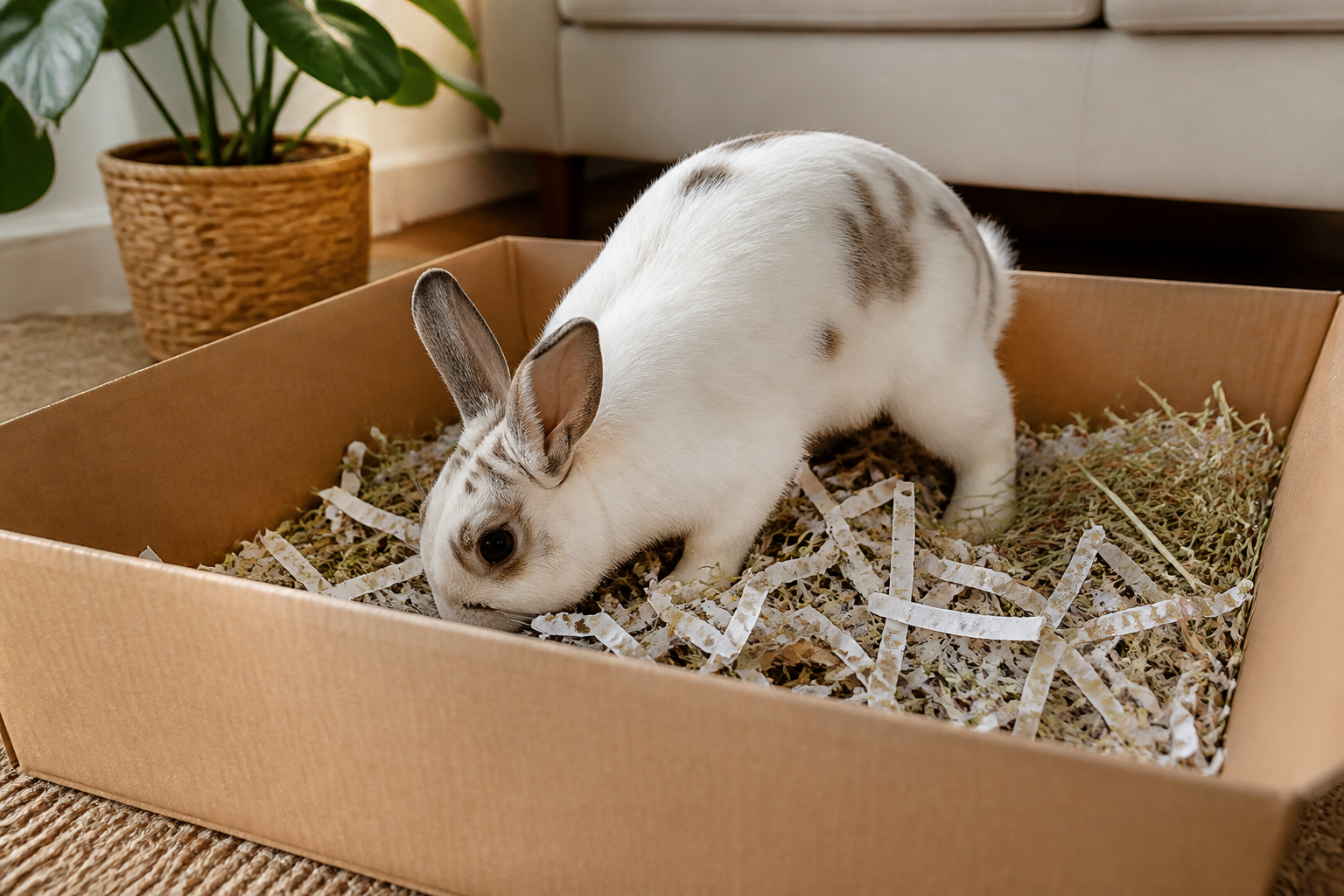
Why Rabbits Dig and How to Redirect the Urge
Digging is completely normal rabbit behaviour , in the wild they excavate warrens to live and hide in, so the urge is hardwired. You can't and shouldn't stop it, but you can redirect it. Give your rabbit legal places to dig, and the scratching at your carpet and sofa usually settles down fast.
- Species
- rabbit
- Category
- behavior
- Risk level
- low
- Content focus
- practical owner decisions + mechanism
- When to escalate
- same-day if pain, not eating, breathing issues, or rapid decline
Decide in 60 seconds
| Situation | Do now |
|---|---|
| Mild / stable at home | Follow steps in this guide and monitor for 12–24 hours |
| Not eating, hiding, or clear pain | Same-day vet (species-savvy if exotic) |
| Breathing hard, collapse, continuous distress | Emergency vet now |
| You are unsure after reading | Call a clinic with your notes rather than waiting days |
Why rabbits dig
Wild rabbits dig for shelter, safety, and comfort, so your pet is following an instinct thousands of years deep. Digging is also a way to burn energy, explore, and feel in control of its space. Un-neutered females often dig especially hard, driven by a nesting instinct , even a phantom pregnancy can send a doe burrowing into a corner and pulling out her own fur.
Understanding this matters: punishing digging is both unfair and useless, because you're fighting biology. The goal is always to redirect, never to suppress.
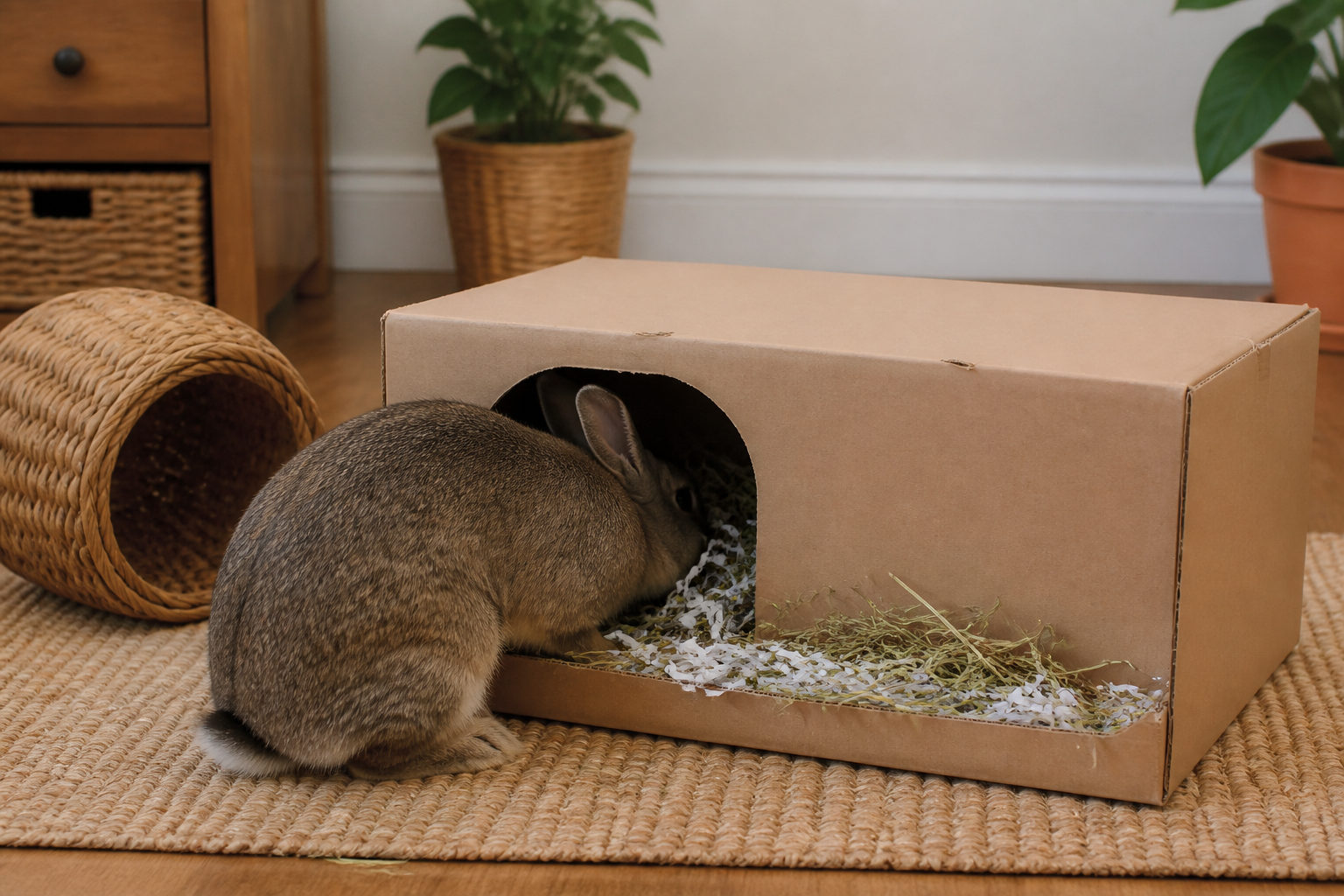
A dig box gives the instinct a legal home and saves your carpet.
Build a legal dig box
The simplest fix is a dedicated dig box. Take a sturdy cardboard box or a shallow storage tub and fill it with something safe to burrow in: shredded paper, torn cardboard, plain hay, or clean untreated soil. Cut an entrance hole, and let your rabbit go wild. Rotate the filling when it gets flat, and hide a few pellets inside to make digging rewarding.
In a small flat where mess is a concern, a covered tub with a hole in the lid keeps the shredded paper contained. A large litter tray of hay works too.
Protect your floors and furniture
While your rabbit learns where digging is allowed, protect the hotspots. Cover a favourite carpet corner with a seagrass or cotton mat the rabbit is allowed to scratch, place a ceramic tile over the exact spot it targets, or block access to that corner. Trim toenails regularly so scratching does less damage and the nails don't catch and tear.
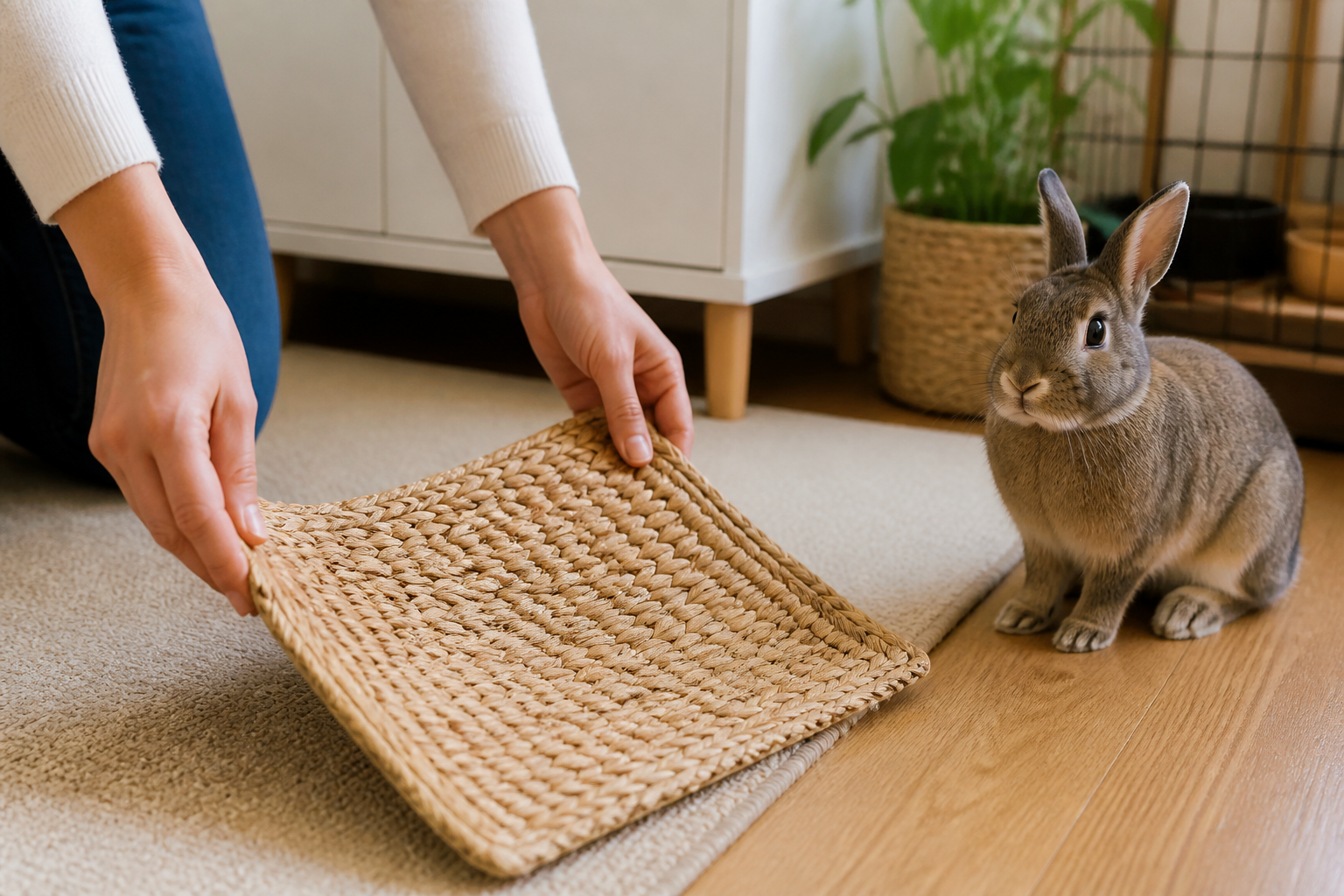
Protect hotspots with a scratch-friendly mat while your rabbit learns the dig box.
When digging signals something more
Most digging is healthy play, but a sudden increase can flag boredom, stress, or, in females, hormones. A rabbit cooped up for long hours with nothing to do will dig at carpet out of frustration; more daily free-roam time and foraging toys often solve it. Frantic nest-digging with fur-pulling in an un-spayed female points to hormonal drive, and spaying both calms the behaviour and removes a real risk of uterine cancer later in life.
Living context by region
This guide is written for multi-region English readers (US/UK/AU/NZ/CA/EU and more). Where climate, products, or vet access differ, prefer local veterinary advice and local product labels. Use metric first; keep °F/lb in mind for North American homes.
When to call your vet
-
Signs are getting worse over hours, not better
-
Pain, persistent vomiting/diarrhea, or neurological signs
-
You needed force or guesswork to keep going at home
Common mistakes
-
Waiting because the animal 'still looks okay' while prey species hide pain
-
Changing five variables at once so you cannot tell what helped
-
Copying drug doses from social media
-
Skipping species-appropriate husbandry while buying more gadgets
FAQ
Can I train my rabbit to stop digging entirely?
What's safe to fill a dig box with?
Will neutering stop the digging?
My rabbit digs at me and the sofa , why?
My highlights & notes
This article is for general education and is not a substitute for professional veterinary advice. If your pet is unwell, please consult a veterinarian.
Worried about your pet?
Peqaboo’s AI helps you track symptoms, understand lab reports, and know when to see a vet.
Get the Peqaboo app