

How to Choose the Right Rabbit Pellets (and How Much to Feed)
Pellets are a small but useful part of a rabbit's diet , if you pick the right kind and feed the right amount. This guide explains how to read a pellet label, why plain beats muesli mixes, how much to feed by weight, and when to adjust for age.

Quick answer

How to Choose the Right Rabbit Pellets (and How Much to Feed)
Choose a plain, uniform, grass-hay-based pellet that is high in fibre (ideally 18% or more), modest in protein (around 12 to 14% for adults), and low in fat and sugar. Avoid colourful muesli-style mixes. Feed only a small measured amount daily , roughly one tablespoon per two pounds (about one kilogram) of body weight , because hay, not pellets, is the foundation of the diet.
- Species
- rabbit
- Category
- nutrition
- Risk level
- low
- Content focus
- practical owner decisions + mechanism
- When to escalate
- same-day if pain, not eating, breathing issues, or rapid decline
Decide in 60 seconds
| Situation | Do now |
|---|---|
| Mild / stable at home | Follow steps in this guide and monitor for 12–24 hours |
| Not eating, hiding, or clear pain | Same-day vet (species-savvy if exotic) |
| Breathing hard, collapse, continuous distress | Emergency vet now |
| You are unsure after reading | Call a clinic with your notes rather than waiting days |
What pellets are for
Pellets are a supplement, not a staple. They deliver concentrated nutrients and vitamins in a small package, which is useful, but they are also easy to over-feed because rabbits find them tastier than hay. A rabbit that fills up on pellets eats less hay, and that leads to dental disease, obesity, and gut problems. Think of pellets as a small daily top-up: helpful for filling nutritional gaps, but strictly rationed.
How to read a pellet label
Check the guaranteed analysis on the bag. Aim for crude fibre of at least 18% (higher is generally better), crude protein around 12 to 14% for a healthy adult, and fat under about 3%. The first ingredient should be a grass hay such as timothy, not alfalfa, for adult rabbits, and not a cereal grain or by-product. Avoid pellets with added seeds, dried fruit, corn, nuts, or coloured pieces.
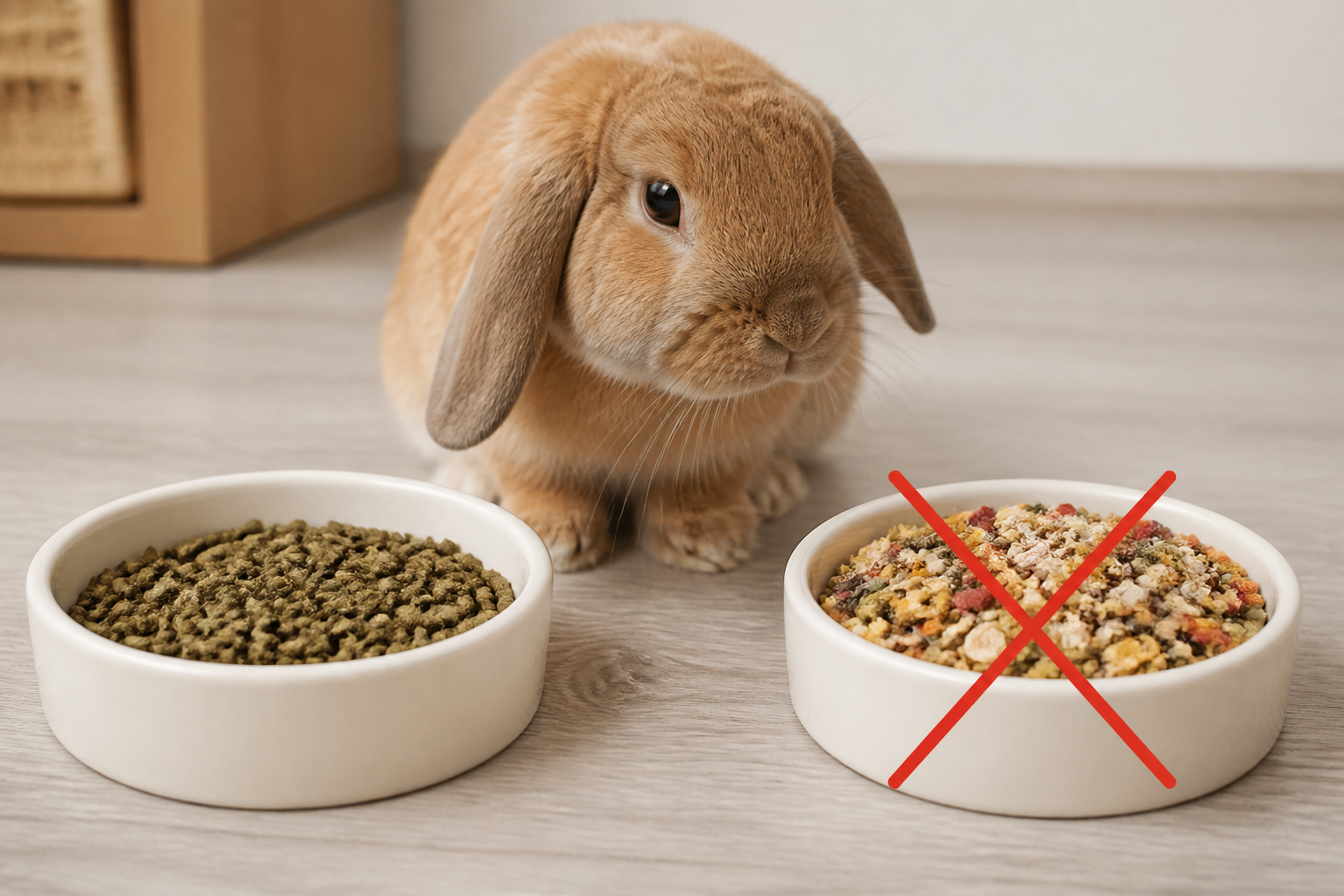
Choose uniform grass-hay pellets over colourful muesli mixes, which let rabbits pick out sugary bits and skip the fibre.
Why plain beats muesli
Colourful muesli or museli-style mixes containing flakes, seeds, peas, and coloured bits look appealing but encourage selective feeding: the rabbit picks out the sugary, starchy pieces and leaves the fibrous ones. This unbalances the diet and is strongly linked to dental and digestive disease. A uniform pellet cannot be sorted, so your rabbit gets the whole balanced formula in every bite. If your rabbit currently eats muesli, switch gradually to a plain pellet over a couple of weeks.
How much to feed
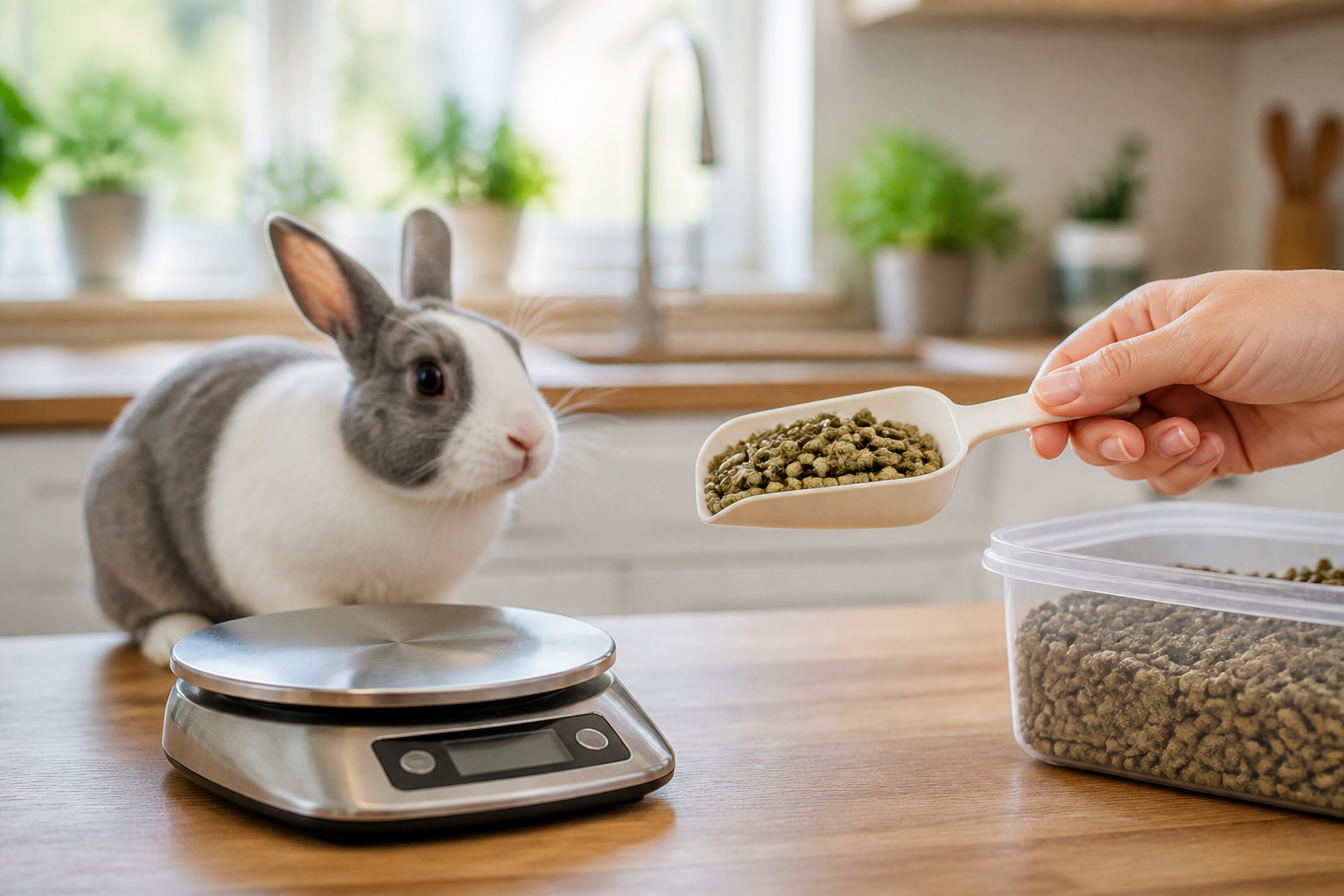
A common guide for healthy adult rabbits is about one tablespoon (roughly 25 grams) of pellets per two pounds, or about one kilogram, of body weight per day, split between morning and evening if you like. Adjust down for an overweight or very sedentary rabbit, and remember this is a rough starting point , your vet can advise for your individual rabbit. Always weigh your rabbit periodically and adjust the ration to keep a healthy body condition. Fresh water must be available at all times.
Measure pellets by your rabbit's weight , roughly one tablespoon per two pounds of body weight per day.
Adjusting for age and life stage
Young growing rabbits under about six months and pregnant or nursing does need more pellets and often an alfalfa-based formula for the extra protein and calcium. Around six months, transition gradually to an adult grass-hay pellet and reduce the quantity. Senior rabbits usually continue on adult pellets, but a thin or unwell senior may need more, or a vet-recommended formula. Any major diet change should be made slowly over one to two weeks to protect the sensitive gut.
Living context by region
This guide is written for multi-region English readers (US/UK/AU/NZ/CA/EU and more). Where climate, products, or vet access differ, prefer local veterinary advice and local product labels. Use metric first; keep °F/lb in mind for North American homes.
When to call your vet
-
Signs are getting worse over hours, not better
-
Pain, persistent vomiting/diarrhea, or neurological signs
-
You needed force or guesswork to keep going at home
Common mistakes
-
Waiting because the animal 'still looks okay' while prey species hide pain
-
Changing five variables at once so you cannot tell what helped
-
Copying drug doses from social media
-
Skipping species-appropriate husbandry while buying more gadgets
FAQ
Do rabbits even need pellets?
How much pellet per day for an adult rabbit?
Are muesli mixes really that bad?
What protein and fibre levels should I look for?
My highlights & notes
This article is for general education and is not a substitute for professional veterinary advice. If your pet is unwell, please consult a veterinarian.
Worried about your pet?
Peqaboo’s AI helps you track symptoms, understand lab reports, and know when to see a vet.
Get the Peqaboo app