

Rabbit Chewing Everything? Bunny-Proof Your Home and Redirect the Habit
Rabbits chew because they must. Here is how to bunny-proof wires and furniture, redirect the habit onto safe chews, and keep a bored bunny busy.

Quick answer
Rabbit Chewing Everything? Bunny-Proof Your Home and Redirect the Habit
Chewing is not bad behaviour; it is a healthy rabbit doing exactly what rabbits do. Their teeth grow for life, so gnawing keeps them worn down and their mind busy. You cannot train chewing away, but you can steer it. Block access to wires and furniture, flood the space with safe things to chew, and give your bored bunny more hay, space, and enrichment. Protect electrical cords first, because a chewed live wire can electrocute your rabbit.
- Species
- rabbit
- Category
- behavior
- Risk level
- low
- Content focus
- practical owner decisions + mechanism
- When to escalate
- same-day if pain, not eating, breathing issues, or rapid decline
Decide in 60 seconds
| Situation | Do now |
|---|---|
| Mild / stable at home | Follow steps in this guide and monitor for 12–24 hours |
| Not eating, hiding, or clear pain | Same-day vet (species-savvy if exotic) |
| Breathing hard, collapse, continuous distress | Emergency vet now |
| You are unsure after reading | Call a clinic with your notes rather than waiting days |
Why rabbits chew
A rabbit's teeth never stop growing. Constant chewing, mostly on hay and grass, grinds them to a healthy length. Chewing also relieves boredom, explores the world, and simply feels good. A rabbit that chews your skirting board is not being naughty; it is a curious animal meeting a normal need on the wrong object.
That reframe matters. Your job is not to stop chewing but to redirect it onto things that are safe and satisfying, while making the off-limits things impossible to reach.
Bunny-proof the danger zones first
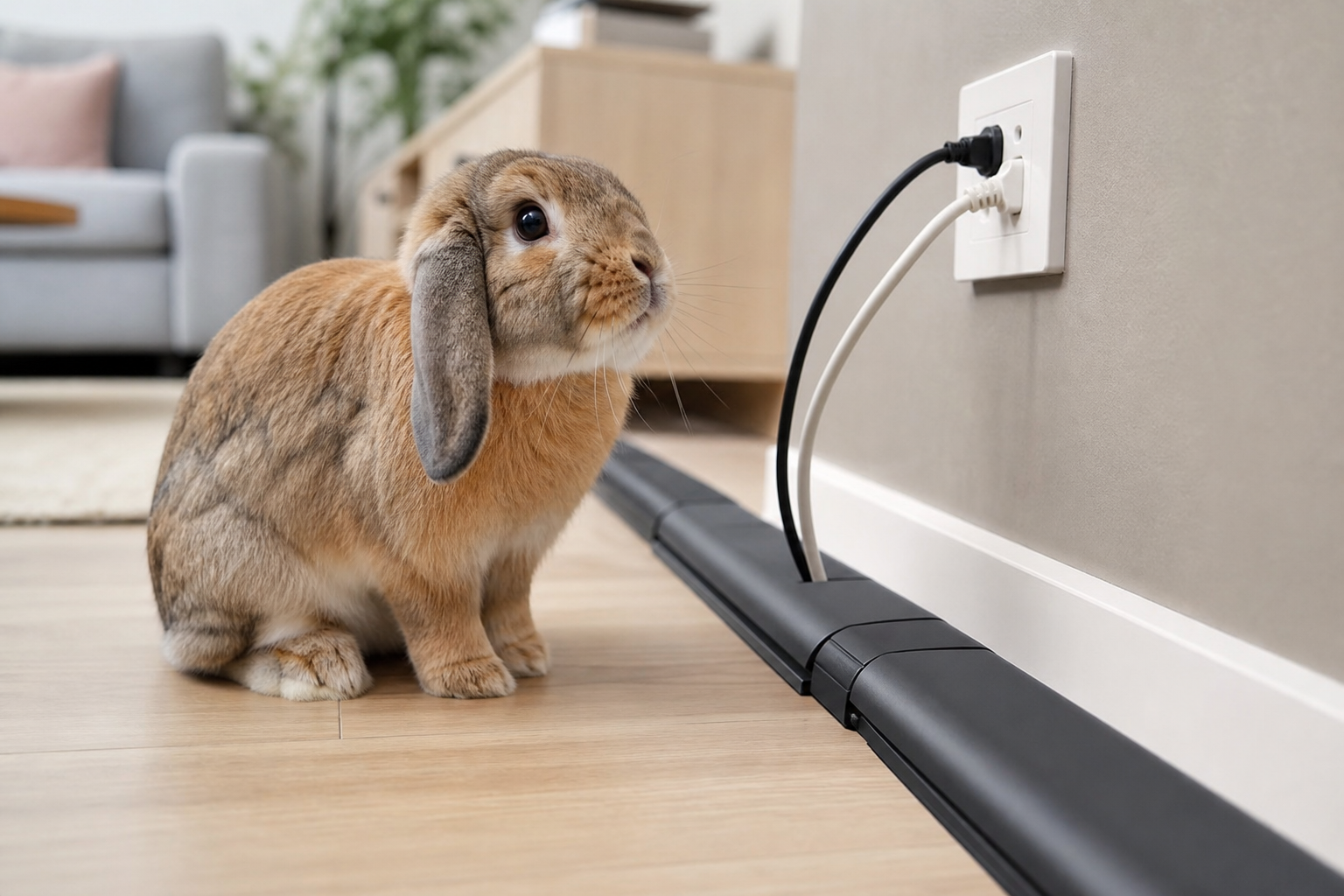
Start with wires, because they can kill. Run cords inside hard spiral cable wrap or rigid tubing, lift them out of reach, or block off the whole area. Never rely on a rabbit learning to leave a cord alone.
Next, protect baseboards and furniture legs with cardboard, untreated wood battens, or cat-scratch-style guards. Move house plants up high, since several common ones are toxic. Close off tempting gaps under sofas and beds where a rabbit can hide and gnaw unseen.

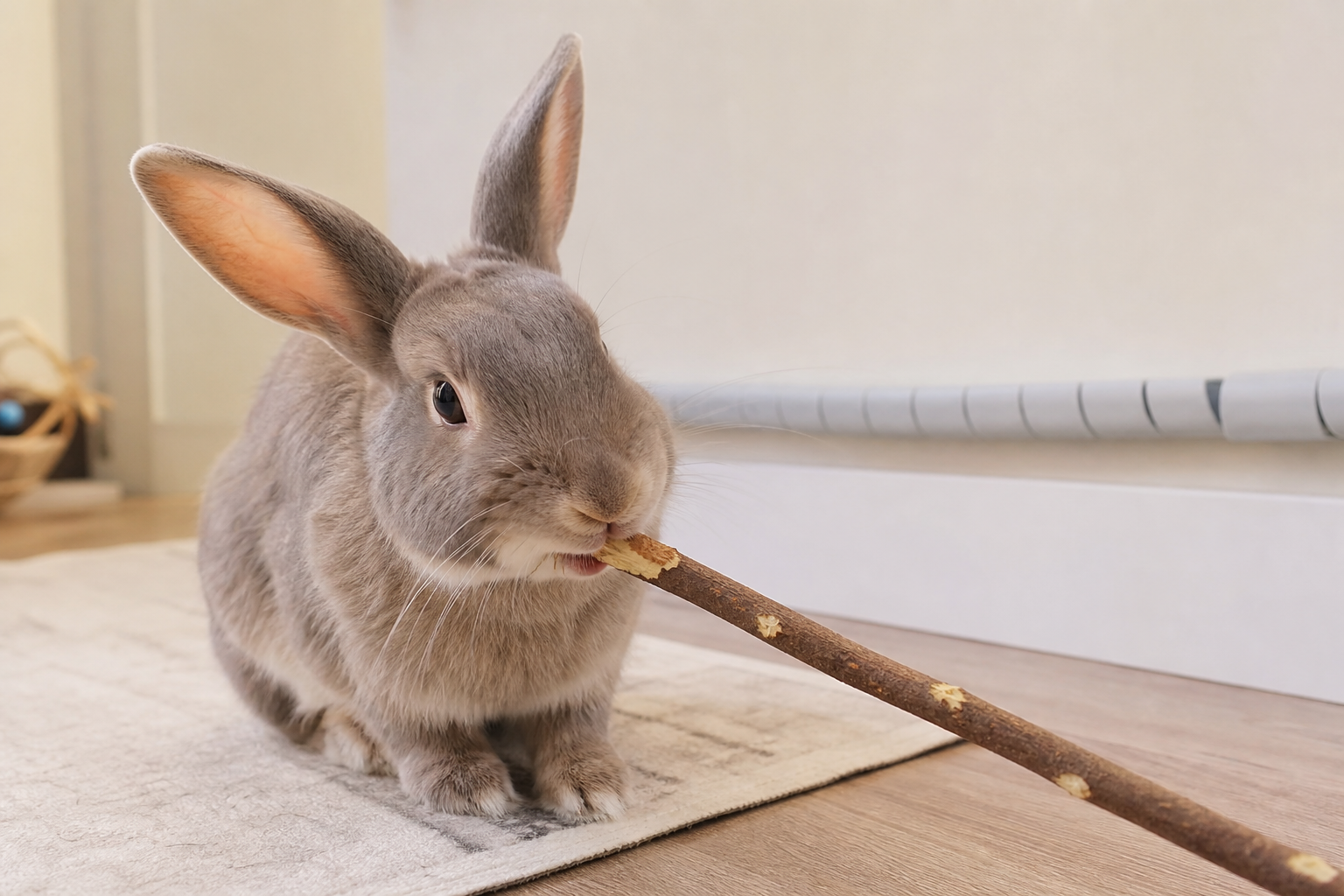
Give chewing a better target: unlimited hay, cardboard, and untreated willow turn the urge into safe play.
Give chewing a better target
Once the danger is handled, make the right choices irresistible. Offer unlimited grass hay, which is chew, food, and gut fuel in one. Add untreated willow, apple, or hazel sticks, plain cardboard boxes, seagrass mats, and hay-stuffed toilet rolls. Rotate them so novelty keeps them interesting.
Avoid softwoods with resin, anything painted or glued, and toys with small plastic parts a rabbit could swallow.
Address the boredom behind it
A rabbit chewing furniture is often a rabbit with too little to do. More floor time, more space to run, a bonded friend, and daily foraging games all lower unwanted chewing. Make sure the diet is right too, with hay as the bulk of every day. A well-exercised, well-fed, mentally busy rabbit simply has less reason to strip your table leg.
Living context by region
This guide is written for multi-region English readers (US/UK/AU/NZ/CA/EU and more). Where climate, products, or vet access differ, prefer local veterinary advice and local product labels. Use metric first; keep °F/lb in mind for North American homes.
When to call your vet
-
Signs are getting worse over hours, not better
-
Pain, persistent vomiting/diarrhea, or neurological signs
-
You needed force or guesswork to keep going at home
Common mistakes
-
Waiting because the animal 'still looks okay' while prey species hide pain
-
Changing five variables at once so you cannot tell what helped
-
Copying drug doses from social media
-
Skipping species-appropriate husbandry while buying more gadgets
FAQ
Will my rabbit ever grow out of chewing?
Is chewing a sign of a dental problem?
Can I spray something to stop the chewing?
My rabbit only chews when I leave the room, so why?
My highlights & notes
This article is for general education and is not a substitute for professional veterinary advice. If your pet is unwell, please consult a veterinarian.
Worried about your pet?
Peqaboo’s AI helps you track symptoms, understand lab reports, and know when to see a vet.
Get the Peqaboo app