

Bladder Sludge and Urinary Problems in Rabbits
Rabbits process calcium unusually, so thick, chalky urine and bladder sludge are common. This article explains normal versus abnormal rabbit urine, how diet and hydration help, and the signs of a urinary problem that means it is time to see a rabbit-savvy vet.

Quick answer

Bladder Sludge and Urinary Problems in Rabbits
Rabbits absorb and excrete calcium differently from most pets, so their urine is naturally cloudy and can carry a lot of calcium. When too much calcium settles, it forms a thick, chalky "bladder sludge" that can cause discomfort, straining, and a wet, urine-scalded bottom. Improving hydration and reviewing the diet help, but straining, blood, or a rabbit that cannot pass urine needs a rabbit-savvy vet urgently.
- Species
- rabbit
- Category
- health
- Risk level
- medium
- Content focus
- practical owner decisions + mechanism
- When to escalate
- same-day if pain, not eating, breathing issues, or rapid decline
Decide in 60 seconds
| Situation | Do now |
|---|---|
| Mild / stable at home | Follow steps in this guide and monitor for 12–24 hours |
| Not eating, hiding, or clear pain | Same-day vet (species-savvy if exotic) |
| Breathing hard, collapse, continuous distress | Emergency vet now |
| You are unsure after reading | Call a clinic with your notes rather than waiting days |
Normal versus abnormal rabbit urine
Rabbit urine is normally cloudy and varies widely in colour, from pale yellow to orange, red-brown, or even bright red, often depending on diet and pigments. This natural colour variation surprises many owners, and red-tinged urine is frequently harmless pigment rather than blood.
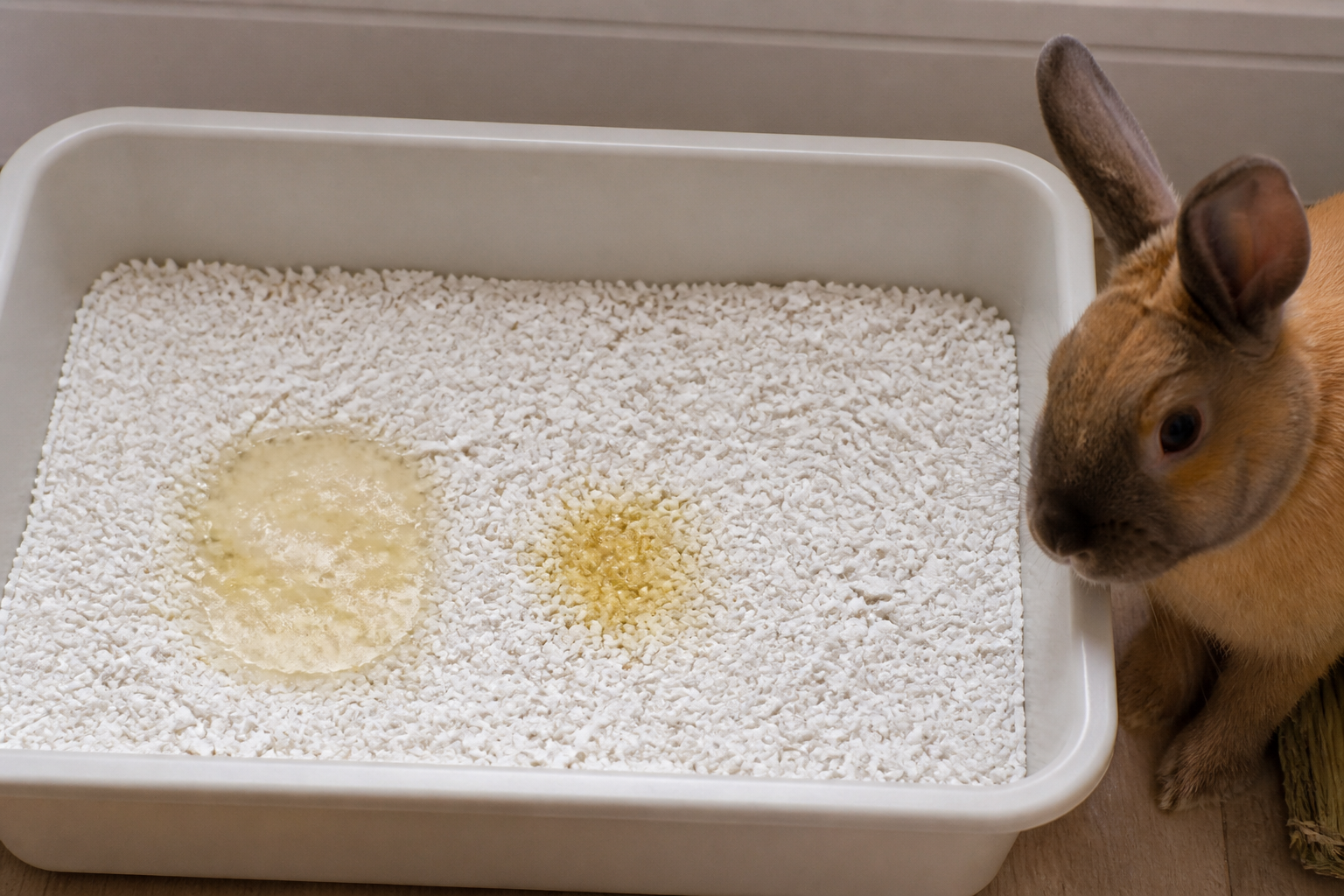
Thick, chalky, toothpaste-like urine can indicate bladder sludge; normal urine is more fluid.
What is not normal is urine that is thick, gritty, and toothpaste-like, or true blood, which usually appears as streaks or clots rather than an even colour. Straining, frequent small urinations, and a constantly damp, stained bottom are all signs of a urinary problem.
Why sludge forms
Because rabbits pass surplus calcium into the urine, any factor that concentrates the urine or overloads it with calcium can lead to sludge. Common contributors are too little water intake, a diet very high in calcium such as unlimited alfalfa hay or calcium-rich pellets and greens, obesity, reduced movement, and any pain or arthritis that makes a rabbit reluctant to posture and fully empty the bladder.
Older and less active rabbits are therefore at higher risk, which is why sludge, arthritis, and obesity often appear together and need managing as a group.
Diet and hydration at home
The two most powerful home levers are more water and the right calcium level. Encourage drinking by offering a wide, low bowl, which most rabbits prefer to a bottle, keeping water fresh, and feeding plenty of washed, wet leafy greens that add moisture to the diet.
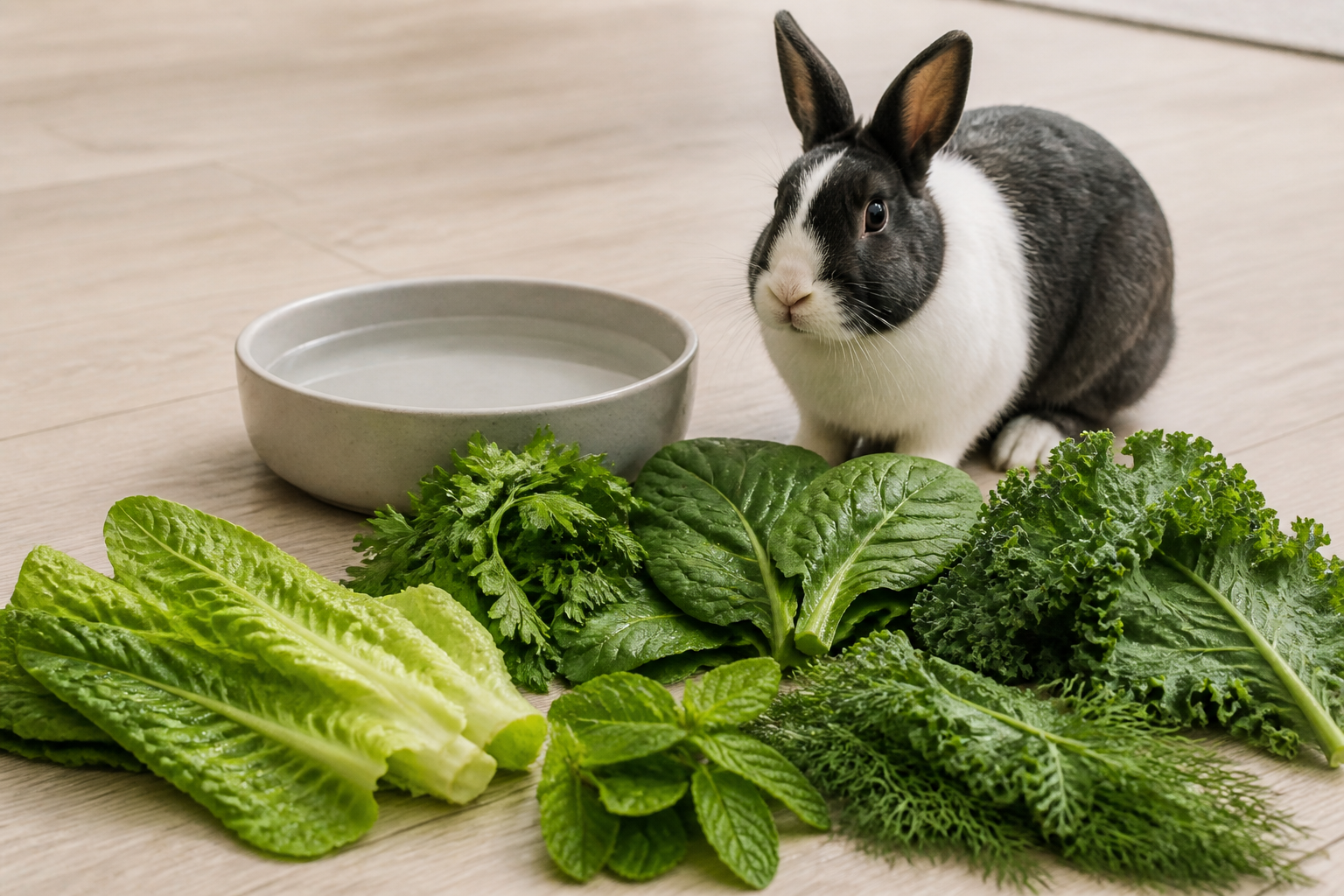
A wide bowl and wet greens encourage drinking, which helps flush the bladder.
For diet, base feeding on grass hay such as Timothy rather than high-calcium alfalfa, which is only appropriate for young or growing rabbits. Keep pellets to a measured amount and choose a good grass-based pellet. Your vet can help you review which greens are higher in calcium if your rabbit is prone to sludge, and check whether weight or arthritis is reducing activity.
When to see a vet
A rabbit-savvy vet can feel the bladder, image it to assess sludge or stones, and test the urine. Treatment may involve improving hydration, dietary change, pain relief, flushing the bladder, or in some cases surgery for stones. Do not try to manage ongoing urinary signs at home alone, as sludge can progress and stones can cause a painful blockage.
Living context by region
This guide is written for multi-region English readers (US/UK/AU/NZ/CA/EU and more). Where climate, products, or vet access differ, prefer local veterinary advice and local product labels. Use metric first; keep °F/lb in mind for North American homes.
When to call your vet
-
Signs are getting worse over hours, not better
-
Pain, persistent vomiting/diarrhea, or neurological signs
-
You needed force or guesswork to keep going at home
Common mistakes
-
Waiting because the animal 'still looks okay' while prey species hide pain
-
Changing five variables at once so you cannot tell what helped
-
Copying drug doses from social media
-
Skipping species-appropriate husbandry while buying more gadgets
FAQ
Is cloudy urine in my rabbit normal?
Is red urine always blood?
Should I stop giving calcium entirely?
Can bladder sludge come back after treatment?
My highlights & notes
This article is for general education and is not a substitute for professional veterinary advice. If your pet is unwell, please consult a veterinarian.
Worried about your pet?
Peqaboo’s AI helps you track symptoms, understand lab reports, and know when to see a vet.
Get the Peqaboo app