

Why Is My Rabbit Suddenly Aggressive? Biting and Lunging
A rabbit that suddenly bites or lunges is frightened, hormonal, or in pain , not mean. This guide shows why to rule out illness first, how neutering calms teenage aggression, why cage-guarding triggers bites, and how to rebuild trust without punishment, which only deepens fear.

Quick answer
Why Is My Rabbit Suddenly Aggressive? Biting and Lunging
A rabbit that suddenly bites or lunges is almost never being "mean" , it's frightened, hormonal, in pain, or defending its territory. Sudden aggression in a previously gentle rabbit deserves a health check first, because pain is a common hidden cause. Once illness is ruled out, most aggression is fixable with neutering, better handling, and respect for the rabbit's space.
- Species
- rabbit
- Category
- behavior
- Risk level
- medium
- Content focus
- practical owner decisions + mechanism
- When to escalate
- same-day if pain, not eating, breathing issues, or rapid decline
Decide in 60 seconds
| Situation | Do now |
|---|---|
| Mild / stable at home | Follow steps in this guide and monitor for 12–24 hours |
| Not eating, hiding, or clear pain | Same-day vet (species-savvy if exotic) |
| Breathing hard, collapse, continuous distress | Emergency vet now |
| You are unsure after reading | Call a clinic with your notes rather than waiting days |
Rule out pain first
When a calm rabbit turns snappy overnight, think medicine before behaviour. Dental pain, a sore belly from gut trouble, arthritis in an older rabbit, or an ear or urinary infection can all make a rabbit lash out when touched. A rabbit-savvy vet can check teeth, joints, and abdomen. This step matters most for a sudden change in an adult rabbit that was previously friendly.
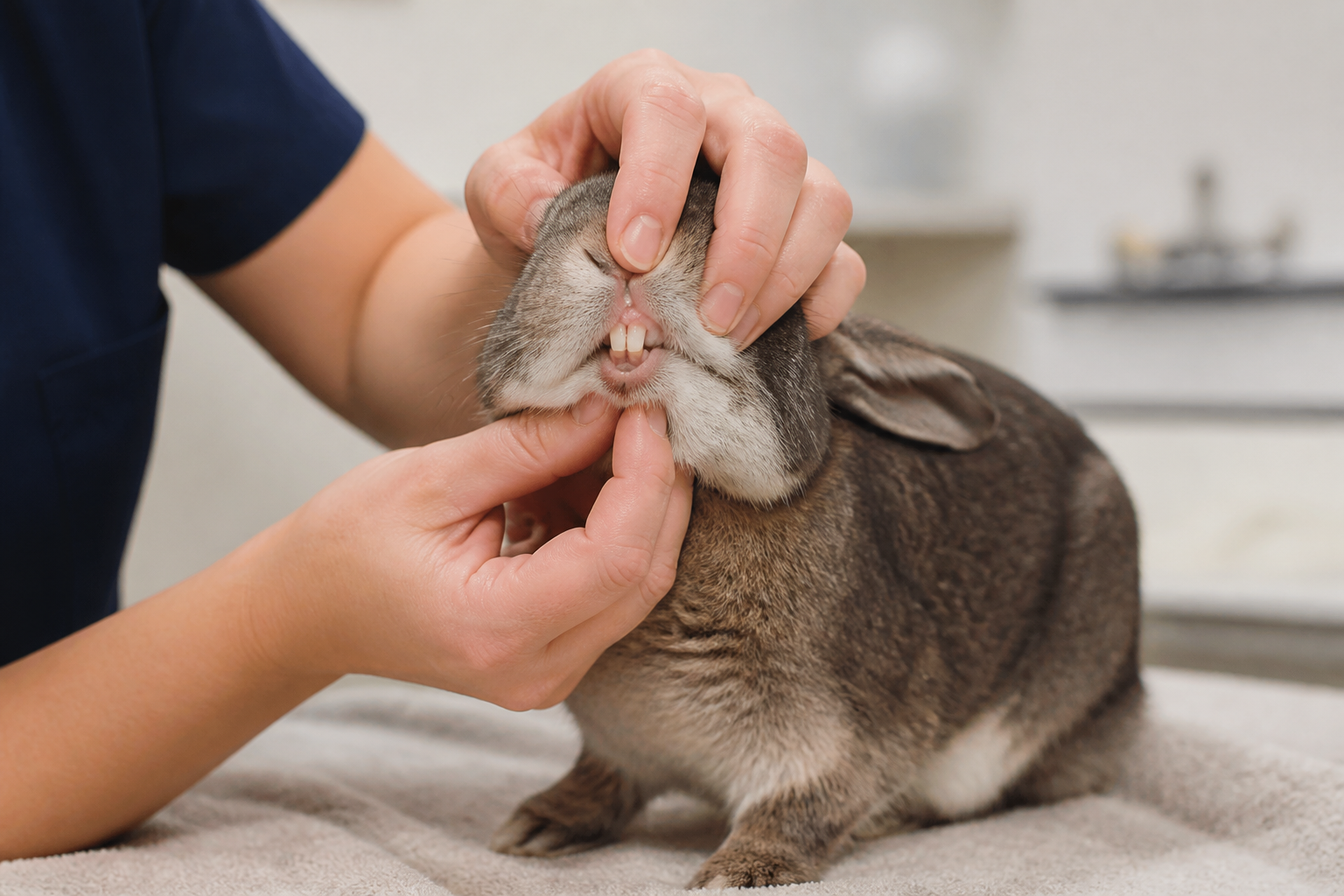
Rule out pain first , dental or gut trouble often hides behind sudden biting.
Hormones and the teenage phase
Rabbits hit adolescence around 3–6 months, and un-neutered rabbits of both sexes often become territorial, mount, spray, and bite during this stage. It can feel like your sweet baby has switched personality overnight. Neutering (spaying females, castrating males) resolves most hormone-driven aggression over the following weeks, and also prevents the very high rate of uterine cancer in un-spayed females. This is the single most effective fix for teenage aggression.
Territory and the cage-guard bite
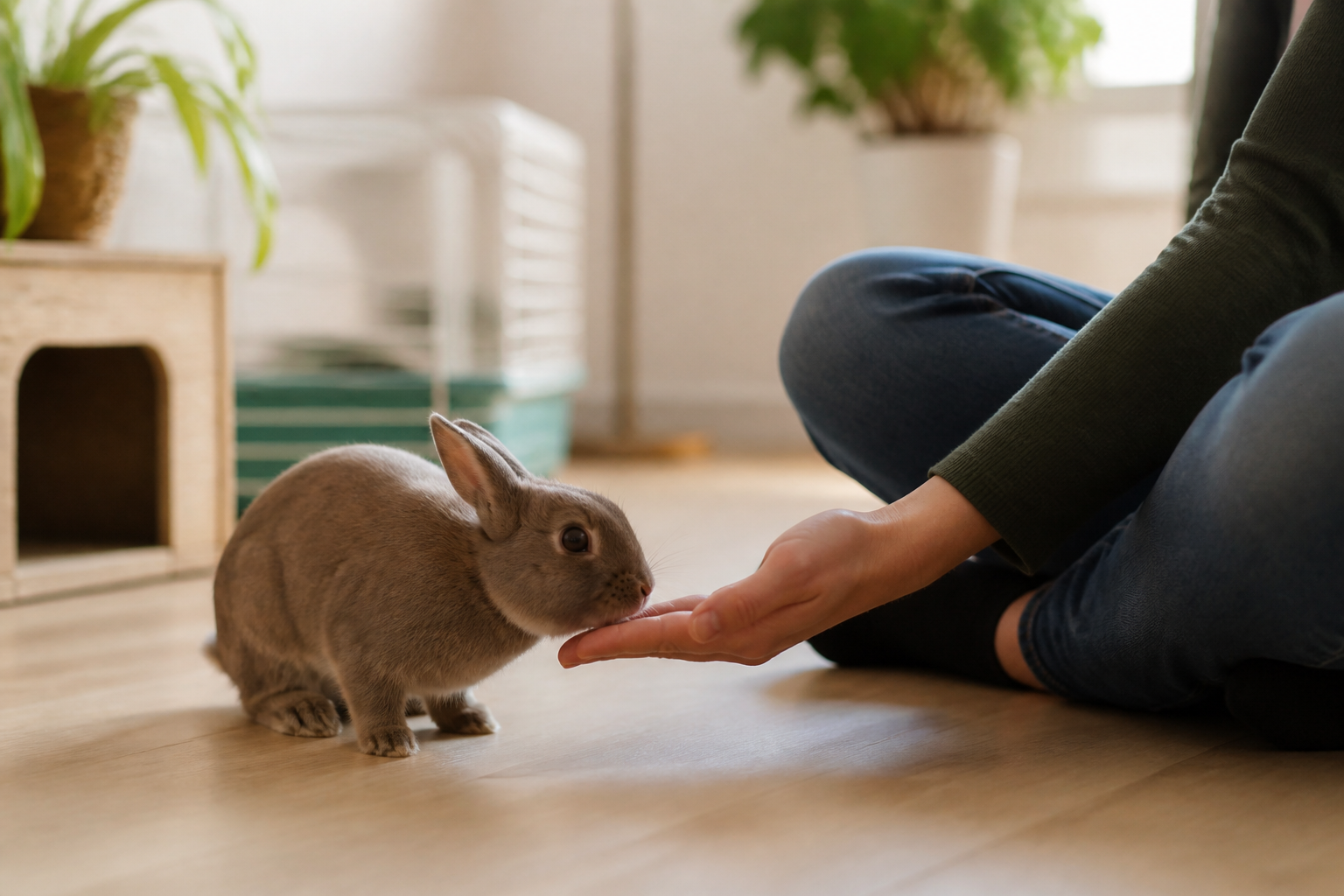
Many bites happen when a hand reaches into the rabbit's cage or pen , the rabbit is defending its core territory. Feed and clean without cornering it: let the rabbit come out first, add food while it's elsewhere, and avoid looming over it from above, which mimics a predator. Interacting on the floor at the rabbit's level, rather than lifting it, prevents a huge share of defensive bites.

Meet your rabbit at floor level and let it come to you to rebuild trust.
Rebuilding trust
Work with rabbit instincts, not against them. Sit on the floor and let the rabbit approach you; reward calm contact with a favourite green. Avoid picking your rabbit up unless necessary, since most hate being lifted and may bite in self-defence. If you're bitten, a calm high-pitched squeak and quietly withdrawing your hand teaches "that hurt" far better than any punishment. Never smack, shout, or squirt water , fear is usually the root of biting, and punishment makes it worse.
Living context by region
This guide is written for multi-region English readers (US/UK/AU/NZ/CA/EU and more). Where climate, products, or vet access differ, prefer local veterinary advice and local product labels. Use metric first; keep °F/lb in mind for North American homes.
When to call your vet
-
Signs are getting worse over hours, not better
-
Pain, persistent vomiting/diarrhea, or neurological signs
-
You needed force or guesswork to keep going at home
Common mistakes
-
Waiting because the animal 'still looks okay' while prey species hide pain
-
Changing five variables at once so you cannot tell what helped
-
Copying drug doses from social media
-
Skipping species-appropriate husbandry while buying more gadgets
FAQ
Why did my friendly rabbit suddenly turn aggressive?
Will neutering fix biting?
Should I punish my rabbit for biting?
Is it safe to keep handling a biting rabbit?
My highlights & notes
This article is for general education and is not a substitute for professional veterinary advice. If your pet is unwell, please consult a veterinarian.
Worried about your pet?
Peqaboo’s AI helps you track symptoms, understand lab reports, and know when to see a vet.
Get the Peqaboo app