

Rabbit Abscesses: Why That Lump Is Trickier Than It Looks
A lump on your rabbit is rarely simple. Rabbit abscesses hold thick pus in a tough capsule that antibiotics can't reach, so they almost never drain or heal on their own. Learn where to check, why surgery usually beats pills, and the red flags that mean go to a vet now.

Quick answer

Rabbit Abscesses: Why That Lump Is Trickier Than It Looks
A rabbit abscess is a walled-off pocket of thick, cheese-like pus , usually from a dental root, a bite wound, or an infection under the skin. Unlike a cat abscess it rarely bursts and drains on its own, and antibiotics alone almost never cure it. Any firm lump on a rabbit warrants a rabbit-savvy vet, ideally within a day or two.
- Species
- rabbit
- Category
- health
- Risk level
- high
- Content focus
- practical owner decisions + mechanism
- When to escalate
- same-day if pain, not eating, breathing issues, or rapid decline
Decide in 60 seconds
| Situation | Do now |
|---|---|
| Mild / stable at home | Follow steps in this guide and monitor for 12–24 hours |
| Not eating, hiding, or clear pain | Same-day vet (species-savvy if exotic) |
| Breathing hard, collapse, continuous distress | Emergency vet now |
| You are unsure after reading | Call a clinic with your notes rather than waiting days |
Why rabbit abscesses are different
In dogs and cats, pus is liquid and drains easily. In rabbits the pus is thick and paste-like, and the body seals it inside a tough fibrous capsule. That capsule protects the infection from both the immune system and from antibiotics carried in the blood. This is why a rabbit lump you "wait and watch" almost always gets bigger, not better.
Most abscesses in adult and senior rabbits trace back to the teeth. Rabbit teeth grow continuously, and an overgrown or fractured tooth root can drive infection into the jaw. Others follow a scratch or bite from a companion, a grass-seed splinter, or a hidden wound.
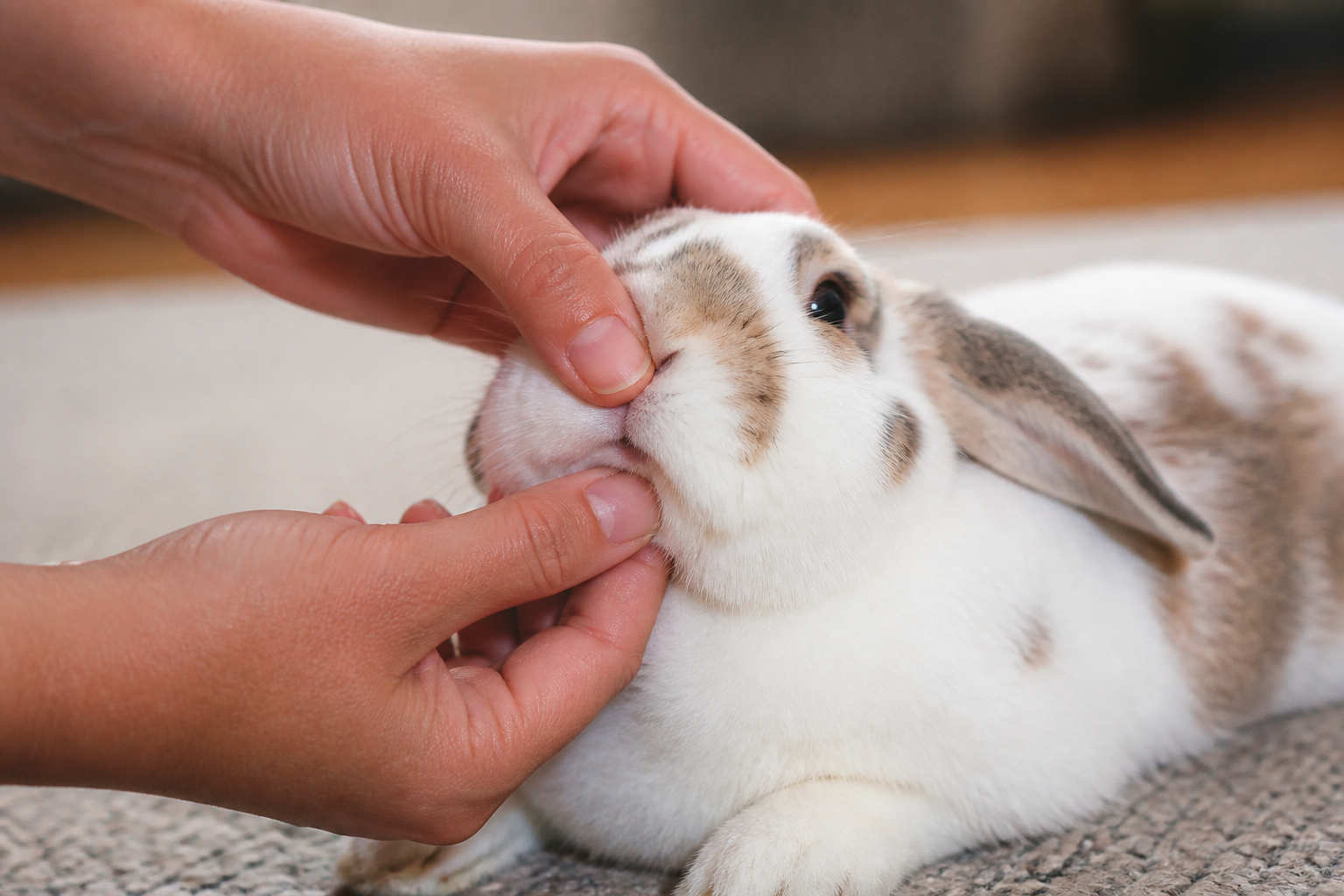
A daily hands-on check helps you catch a firm lump early, before your rabbit shows illness.
Where to check on your rabbit
Run your hands over your rabbit during a daily cuddle. Common abscess sites are the jaw and cheek, under the chin, along the back and rump, and around the eye (a bulging or weepy eye can signal a tooth-root abscess pushing from behind). A facial abscess may feel like a hard marble fixed to the bone.
What the vet will actually do
Treatment is usually surgical, not a course of pills. A rabbit-savvy vet may lance and flush the abscess, but more often they aim to remove the entire capsule intact, plus any diseased tooth root feeding it. X-rays or a CT scan check the jaw and roots. Your vet may pack the cavity, leave it open to heal from the inside, or place antibiotic beads. Culturing the pus guides the right antibiotic to support the surgery.
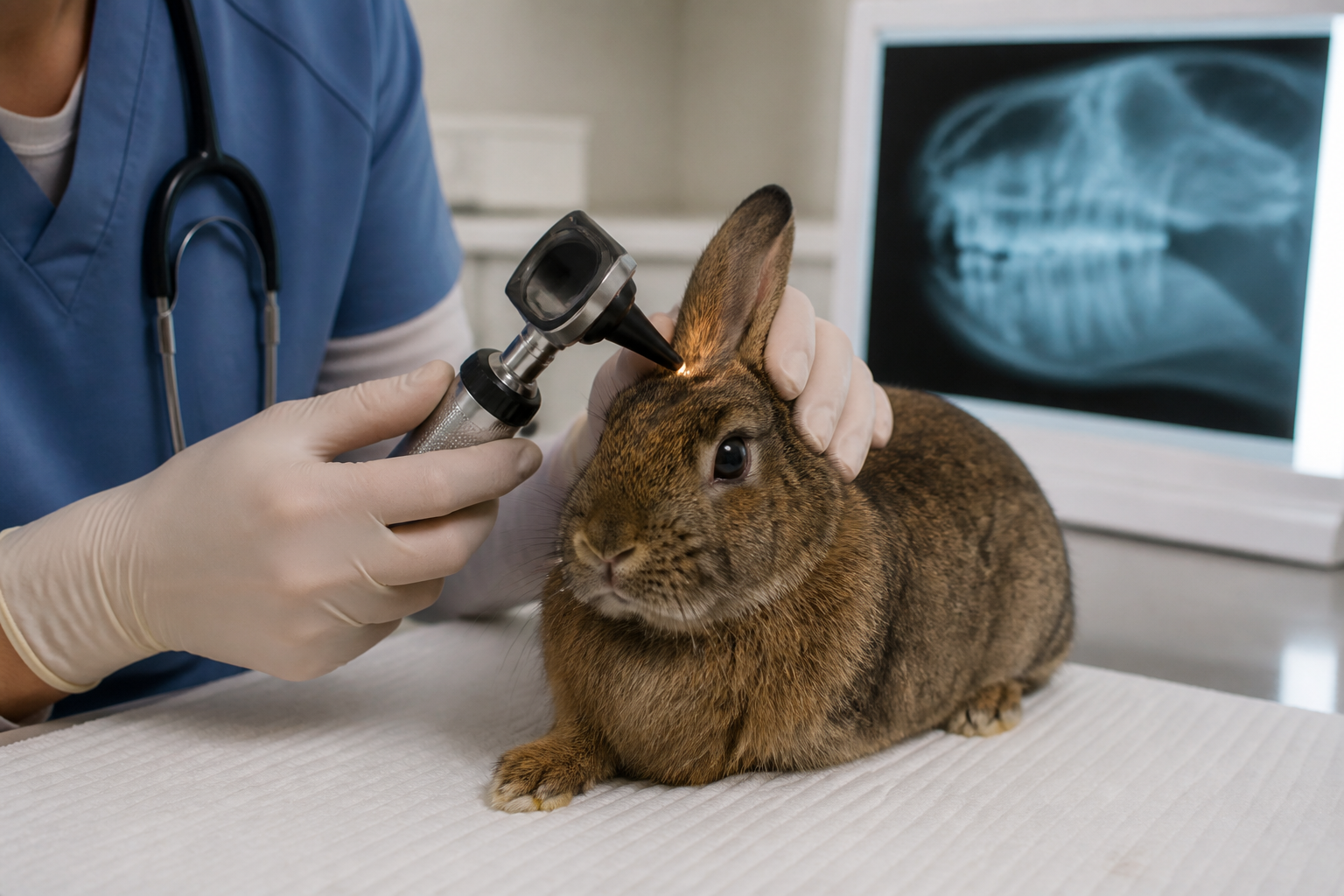
X-rays reveal diseased tooth roots that feed many facial abscesses.
Home care and the long game
Recovery from a rabbit abscess is a marathon. You may be flushing an open wound and giving oral antibiotics and pain relief for weeks. The single most important job is to keep your rabbit eating , a rabbit that stops eating for 12 hours is a genuine emergency because the gut can shut down (ileus).
Living context by region
This guide is written for multi-region English readers (US/UK/AU/NZ/CA/EU and more). Where climate, products, or vet access differ, prefer local veterinary advice and local product labels. Use metric first; keep °F/lb in mind for North American homes.
When to call your vet
-
Signs are getting worse over hours, not better
-
Pain, persistent vomiting/diarrhea, or neurological signs
-
You needed force or guesswork to keep going at home
Common mistakes
-
Waiting because the animal 'still looks okay' while prey species hide pain
-
Changing five variables at once so you cannot tell what helped
-
Copying drug doses from social media
-
Skipping species-appropriate husbandry while buying more gadgets
FAQ
Can I drain the abscess at home?
Will antibiotics alone fix it?
Do abscesses come back?
Is it contagious to my other rabbit?
My highlights & notes
This article is for general education and is not a substitute for professional veterinary advice. If your pet is unwell, please consult a veterinarian.
Worried about your pet?
Peqaboo’s AI helps you track symptoms, understand lab reports, and know when to see a vet.
Get the Peqaboo app