

Monitor Lizard Diet Guide: Feeding a Predatory Appetite
Monitor lizards are active carnivores that pile on fat when overfed on rich food. This guide explains what to feed by age, safe portion sizes, why whole prey beats organ meat, essential calcium supplementation, and how to feed a powerful predator safely without turning it obese.

Quick answer

Monitor Lizard Diet Guide: Feeding a Predatory Appetite
Monitor lizards are carnivores that do best on a varied diet of whole prey: insects, whole rodents, and lean protein, dusted with calcium. The biggest real-world risk is not deficiency but obesity from overfeeding fatty foods. Feed young monitors more often, adults less, and always match portions to a lean, active body.
- Species
- lizard, reptile
- Category
- nutrition
- Risk level
- low
- Content focus
- practical owner decisions + mechanism
- When to escalate
- same-day if pain, not eating, breathing issues, or rapid decline
Decide in 60 seconds
| Situation | Do now |
|---|---|
| Mild / stable at home | Follow steps in this guide and monitor for 12–24 hours |
| Not eating, hiding, or clear pain | Same-day vet (species-savvy if exotic) |
| Breathing hard, collapse, continuous distress | Emergency vet now |
| You are unsure after reading | Call a clinic with your notes rather than waiting days |
Understand what a monitor really eats
Monitors are opportunistic hunters, not grazers. In the wild, small and medium species such as the savannah and Ackie monitor eat mostly invertebrates, while larger species take whole vertebrate prey. The goal in captivity is to copy that whole-animal nutrition: bone, organ, and muscle together, which naturally balances calcium and phosphorus.
Best foods by species size
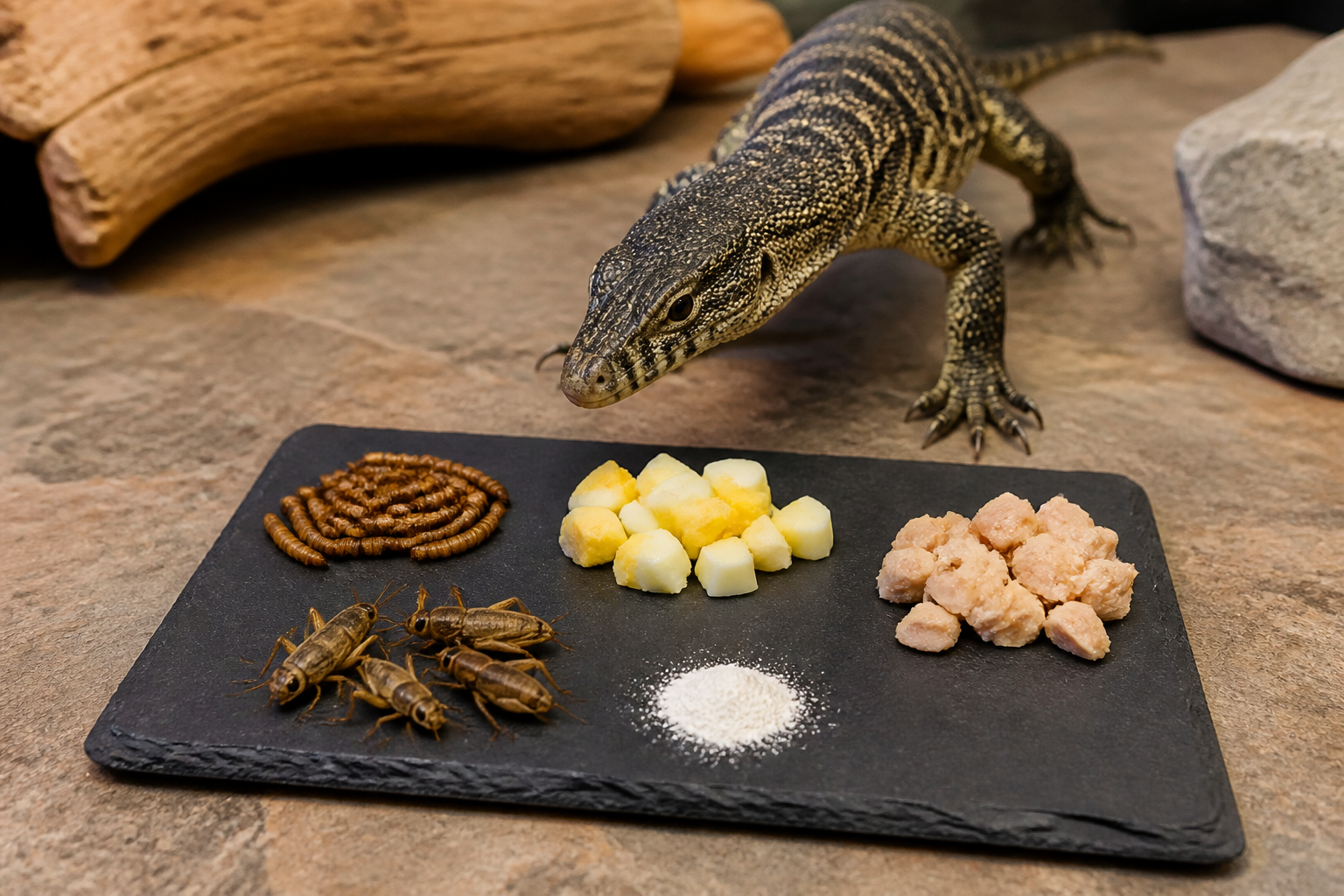
For smaller monitors (Ackie, savannah), the staple should be insects: dubia roaches, crickets, black soldier fly larvae, and the occasional silkworm. Larger monitors can take whole thawed rodents appropriate to their size. Occasional additions include lean cooked egg and, for some keepers, whole fish. Avoid dog food, cat food, and fatty ground meats as a staple; they drive rapid weight gain and are poorly balanced.
Build meals around whole prey and dust with calcium, not around fatty organ meats or processed food.
Portion size and feeding frequency
Hatchlings and juveniles are growing fast and can be fed most days, offering as much as they will eat in a short session. As monitors mature, cut back sharply. A healthy adult may eat only two to three times a week, and large adults even less. Watch body condition: you should feel the ribs and hip bones with gentle pressure, and the tail base should be firm but not bulging with fat. If your monitor is round and the tail base is swollen, it is overfed.
Calcium, phosphorus, and supplements
Even a good whole-prey diet benefits from light calcium dusting, especially for growing animals and breeding females. Use a plain calcium powder on insect feeders, and a calcium-with-D3 or multivitamin product sparingly on a schedule your vet recommends. Whole rodents already carry good calcium in the bone, so heavily rodent-fed monitors need less dusting. Combined with correct UVB and basking temperatures, this supports strong bone and prevents metabolic bone disease.
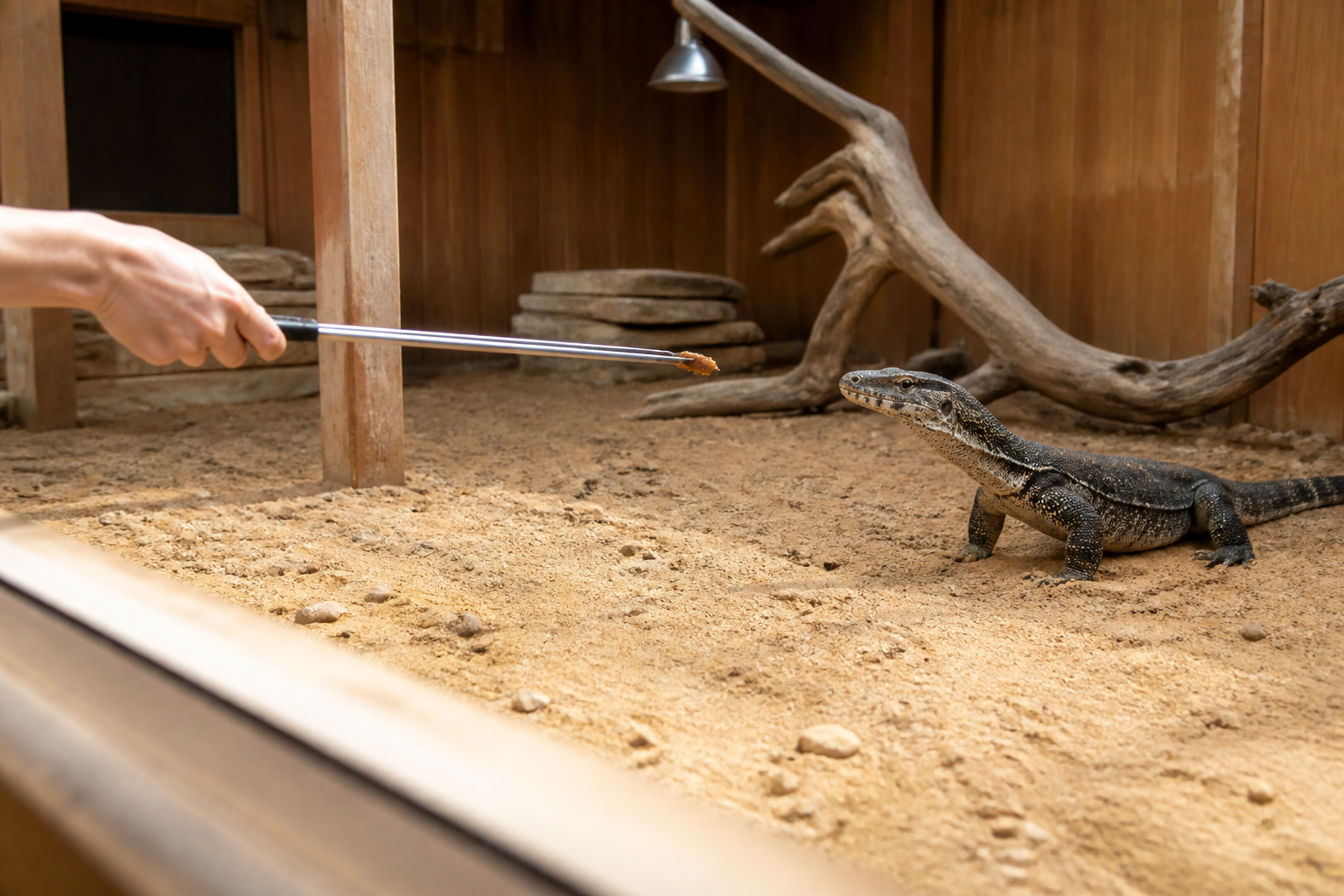
Feeding with tongs keeps fingers safe and stops the lizard associating your hand with food.
Feeding safely
Monitors are intelligent and have a strong feeding response. Always use long tongs so the lizard does not learn that hands mean food, and feed at a set spot so mealtime is predictable. Thaw frozen prey fully to room or body temperature; never microwave to a hot core. Remove uneaten insects so they cannot bite a resting lizard.
Living context by region
This guide is written for multi-region English readers (US/UK/AU/NZ/CA/EU and more). Where climate, products, or vet access differ, prefer local veterinary advice and local product labels. Use metric first; keep °F/lb in mind for North American homes.
When to call your vet
-
Signs are getting worse over hours, not better
-
Pain, persistent vomiting/diarrhea, or neurological signs
-
You needed force or guesswork to keep going at home
Common mistakes
-
Waiting because the animal 'still looks okay' while prey species hide pain
-
Changing five variables at once so you cannot tell what helped
-
Copying drug doses from social media
-
Skipping species-appropriate husbandry while buying more gadgets
FAQ
Can monitor lizards eat fruit or vegetables?
Why is my monitor getting fat?
Do I need to give supplements if I feed whole rodents?
My monitor stopped eating in cooler weather. Is that normal?
My highlights & notes
This article is for general education and is not a substitute for professional veterinary advice. If your pet is unwell, please consult a veterinarian.
Worried about your pet?
Peqaboo’s AI helps you track symptoms, understand lab reports, and know when to see a vet.
Get the Peqaboo app