

Living With a Hyperthyroid Cat: Treatment and Daily Management
Hyperthyroidism is one of the most common hormonal diseases in older cats, and most cats live well once it is controlled. This guide explains the four treatment options, what daily medication and monitoring involve, and the warning signs that mean you should call your vet.

Quick answer

Living With a Hyperthyroid Cat: Treatment and Daily Management
Hyperthyroidism is caused by an overactive thyroid gland, usually from a benign growth, and it speeds up your cat's whole metabolism. It is very treatable: the four main options are daily medication, a special iodine-restricted diet, radioactive iodine therapy (a one-time cure), or surgery. Most cats do well for years with the right plan and regular blood tests.
- Species
- cat
- Category
- health
- Risk level
- medium
- Content focus
- practical owner decisions + mechanism
- When to escalate
- same-day if pain, not eating, breathing issues, or rapid decline
Decide in 60 seconds
| Situation | Do now |
|---|---|
| Mild / stable at home | Follow steps in this guide and monitor for 12–24 hours |
| Not eating, hiding, or clear pain | Same-day vet (species-savvy if exotic) |
| Breathing hard, collapse, continuous distress | Emergency vet now |
| You are unsure after reading | Call a clinic with your notes rather than waiting days |
What hyperthyroidism does to your cat
The thyroid glands sit in the neck and control metabolism. When they overproduce hormone, everything runs too fast. Classic signs are weight loss despite a big appetite, restlessness, a fast heart rate, vomiting or loose stool, an unkempt coat, and increased thirst. Because these creep in slowly, many owners assume the cat is "just getting old." It is almost always a disease of cats over 8 years, and it can strain the heart and kidneys if left untreated.

The four treatment options
Daily medication (methimazole) is the most common starting point. It is given as a tablet or a gel rubbed inside the ear, usually once or twice a day for life. It controls the disease but does not cure it.
Prescription iodine-restricted diet can normalise thyroid levels, but ONLY works if your cat eats nothing else , no treats, no other food, no hunting. That makes it hard in multi-cat homes.
Radioactive iodine (I-131) is considered the gold-standard cure. A single injection destroys the overactive tissue, and most cats need no further treatment. It requires a short stay at a licensed facility.
Surgery to remove the thyroid glands is another curative option, used less often now that I-131 is available.
Most hyperthyroid cats take a small anti-thyroid tablet once or twice daily for life.
Giving medication day to day
If your cat is on methimazole, consistency matters more than perfection. Give it at the same times each day. Many cats accept a tablet tucked into a soft treat or a lickable paste; the transdermal ear gel is a good option for cats who fight pills. Wear a glove or wash your hands after applying gel, since the medicine absorbs through skin.
Monitoring at home and at the vet
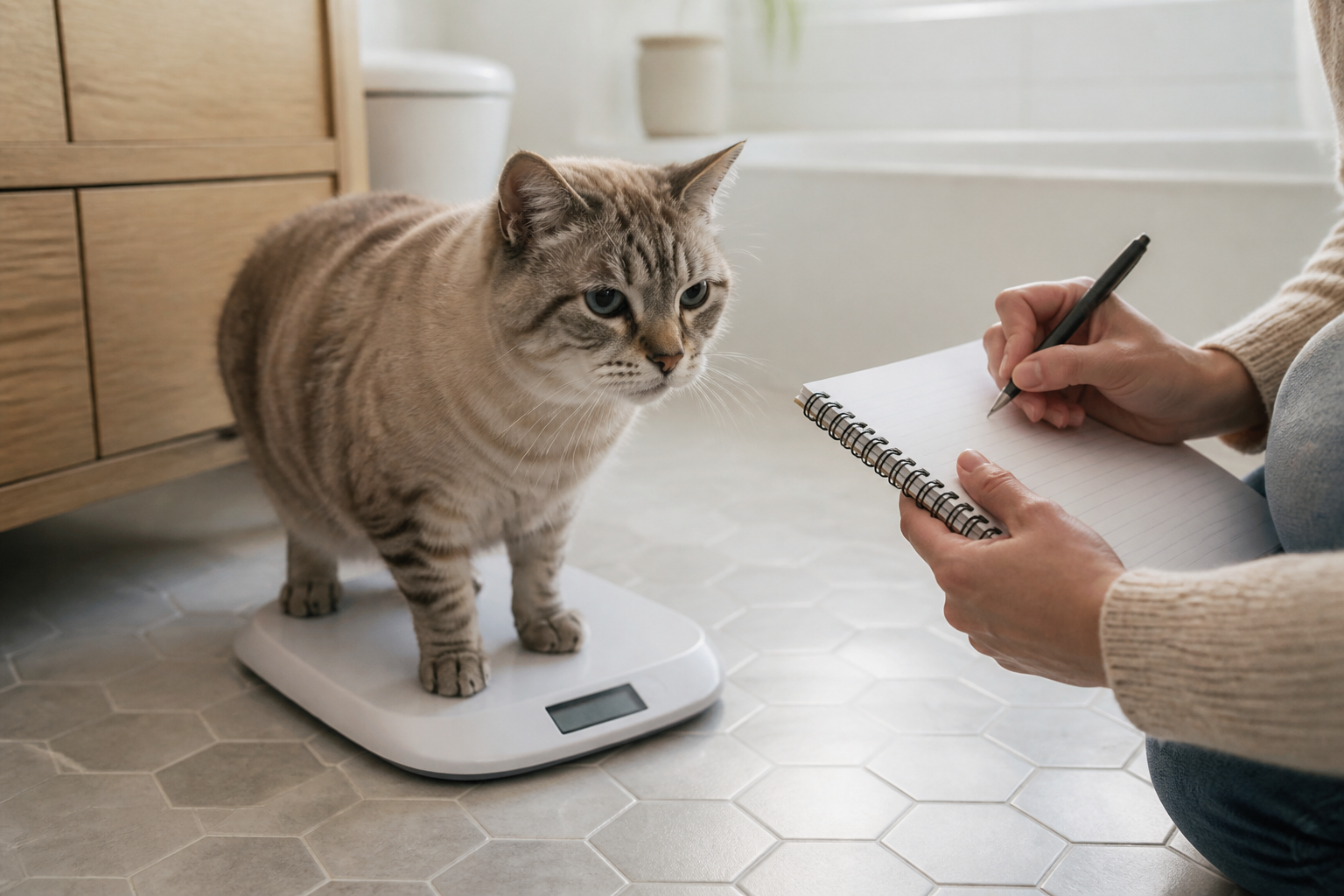
Your vet will recheck blood (T4, plus kidney values) about 2-4 weeks after starting or changing treatment, then every 3-6 months once stable. At home, watch appetite, energy, and litter box habits, and weigh your cat regularly. Treating the thyroid can sometimes unmask hidden kidney disease, which is why kidney values are checked alongside.
Weighing your cat every 2-4 weeks is one of the easiest ways to track whether treatment is working.
Living well with the diagnosis
A hyperthyroid cat is often a senior cat, so make life easy: keep food, water, and a low-sided litter box on the same floor, provide warm resting spots, and reduce stress around dosing. Regular gentle weigh-ins and a calm routine do more for long-term outcome than any single test.
Living context by region
This guide is written for multi-region English readers (US/UK/AU/NZ/CA/EU and more). Where climate, products, or vet access differ, prefer local veterinary advice and local product labels. Use metric first; keep °F/lb in mind for North American homes.
When to call your vet
-
Signs are getting worse over hours, not better
-
Pain, persistent vomiting/diarrhea, or neurological signs
-
You needed force or guesswork to keep going at home
Common mistakes
-
Waiting because the animal 'still looks okay' while prey species hide pain
-
Changing five variables at once so you cannot tell what helped
-
Copying drug doses from social media
-
Skipping species-appropriate husbandry while buying more gadgets
FAQ
Is hyperthyroidism curable?
Will my cat gain the weight back?
Can I stop medication once she looks better?
Is it painful?
My highlights & notes
This article is for general education and is not a substitute for professional veterinary advice. If your pet is unwell, please consult a veterinarian.
Worried about your pet?
Peqaboo’s AI helps you track symptoms, understand lab reports, and know when to see a vet.
Get the Peqaboo app