

Bedding Depth for Burrowing Hamsters: How Deep Is Deep Enough?
Hamsters are natural burrowers, and shallow bedding stops them from digging the tunnels they need. This guide explains how deep bedding should be for Syrian and dwarf hamsters, which materials hold a burrow best, and how to set up depth without making a mess.

Quick answer

Bedding Depth for Burrowing Hamsters: How Deep Is Deep Enough?
Give a Syrian hamster at least 25 cm of bedding depth and a dwarf hamster at least 20 cm, measured in the deepest zone. That depth lets them dig real tunnels instead of just scratching the surface. Deep, diggable bedding is one of the biggest welfare upgrades you can make.
- Species
- hamster
- Category
- environment
- Risk level
- low
- Content focus
- practical owner decisions + mechanism
- When to escalate
- same-day if pain, not eating, breathing issues, or rapid decline
Decide in 60 seconds
| Situation | Do now |
|---|---|
| Mild / stable at home | Follow steps in this guide and monitor for 12–24 hours |
| Not eating, hiding, or clear pain | Same-day vet (species-savvy if exotic) |
| Breathing hard, collapse, continuous distress | Emergency vet now |
| You are unsure after reading | Call a clinic with your notes rather than waiting days |
Why depth matters so much
Burrowing is a core hamster behaviour, not an optional extra. In the wild they dig multi-chamber tunnel systems for sleeping, food storage and safety. In a cage with only a thin layer of bedding, they cannot express this, and many respond with bar-chewing, restlessness or repetitive climbing. Giving them enough depth to disappear underground is often what settles a nervous new hamster.
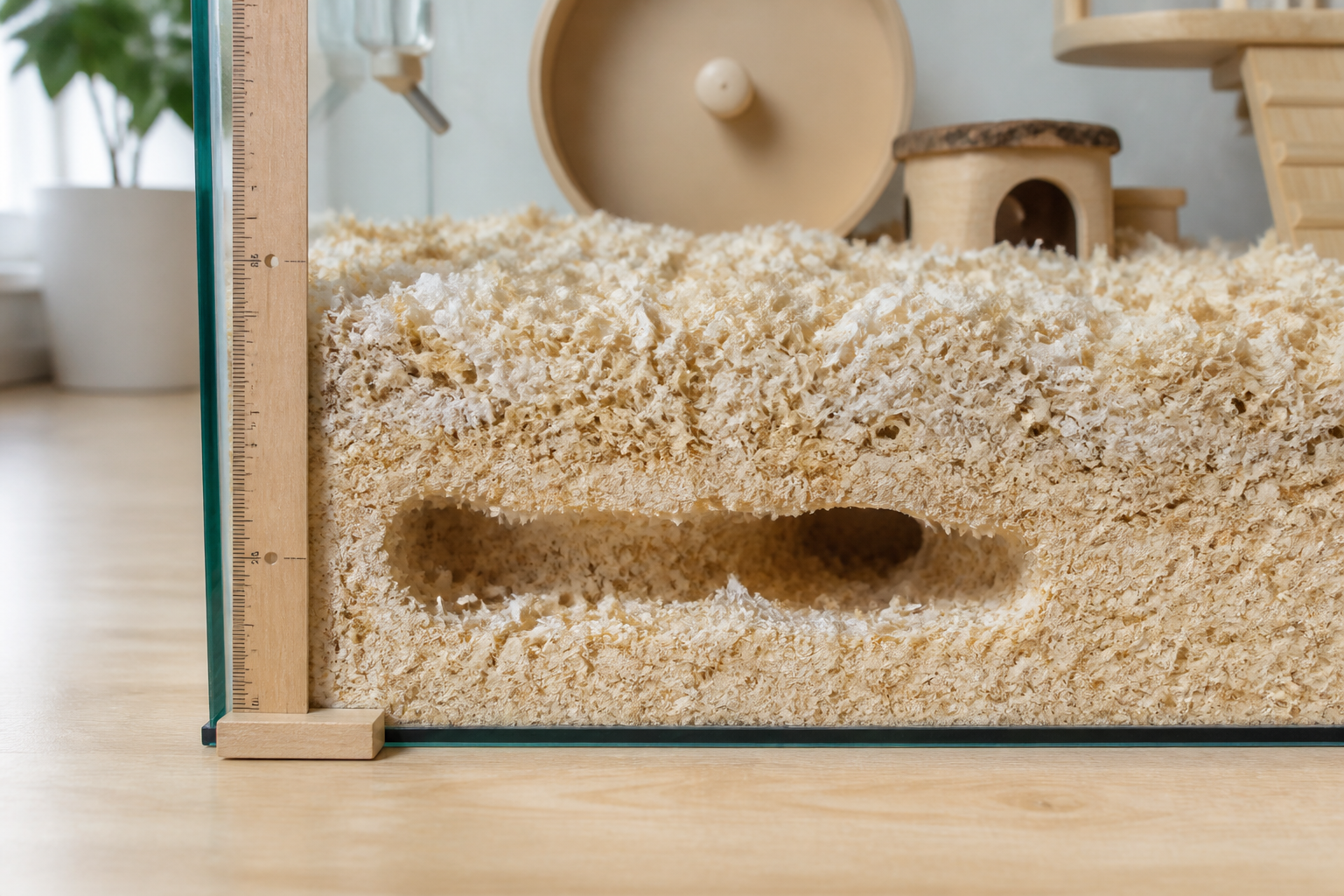
Measure bedding against the tank wall , aim for at least 20 cm so tunnels hold their shape.
Choosing bedding that holds a tunnel
Depth only works if the material keeps its shape. The best base is a generous layer of dust-extracted paper bedding or unscented aspen, which pack together enough for tunnel walls to stay up. Mixing in some plain kitchen paper or a handful of clean hay helps bind the burrow. Avoid fluffy cotton-wool bedding: it does not tunnel, and strands can wrap around limbs or be swallowed. Never use pine or cedar shavings, whose aromatic oils irritate the airways.
Making tunnels actually stay up
A common frustration is that tunnels keep collapsing. The fix is to firm the bedding gently rather than leaving it loose and fluffy. Press one section into a slightly denser mound so the hamster can excavate a stable chamber. Slight moisture from the hamster's own activity also helps burrows set.
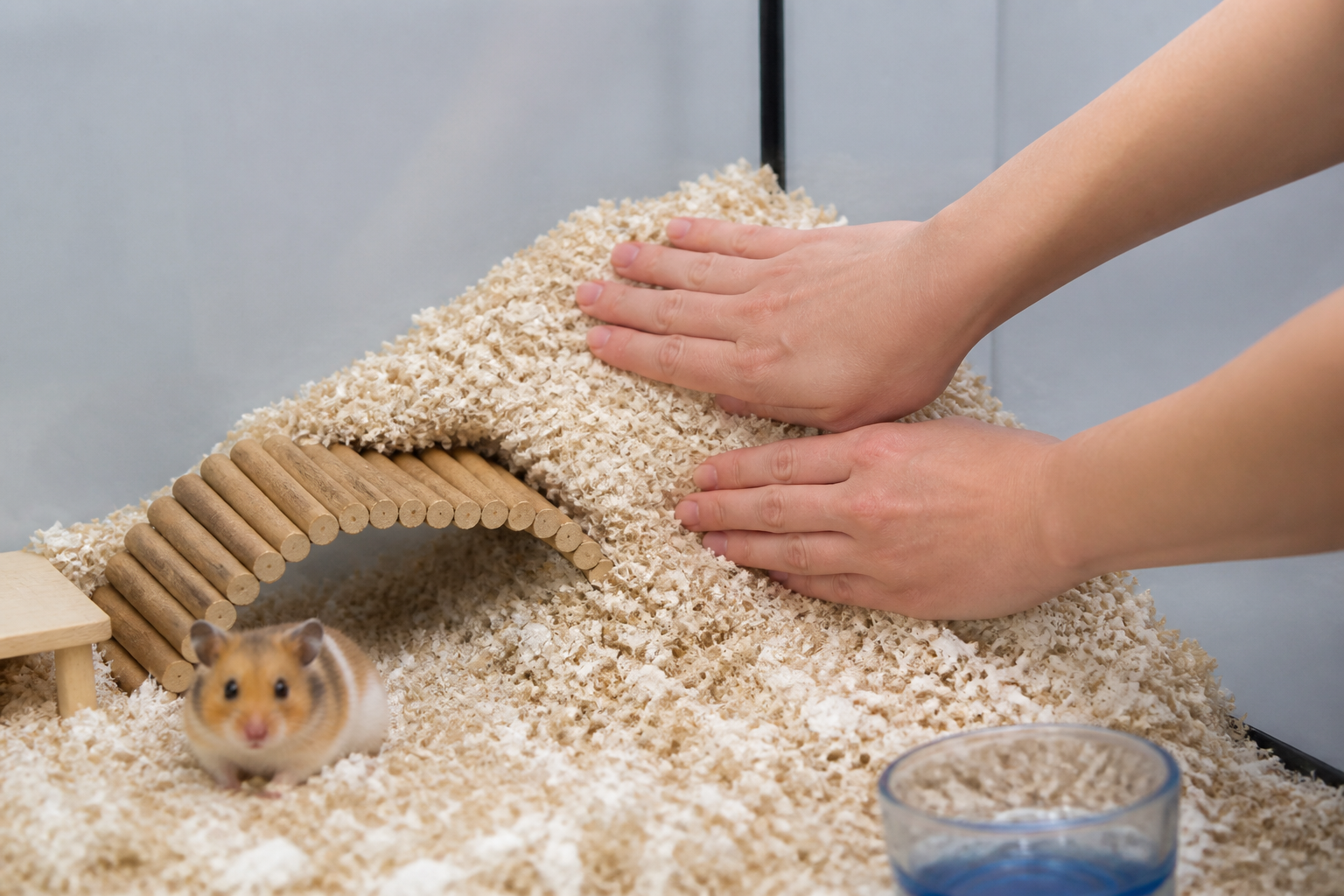
Lightly firming one section helps tunnels hold instead of caving in.
Keeping deep bedding clean
Deep bedding does not mean a dirty cage. Hamsters are tidy and usually pick one corner as a toilet. Spot-clean that corner every day or two and leave the rest of the burrow undisturbed, because a full clean-out destroys their tunnel work and their reassuring scent. A complete change every three to four weeks is plenty for most setups. In humid climates check that the lower layers are not staying damp, as trapped moisture near the base can grow mould.
Living context by region
This guide is written for multi-region English readers (US/UK/AU/NZ/CA/EU and more). Where climate, products, or vet access differ, prefer local veterinary advice and local product labels. Use metric first; keep °F/lb in mind for North American homes.
When to call your vet
-
Signs are getting worse over hours, not better
-
Pain, persistent vomiting/diarrhea, or neurological signs
-
You needed force or guesswork to keep going at home
Common mistakes
-
Waiting because the animal 'still looks okay' while prey species hide pain
-
Changing five variables at once so you cannot tell what helped
-
Copying drug doses from social media
-
Skipping species-appropriate husbandry while buying more gadgets
FAQ
Can bedding ever be too deep?
My dwarf hamster does not dig much , do they still need depth?
How much bedding does that actually take?
Is a sand area a substitute for deep bedding?
My highlights & notes
This article is for general education and is not a substitute for professional veterinary advice. If your pet is unwell, please consult a veterinarian.
Worried about your pet?
Peqaboo’s AI helps you track symptoms, understand lab reports, and know when to see a vet.
Get the Peqaboo app