

Flea and Tick Prevention: Choosing the Right Product for Your Dog
Spot-ons, chewables, and collars all prevent fleas and ticks, but they suit different dogs and lifestyles. This guide compares the main formats, explains what to check on the label, and helps you match a safe, effective product to your dog's age, size, and daily routine.

Quick answer

Flea and Tick Prevention: Choosing the Right Product for Your Dog
The best flea and tick preventive is the one you will actually use every month, that covers the parasites in your area, and that suits your dog's age and lifestyle. The three main formats are spot-on liquids, chewable tablets, and collars. There is no single "best" , a swimmer, a puppy, and a dog that hates tablets each have a different ideal choice. Your vet is the best guide.
- Species
- dog
- Category
- health
- Risk level
- medium
- Content focus
- practical owner decisions + mechanism
- When to escalate
- same-day if pain, not eating, breathing issues, or rapid decline
Decide in 60 seconds
| Situation | Do now |
|---|---|
| Mild / stable at home | Follow steps in this guide and monitor for 12–24 hours |
| Not eating, hiding, or clear pain | Same-day vet (species-savvy if exotic) |
| Breathing hard, collapse, continuous distress | Emergency vet now |
| You are unsure after reading | Call a clinic with your notes rather than waiting days |
Why prevention matters year-round
Fleas cause itching, allergic skin disease, and can transmit tapeworm; ticks can carry serious diseases. In warm, humid climates fleas and ticks stay active all year, not just in summer, so consistent monthly (or per-product) prevention beats treating an infestation later. Once fleas are in the home they lay eggs in carpets and bedding, and clearing them takes months of effort , prevention is far easier.

Comb near the tail base and belly , flea dirt looks like tiny black specks that turn red on a wet tissue.
Spot-on treatments
Spot-ons are liquids applied to the skin between the shoulder blades. They are widely available, don't rely on your dog swallowing anything, and many also repel or kill ticks. The trade-offs: you must part the fur and apply to skin correctly, keep other pets from licking the spot while it dries, and avoid bathing or swimming for a day or two around application, which matters for water-loving dogs.
Chewable tablets
Oral chews have become very popular because they are simple, mess-free, and unaffected by bathing or swimming. Dogs usually take them as a treat, and some products cover fleas, ticks, and even certain worms or mites in one dose, lasting one to three months depending on the product. They rely on your dog eating and keeping the chew down, and, as with any product, some dogs may have side effects , discuss your dog's history with your vet.
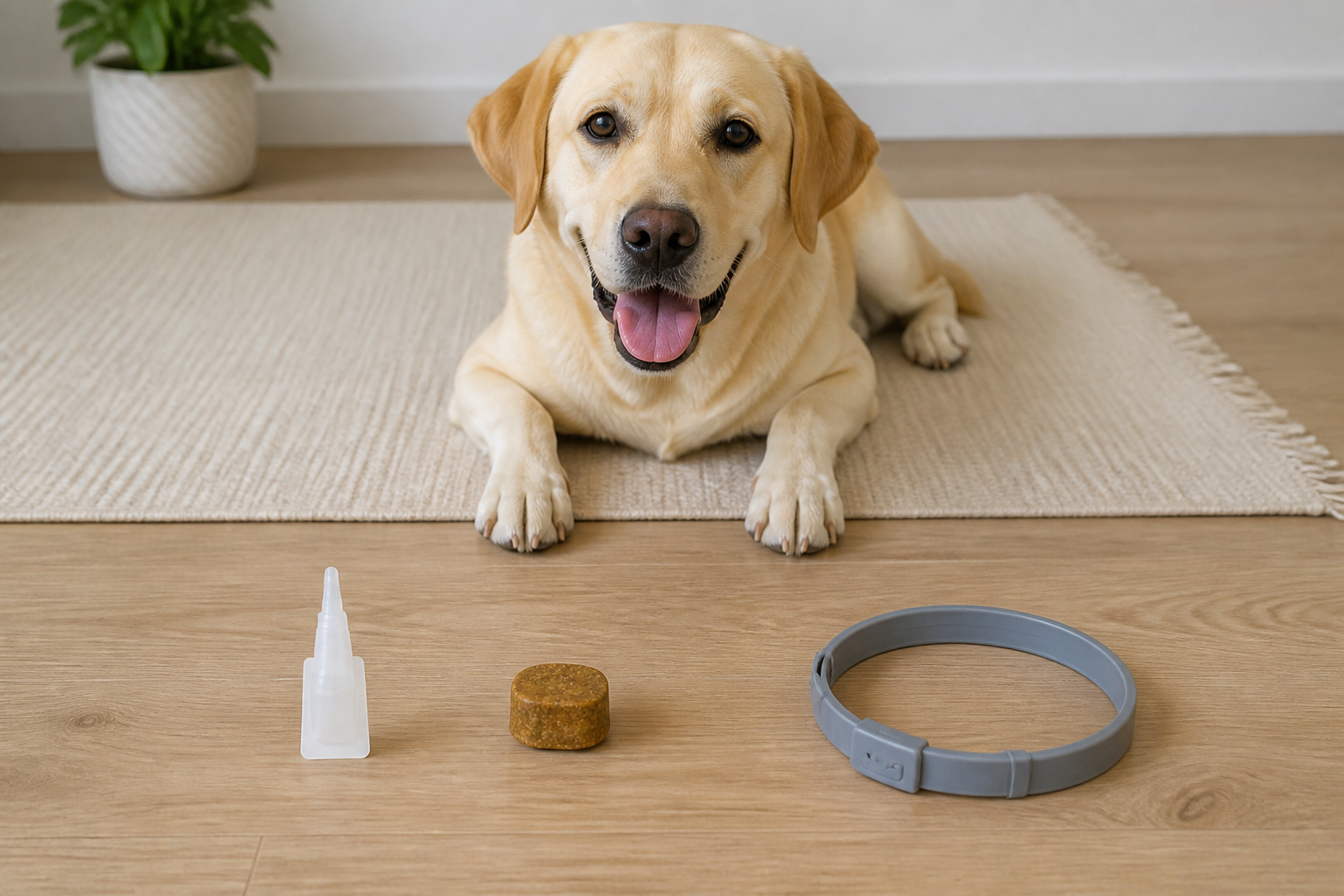
Spot-ons, chewables, and collars each suit different lifestyles , your vet can match one to your dog.
Collars and combination plans
Modern preventive collars can protect for several months, which suits owners who struggle to remember monthly doses. They need to fit correctly and stay on to work. Whatever you choose, remember that flea and heartworm prevention are separate issues , some chews combine them, but many flea products do not cover heartworm, so check what each product actually covers with your vet.
How to choose and use it well
Start by asking your vet which parasites are common where you live and which product fits your dog. Always dose by your dog's current weight, follow the exact interval on the label, and set a phone reminder , a lapse of a few weeks is enough for fleas to return. If you see fleas despite treatment, check you're dosing on time and treating the home environment too.
Living context by region
This guide is written for multi-region English readers (US/UK/AU/NZ/CA/EU and more). Where climate, products, or vet access differ, prefer local veterinary advice and local product labels. Use metric first; keep °F/lb in mind for North American homes.
When to call your vet
-
Signs are getting worse over hours, not better
-
Pain, persistent vomiting/diarrhea, or neurological signs
-
You needed force or guesswork to keep going at home
Common mistakes
-
Waiting because the animal 'still looks okay' while prey species hide pain
-
Changing five variables at once so you cannot tell what helped
-
Copying drug doses from social media
-
Skipping species-appropriate husbandry while buying more gadgets
FAQ
Do I need flea prevention in winter?
Are chewables or spot-ons better?
Can I use the same product on my dog and cat?
I found one flea , is my dog infested?
My highlights & notes
This article is for general education and is not a substitute for professional veterinary advice. If your pet is unwell, please consult a veterinarian.
Worried about your pet?
Peqaboo’s AI helps you track symptoms, understand lab reports, and know when to see a vet.
Get the Peqaboo app