

Decoding the Talkative Cat: Why Some Cats Never Stop Meowing
Some cats are naturally chatty, but excessive or new meowing has reasons , from breed and learned habits to hunger, boredom, or illness. Learn what your cat's meows mean, how not to accidentally train louder demands, and the medical causes of sudden vocal changes worth a vet visit.

Quick answer

Decoding the Talkative Cat: Why Some Cats Never Stop Meowing
Cats meow mainly to communicate with humans, not other cats, so a talkative cat is often just talking to you. Some breeds and individuals are naturally chatty, and much meowing is learned , if it gets a response, it continues. But a sudden increase in vocalising, especially in an older cat or with other symptoms, can signal a medical problem and deserves a vet check.
- Species
- cat
- Category
- behavior
- Risk level
- low
- Content focus
- practical owner decisions + mechanism
- When to escalate
- same-day if pain, not eating, breathing issues, or rapid decline
Decide in 60 seconds
| Situation | Do now |
|---|---|
| Mild / stable at home | Follow steps in this guide and monitor for 12–24 hours |
| Not eating, hiding, or clear pain | Same-day vet (species-savvy if exotic) |
| Breathing hard, collapse, continuous distress | Emergency vet now |
| You are unsure after reading | Call a clinic with your notes rather than waiting days |
Why cats meow at us
Adult cats rarely meow at each other; they reserve the meow largely for people. It's a request or a greeting: feed me, let me in, play with me, notice me. Kittens meow to their mothers, and pet cats keep this up into adulthood because it works on us. Over time, cats refine their meows to the sounds that get the fastest human response.
What different meows can mean
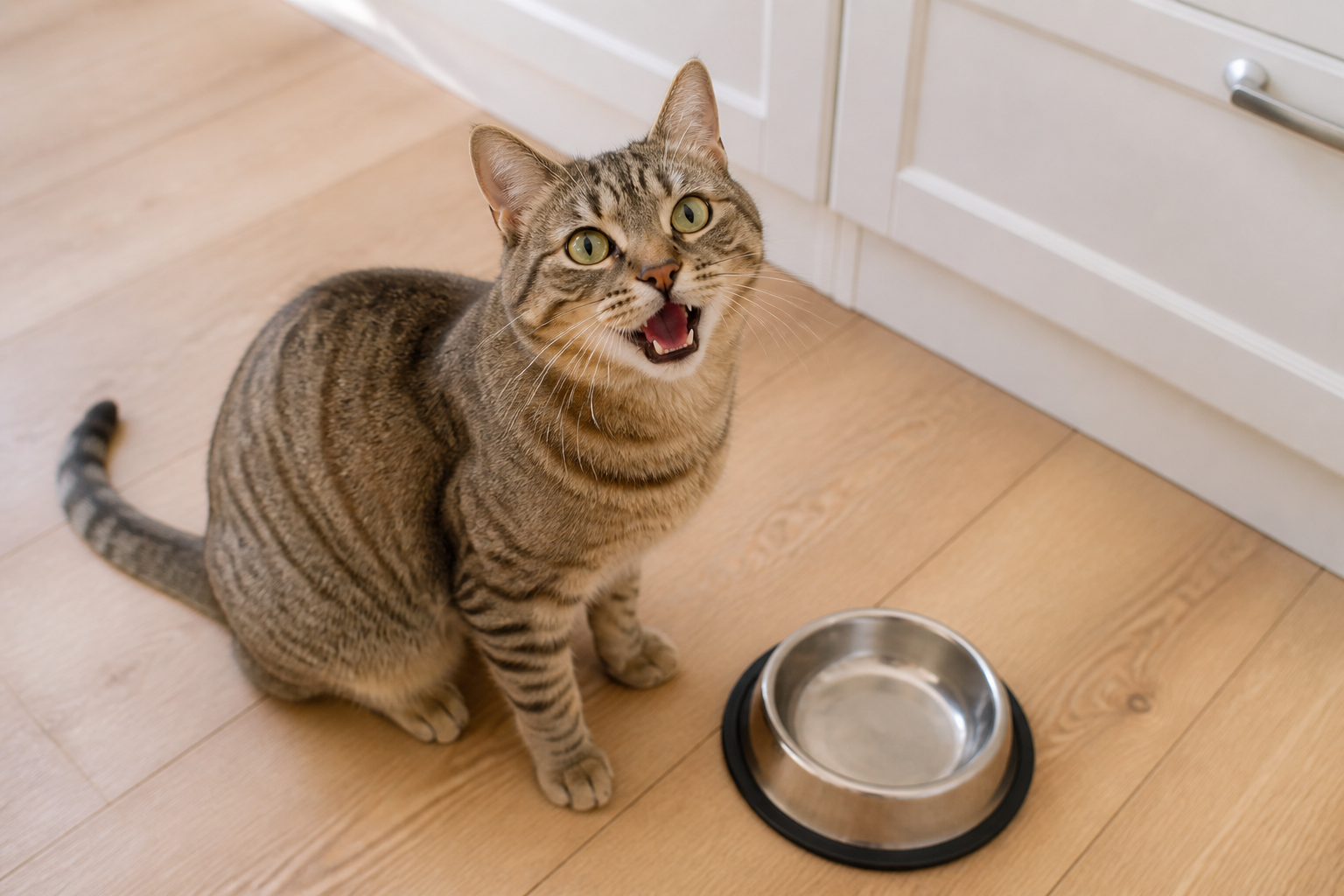
Context decodes the meow. A short, bright meow is usually a greeting. Repeated, insistent meows near the food bowl or door are requests. A drawn-out yowl can mean distress, mating behaviour in unneutered cats, or disorientation. Chirps and trills are friendly. Learning your own cat's patterns matters more than any universal dictionary, because each cat develops a personal vocabulary with its household.
Meowing at the bowl is learned: if it reliably brings food, it gets louder.
Common reasons for excessive meowing
Hunger and routine top the list , cats quickly learn that meowing brings breakfast. Boredom and loneliness are big drivers, especially for indoor cats in small flats with little stimulation. Attention-seeking, wanting a door opened, greeting you home, and stress from changes at home all prompt extra chatter. Unneutered cats yowl loudly when seeking a mate, which neutering resolves.
How not to train louder demands
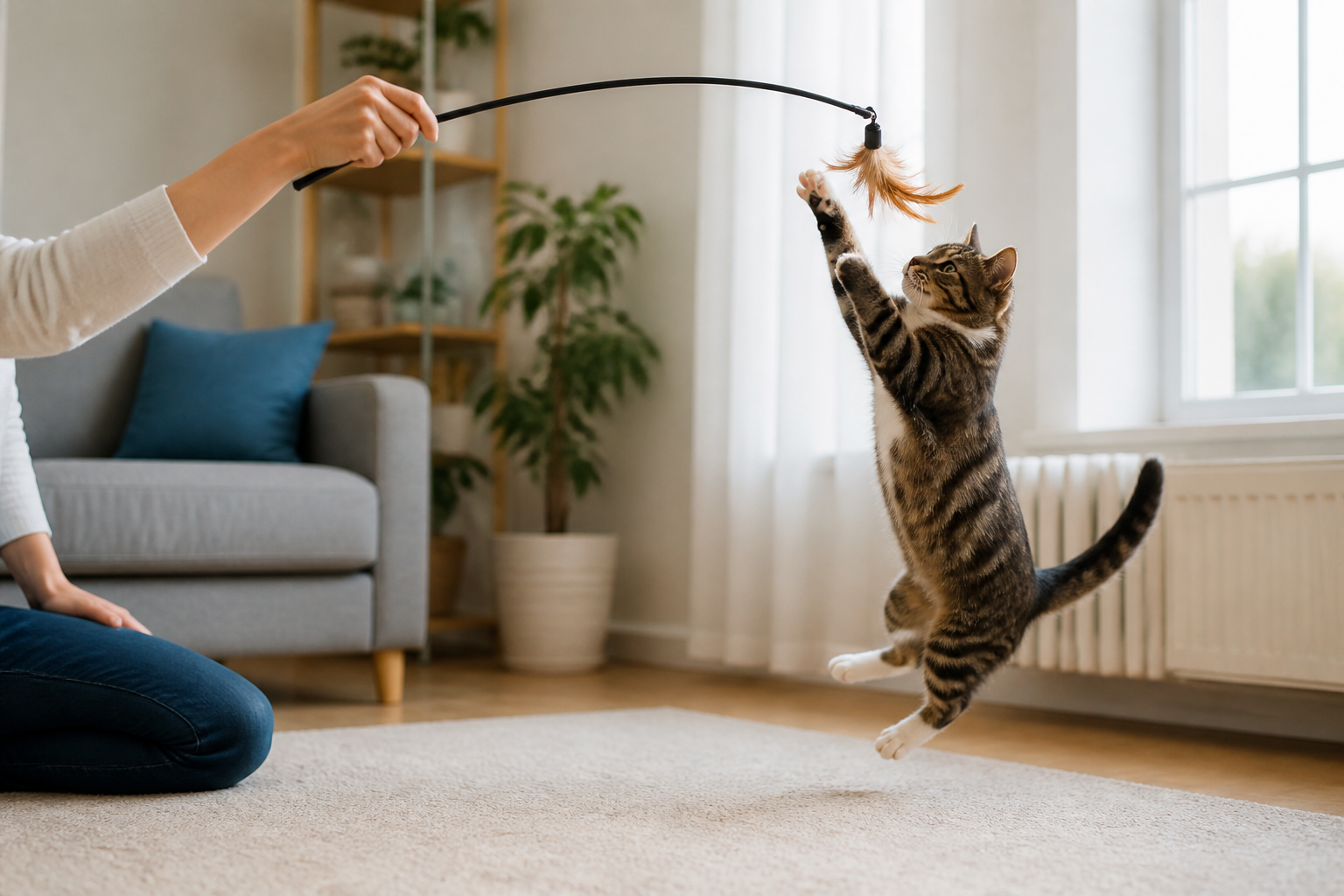
If you feed, open the door, or fuss your cat the moment it meows, you teach it that meowing works , and cats will escalate if a quiet meow stops paying off. To reduce demand-meowing, reward quiet: give attention and food when your cat is calm, not mid-meow. Never punish meowing; it raises stress and can worsen it. Instead, meet genuine needs proactively with routine feeding, play and enrichment.
Scheduled play and attention often reduce attention-seeking meowing.
When meowing signals illness
A notable change in vocalising is the key warning sign. Increased, especially night-time, meowing in senior cats can point to hyperthyroidism, high blood pressure, kidney disease, or cognitive dysfunction (feline dementia). Hunger from an overactive thyroid, pain, deafness, or disorientation can all drive new yowling. Any cat that suddenly becomes much more vocal , or whose meow changes in tone , should be examined.
Living context by region
This guide is written for multi-region English readers (US/UK/AU/NZ/CA/EU and more). Where climate, products, or vet access differ, prefer local veterinary advice and local product labels. Use metric first; keep °F/lb in mind for North American homes.
When to call your vet
-
Signs are getting worse over hours, not better
-
Pain, persistent vomiting/diarrhea, or neurological signs
-
You needed force or guesswork to keep going at home
Common mistakes
-
Waiting because the animal 'still looks okay' while prey species hide pain
-
Changing five variables at once so you cannot tell what helped
-
Copying drug doses from social media
-
Skipping species-appropriate husbandry while buying more gadgets
FAQ
Are some cat breeds just more vocal?
Should I ignore my cat's meowing?
Why does my cat meow more at night?
Does neutering reduce meowing?
My highlights & notes
This article is for general education and is not a substitute for professional veterinary advice. If your pet is unwell, please consult a veterinarian.
Worried about your pet?
Peqaboo’s AI helps you track symptoms, understand lab reports, and know when to see a vet.
Get the Peqaboo app