

Eastern Box Turtle Care Guide: A Terrestrial Turtle's Setup
Eastern box turtles are land-dwelling turtles, not swimmers, so they need a large, humid, planted floor enclosure rather than an aquarium. This guide covers housing, humidity, temperature, UVB and their omnivorous diet, plus why they need stability and patience.

Quick answer

Eastern Box Turtle Care Guide: A Terrestrial Turtle's Setup
An eastern box turtle is a terrestrial turtle that needs a big, humid, planted enclosure with deep substrate, hides, a shallow water dish, a basking spot and UVB, and a varied omnivorous diet. Do not house them in water like aquatic turtles. With good care they can live 30-50 years or more.
- Terrestrial, not aquatic: they walk and forage on land and only soak in shallow water.
- Adult size: around 10-18 cm shell length, with a distinctive hinged, closing shell.
- Long lived: 30-50 years is common, and some live much longer.
- They dislike frequent handling and relocation; stability keeps them healthy.
- Species
- turtle, reptile
- Category
- environment
- Risk level
- low
- Content focus
- practical owner decisions + mechanism
- When to escalate
- same-day if pain, not eating, breathing issues, or rapid decline
Decide in 60 seconds
| Situation | Do now |
|---|---|
| Mild / stable at home | Follow steps in this guide and monitor for 12–24 hours |
| Not eating, hiding, or clear pain | Same-day vet (species-savvy if exotic) |
| Breathing hard, collapse, continuous distress | Emergency vet now |
| You are unsure after reading | Call a clinic with your notes rather than waiting days |
Housing: floor space, not water
Box turtles need horizontal room to roam. An adult should have a large ground-level enclosure, ideally a planted outdoor pen in a suitable climate or a big indoor tortoise table or terrarium. Aim for as much floor area as you can give, with a secure, low barrier they cannot climb or dig under. A tall glass fish tank is a poor choice; it restricts airflow and floor space.

Box turtles need a large, humid, planted floor space with hides, not an aquarium.
Use a deep, moisture-holding substrate such as a mix of topsoil, coconut fibre and leaf litter so they can burrow. Add plenty of hides, live or sturdy plants, and cork bark. A cluttered, planted layout makes a box turtle feel secure and encourages natural foraging.
Humidity and water
Humidity is central. Box turtles come from woodland habitats and need a humid microclimate, generally 60-80 percent, with damp substrate and daily misting as needed. In dry indoor air, chronic low humidity causes dehydration, eye problems and shell issues. In humid climates like Hong Kong and Taiwan, the challenge shifts to keeping the enclosure ventilated and mould-free rather than adding moisture.
Always provide a shallow water dish large enough for the turtle to sit in and soak but not so deep it could drown. Change the water daily since they often defecate in it.
Temperature and UVB
Provide a basking spot of about 29-32C at one end and a cooler zone around 22-25C at the other, so the turtle can thermoregulate. Nights can be cooler. Offer UVB lighting for vitamin D3 and calcium metabolism, especially for indoor turtles that never see direct sun. Replace UVB lamps on schedule.
Feeding an omnivore
Eastern box turtles are true omnivores, and juveniles are especially protein-hungry.
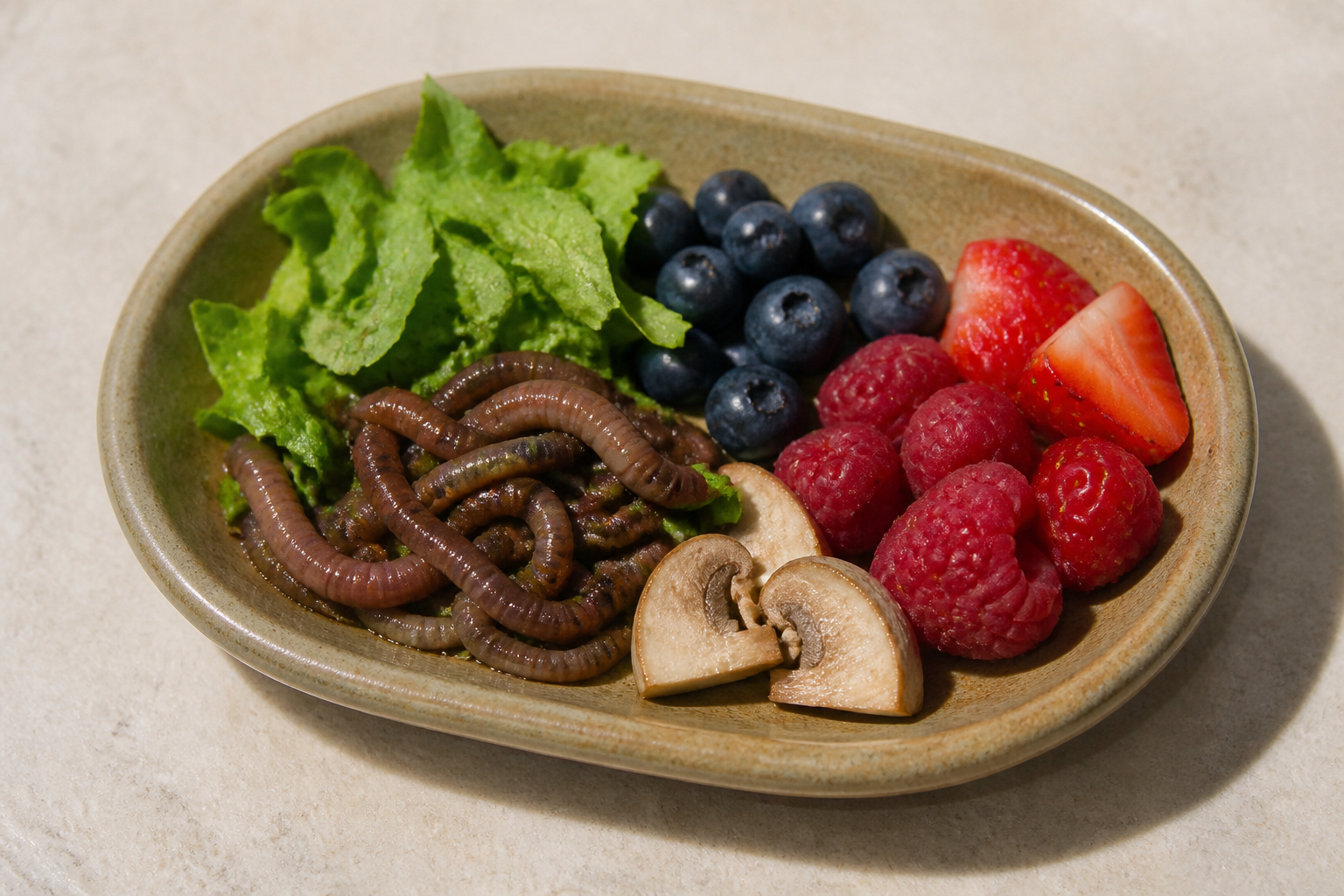
Box turtles are omnivores: mix protein like earthworms with greens, vegetables and some fruit.
Build the diet from a rotating mix: protein such as earthworms, snails and appropriate insects; leafy greens and vegetables; and a smaller portion of fruit and the occasional mushroom. Dust food with calcium regularly, and use a reptile multivitamin as advised. Variety is key, a monotonous diet leads to deficiencies. Avoid processed human food and excess fruit.
Stability and handling
Box turtles are creatures of habit with strong homing instincts and can become stressed by frequent handling, moves or a chaotic enclosure. Handle them minimally and gently, keep their setup consistent, and give them plenty of hiding options. A calm, stable, humid home is what keeps them thriving for decades.
Living context by region
This guide is written for multi-region English readers (US/UK/AU/NZ/CA/EU and more). Where climate, products, or vet access differ, prefer local veterinary advice and local product labels. Use metric first; keep °F/lb in mind for North American homes.
When to call your vet
-
Signs are getting worse over hours, not better
-
Pain, persistent vomiting/diarrhea, or neurological signs
-
You needed force or guesswork to keep going at home
Common mistakes
-
Waiting because the animal 'still looks okay' while prey species hide pain
-
Changing five variables at once so you cannot tell what helped
-
Copying drug doses from social media
-
Skipping species-appropriate husbandry while buying more gadgets
FAQ
Can eastern box turtles swim?
Do box turtles need UVB?
Why won't my box turtle eat?
How long do box turtles live?
My highlights & notes
This article is for general education and is not a substitute for professional veterinary advice. If your pet is unwell, please consult a veterinarian.
Worried about your pet?
Peqaboo’s AI helps you track symptoms, understand lab reports, and know when to see a vet.
Get the Peqaboo app