

Your Puppy's First Walk Outside: How to Keep It Safe and Positive
A puppy's first outings shape how it sees the world for life. Learn how to time outdoor exposure around your vet's vaccination schedule, choose the right gear, keep early walks short and positive, and socialise gently without overwhelming your puppy.

Quick answer

Your Puppy's First Walk Outside: How to Keep It Safe and Positive
First outings are about quality, not distance. Your puppy is forming lifelong impressions, so the goal is calm, positive, and short experiences rather than a long or exciting walk. Before your puppy has full vaccine protection, follow your vet's advice on where it is safe to go, and use carrying or quiet low-traffic spots to let it watch the world safely. Bring treats, keep sessions brief, and let your puppy set the pace. A relaxed first walk builds a confident adult dog.
- The prime socialisation window is roughly three to sixteen weeks, when good experiences matter most.
- Follow your own vet's vaccination schedule before allowing full contact with public ground and unknown dogs.
- First sessions should be short, a few minutes is plenty, and end while your puppy is still happy.
- A well-fitted harness is usually gentler and more secure than a collar for a small puppy.
- Let your puppy explore at its own pace; never drag, rush, or force it toward something scary.
- Species
- dog
- Category
- training
- Risk level
- low
- Content focus
- practical owner decisions + mechanism
- When to escalate
- same-day if pain, not eating, breathing issues, or rapid decline
Decide in 60 seconds
| Situation | Do now |
|---|---|
| Mild / stable at home | Follow steps in this guide and monitor for 12–24 hours |
| Not eating, hiding, or clear pain | Same-day vet (species-savvy if exotic) |
| Breathing hard, collapse, continuous distress | Emergency vet now |
| You are unsure after reading | Call a clinic with your notes rather than waiting days |
Time it around your vet's schedule
Puppies are vulnerable to certain infections before their vaccinations have taken full effect, and some of those diseases are picked up from ground where other dogs have been. This does not mean your puppy should stay locked indoors, because the socialisation window is also closing during these weeks. The balance is to follow your own vet's vaccination schedule for when full public exposure is safe, while still giving your puppy gentle experiences in lower-risk ways. Ask your vet specifically when your puppy can walk freely in public areas.
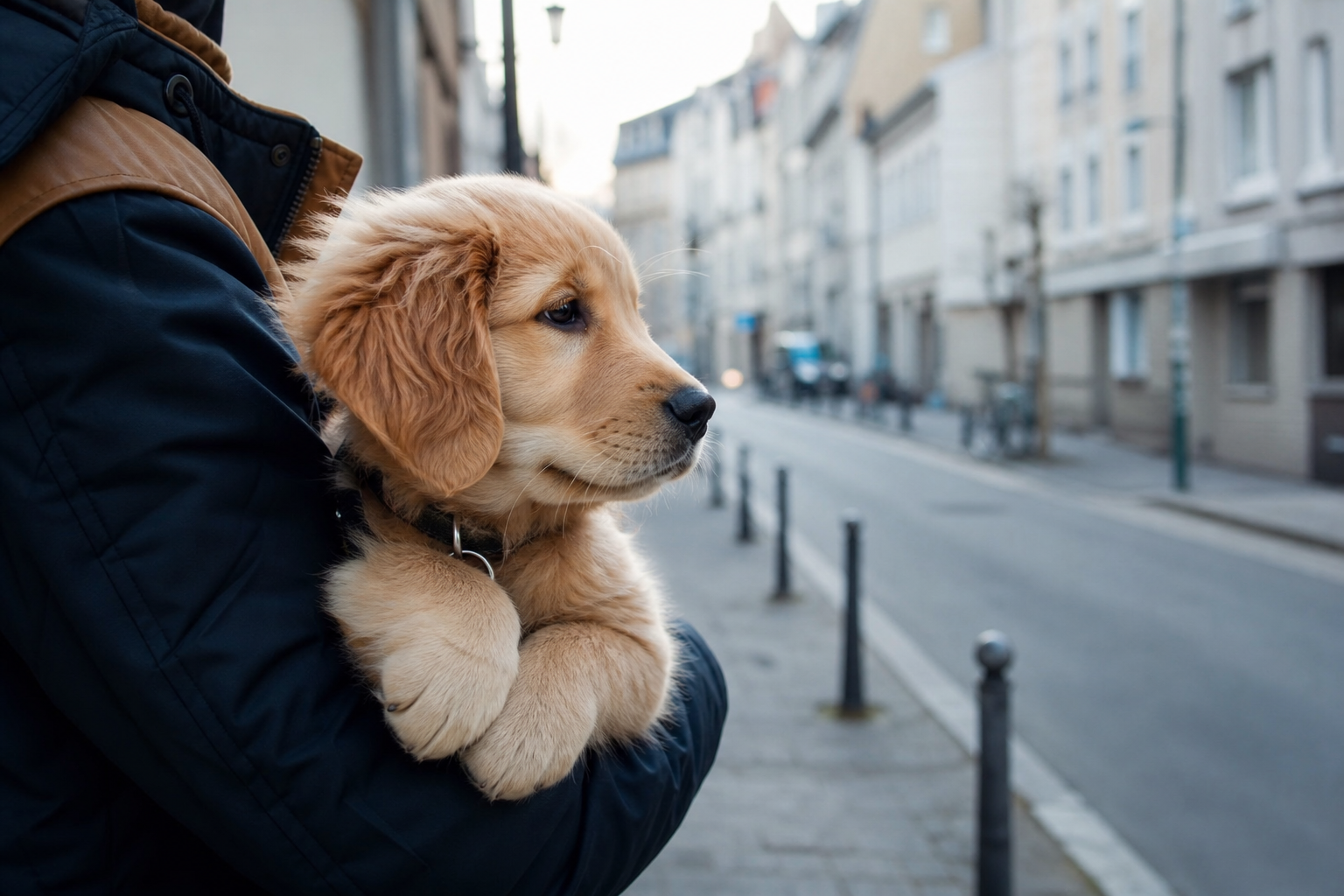
Before full vaccination, carrying lets your puppy watch and learn without ground risk.
Gear that keeps things calm
Good equipment makes the first walk easier. A well-fitted harness spreads pressure across the chest rather than the neck and gives you secure, gentle control. Attach a light, standard-length leash, not a retractable one, so your puppy learns to stay near you. Make sure identification is in order according to local rules. Bring a pouch of small, soft treats your puppy loves, because these are your main tool for building good feelings about the outdoors.
Keep the first walks positive
Start small and unremarkable. A quiet street, your own garden, or a calm corner is more valuable than an exciting destination. Let your puppy sniff, look around, and approach new things in its own time. Every time it notices something new, a passing person, a strange sound, offer a treat so the new thing predicts something good. Keep the first sessions to just a few minutes and finish while your puppy is still relaxed and curious, never once it is tired or overwhelmed.
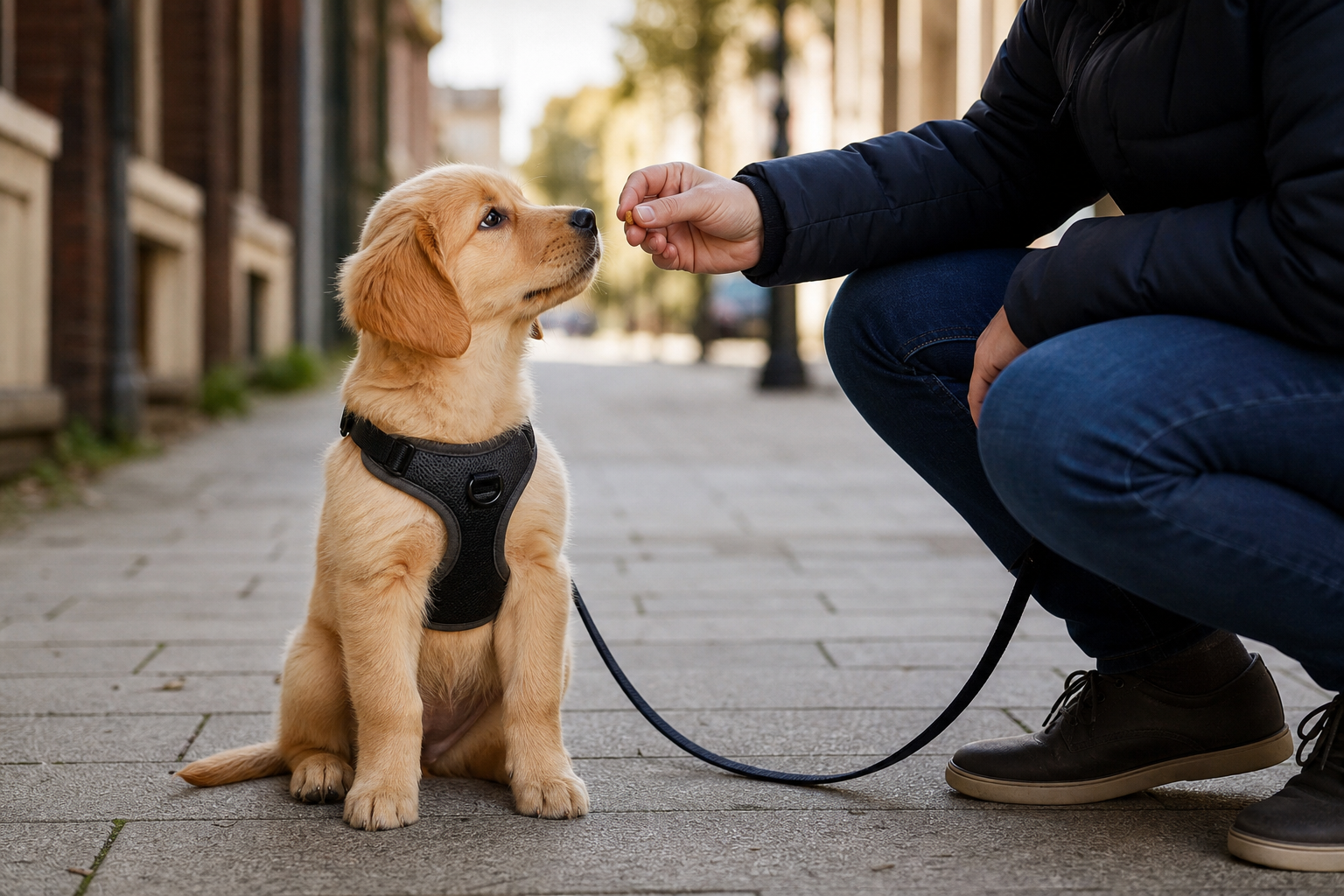
Pair new sights and sounds with tasty treats so the outside world feels safe.
Socialise gently, without over-exposure
Socialisation means positive, manageable experiences, not flooding your puppy with everything at once. Aim for a wide but gentle variety over the weeks: different surfaces, sounds, calm and vaccinated friendly dogs, and polite people. Watch your puppy's body language closely. Signs of stress such as tucking the tail, freezing, cowering, or trying to retreat mean it is time to add distance or head home. One or two good encounters a day beat a single overwhelming outing.
Living context by region
This guide is written for multi-region English readers (US/UK/AU/NZ/CA/EU and more). Where climate, products, or vet access differ, prefer local veterinary advice and local product labels. Use metric first; keep °F/lb in mind for North American homes.
When to call your vet
-
Signs are getting worse over hours, not better
-
Pain, persistent vomiting/diarrhea, or neurological signs
-
You needed force or guesswork to keep going at home
Common mistakes
-
Waiting because the animal 'still looks okay' while prey species hide pain
-
Changing five variables at once so you cannot tell what helped
-
Copying drug doses from social media
-
Skipping species-appropriate husbandry while buying more gadgets
FAQ
When can my puppy walk freely in public?
Should I carry my puppy before then?
My puppy froze and would not move. What now?
How long should the first walk be?
My highlights & notes
This article is for general education and is not a substitute for professional veterinary advice. If your pet is unwell, please consult a veterinarian.
Worried about your pet?
Peqaboo’s AI helps you track symptoms, understand lab reports, and know when to see a vet.
Get the Peqaboo app