

Crate Training Step by Step: Make the Crate a Safe Den
Done kindly, a crate becomes your puppy's own safe den, a place it chooses to rest, not a cage. This step-by-step guide shows you how to build happy crate associations, handle the first few nights and night-crying, and avoid the mistakes that make a puppy fear the crate.

Quick answer

Crate Training Step by Step: Make the Crate a Safe Den
Crate training works when the crate always predicts good things and is never used as punishment. Feed and treat your puppy inside, build up time in small steps, and only close the door once it settles happily. For the first nights, place the crate near your bed so a lonely puppy feels safe and cries less.
- Species
- dog
- Category
- training
- Risk level
- low
- Content focus
- practical owner decisions + mechanism
- When to escalate
- same-day if pain, not eating, breathing issues, or rapid decline
Decide in 60 seconds
| Situation | Do now |
|---|---|
| Mild / stable at home | Follow steps in this guide and monitor for 12–24 hours |
| Not eating, hiding, or clear pain | Same-day vet (species-savvy if exotic) |
| Breathing hard, collapse, continuous distress | Emergency vet now |
| You are unsure after reading | Call a clinic with your notes rather than waiting days |
Why crate training helps
Dogs naturally seek a small, enclosed den to rest in. A well-introduced crate gives your puppy a safe place to switch off, helps enormously with toilet training, and keeps it safe when you can't supervise. In a small flat, it also gives an over-tired puppy a defined spot to sleep rather than the whole living room.
The key word is well-introduced. A crate is only kind if your puppy learns to love it, never if it's shut in a strange box and left to panic.
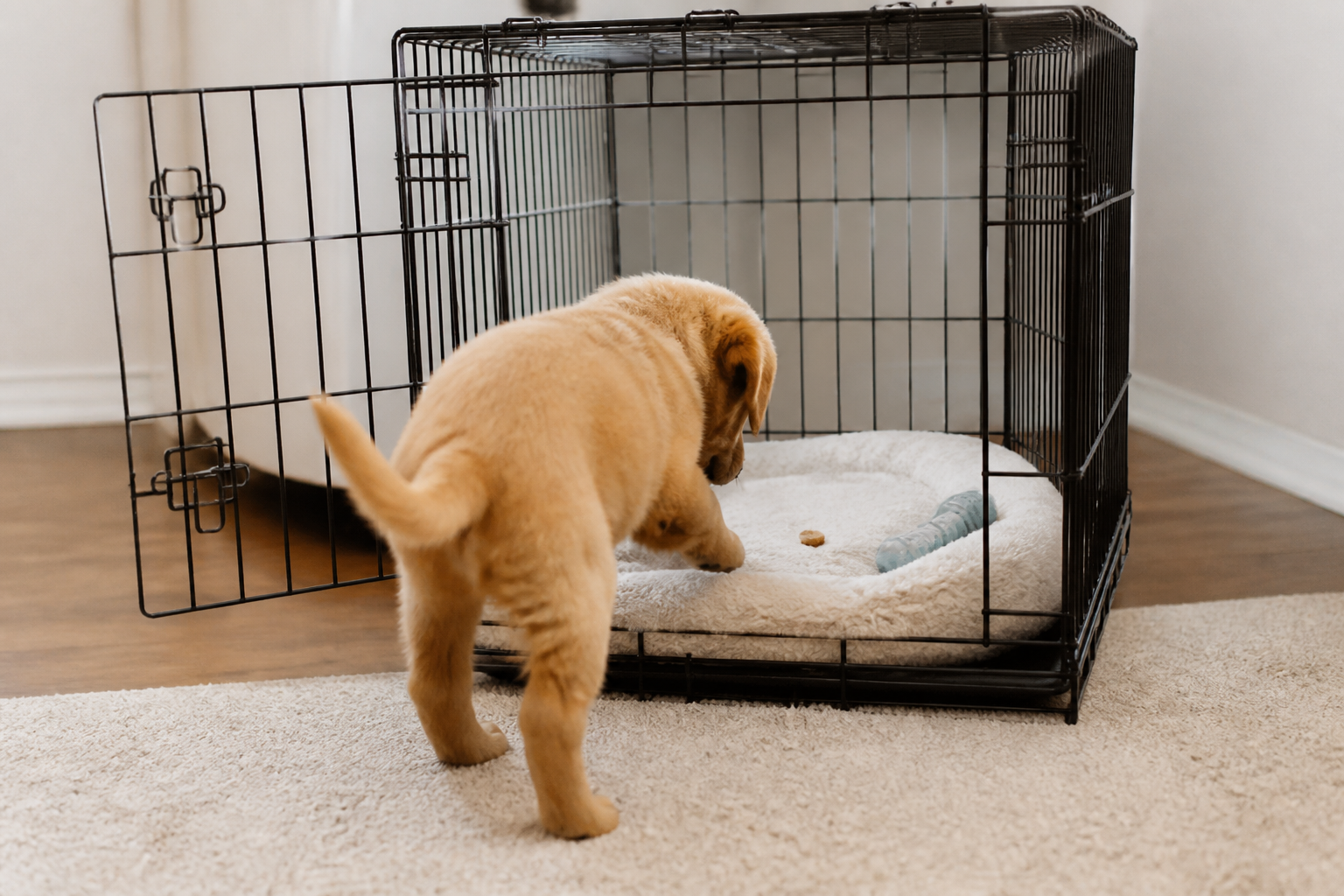
Step 1: Make the crate inviting
Set up the crate with a soft blanket and leave the door open. Toss treats inside and let your puppy explore freely, with no pressure and no shutting the door. Feed meals just inside, then fully inside, so the crate becomes the place good things appear.
Let your puppy choose to go in for treats before you ever close the door.
Step 2: Build up time gradually
Once your puppy happily goes in, close the door for a few seconds while it eats, then open it. Slowly extend the time, staying nearby at first, then stepping away briefly. Give a stuffed chew for longer settles. Always aim to open the door before your puppy gets anxious, not after it starts crying.
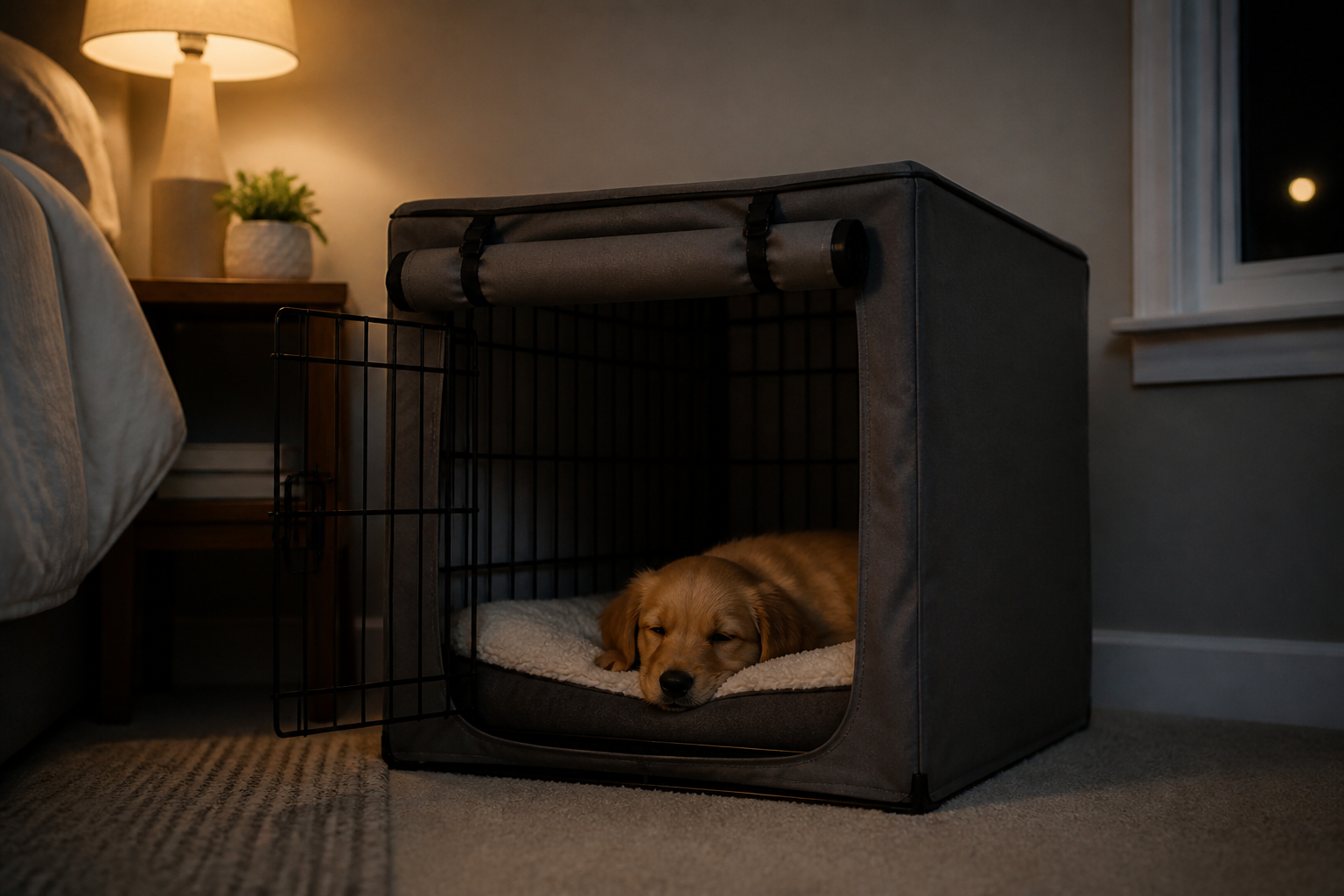
Step 3: The first few nights
Night-crying is usually loneliness, not defiance. Place the crate beside your bed so your puppy can hear and smell you. A covered crate feels more den-like and secure. Expect to get up for toilet breaks; a young puppy simply can't last all night.
A covered crate near you at night helps a puppy feel secure and cry less.
If it cries, a calm, quiet reassurance or a toilet trip is fine, but avoid turning night-waking into an exciting play session. Over a week or two, most puppies settle and you can gradually move the crate to its permanent spot.
Living context by region
This guide is written for multi-region English readers (US/UK/AU/NZ/CA/EU and more). Where climate, products, or vet access differ, prefer local veterinary advice and local product labels. Use metric first; keep °F/lb in mind for North American homes.
When to call your vet
-
Signs are getting worse over hours, not better
-
Pain, persistent vomiting/diarrhea, or neurological signs
-
You needed force or guesswork to keep going at home
Common mistakes
-
Waiting because the animal 'still looks okay' while prey species hide pain
-
Changing five variables at once so you cannot tell what helped
-
Copying drug doses from social media
-
Skipping species-appropriate husbandry while buying more gadgets
FAQ
How long can a puppy stay in a crate?
Should I ignore crate crying at night?
My puppy hates the crate already. Can I fix it?
Do I need to cover the crate?
My highlights & notes
This article is for general education and is not a substitute for professional veterinary advice. If your pet is unwell, please consult a veterinarian.
Worried about your pet?
Peqaboo’s AI helps you track symptoms, understand lab reports, and know when to see a vet.
Get the Peqaboo app