

Multi-Level Cage Setup for Chinchillas
Chinchillas are athletic climbers and jumpers that need vertical space, cool air and safe surfaces underfoot. This guide walks you through choosing a tall cage, arranging ledges to prevent falls, and adding the wheel, hide and dust bath that make a healthy chinchilla home.

Quick answer
Multi-Level Cage Setup for Chinchillas
Chinchillas need a tall, wire-sided cage with several solid wooden or metal ledges at staggered heights so they can jump and climb safely. Aim for the largest footprint and height you can fit, ideally at least 90cm tall with multiple levels. Keep it in the coolest, quietest room, add a large solid wheel, a hide, hay and safe chew items, and avoid plastic and wire-mesh floors.
- Species
- chinchilla
- Category
- environment
- Risk level
- low
- Content focus
- practical owner decisions + mechanism
- When to escalate
- same-day if pain, not eating, breathing issues, or rapid decline
Decide in 60 seconds
| Situation | Do now |
|---|---|
| Mild / stable at home | Follow steps in this guide and monitor for 12–24 hours |
| Not eating, hiding, or clear pain | Same-day vet (species-savvy if exotic) |
| Breathing hard, collapse, continuous distress | Emergency vet now |
| You are unsure after reading | Call a clinic with your notes rather than waiting days |
Start with the right cage
Chinchillas are built to leap several times their body length, so height and climbing routes matter more than floor area alone. Choose a cage with a wide, deep base and vertical space for at least two or three levels. Bar spacing should be about 1.5cm or less so a chinchilla cannot get its head stuck. Wire is better than an all-glass tank or plastic bin, chinchillas overheat easily and need airflow, and they will chew through plastic in minutes. A deep pull-out tray under a wire floor makes cleaning easier while keeping the living surface solid.

Arrange the levels to prevent falls
The most common cage injury is a broken leg from a bad landing, so plan the platforms carefully.
Stagger ledges so falls are short, chinchillas leap far but land hard.
Stagger the ledges rather than stacking them directly above one another, so a slip results in a short drop to the next shelf, not a long fall to the base. Use solid kiln-dried pine or apple wood ledges, or metal ledges you can wipe clean, and vary their heights to create interesting climbing routes. Leave clear vertical corridors for jumping, and put a thick layer of soft bedding or a fleece liner on the cage floor to cushion any fall. Avoid ledges directly over the wheel or water bottle where a fall could cause injury.
Add the essentials
Once the structure is safe, kit it out for a chinchilla's daily needs.
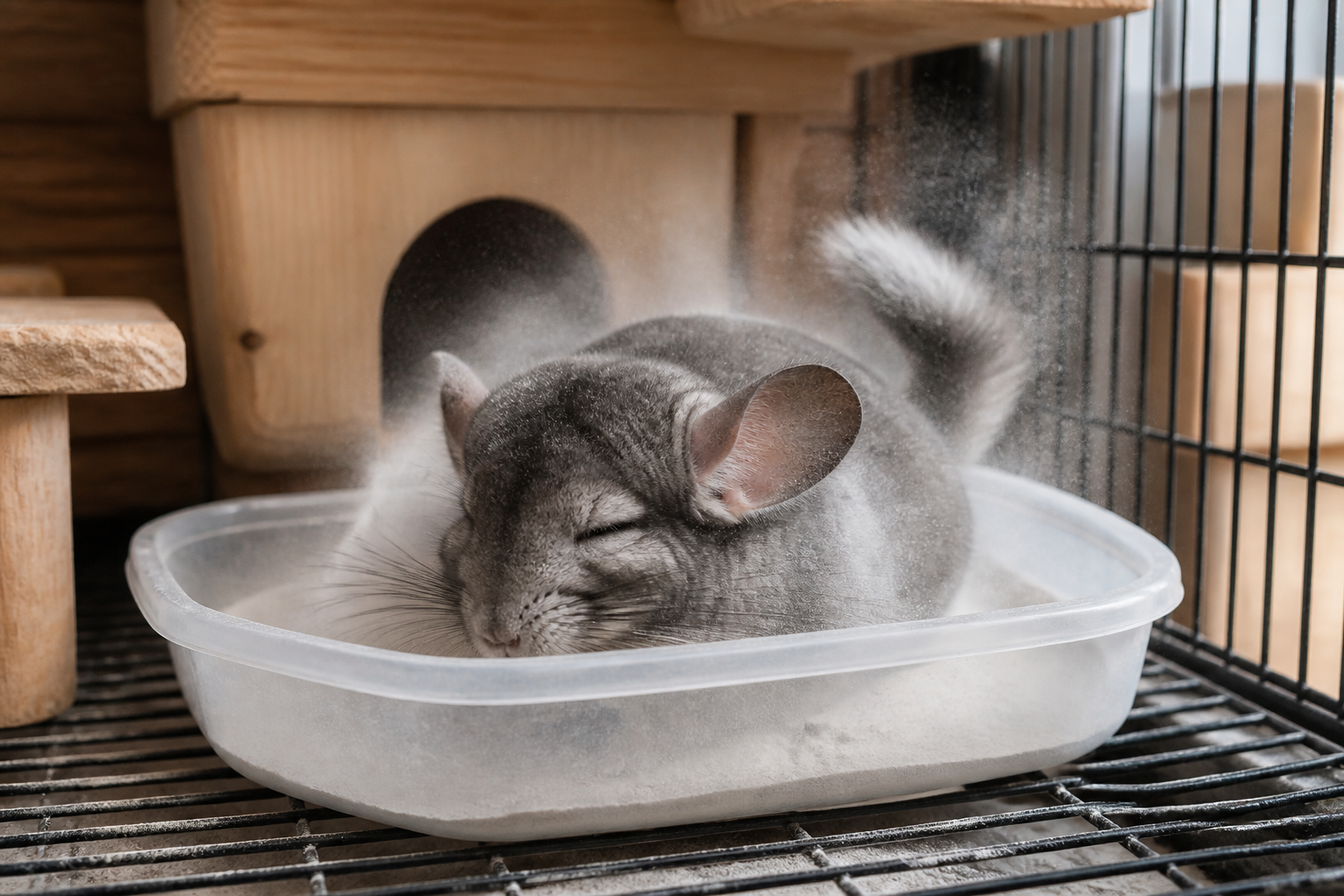
Offer a dust bath a few times a week, not left in permanently.
Include a large solid-surface exercise wheel (at least 30cm across, no rungs or mesh that can catch toes and tails), a wooden or ceramic hide for security, and a hay rack kept constantly full of grass hay. Provide a heavy ceramic food bowl, a water bottle checked daily, and plenty of safe wooden chews to wear down teeth. Offer a dust bath a few times a week in a deep container of fine chinchilla bathing dust, remove it after 10 to 15 minutes so it does not become soiled or cause dry, irritated eyes.
Place the cage well
Where the cage lives is as important as what is in it. Chinchillas originate from cool, dry mountains and are extremely sensitive to heat and humidity, a real challenge in a warm Hong Kong flat. Keep the cage in the coolest, most stable room, out of direct sun and away from windows, kitchens and heat-producing electronics. In humid or hot months, air conditioning is often necessary; aim to keep the room reliably below 25C. Choose a quiet spot too, chinchillas are crepuscular and nervous, and constant noise or foot traffic causes chronic stress.
Living context by region
This guide is written for multi-region English readers (US/UK/AU/NZ/CA/EU and more). Where climate, products, or vet access differ, prefer local veterinary advice and local product labels. Use metric first; keep °F/lb in mind for North American homes.
When to call your vet
-
Signs are getting worse over hours, not better
-
Pain, persistent vomiting/diarrhea, or neurological signs
-
You needed force or guesswork to keep going at home
Common mistakes
-
Waiting because the animal 'still looks okay' while prey species hide pain
-
Changing five variables at once so you cannot tell what helped
-
Copying drug doses from social media
-
Skipping species-appropriate husbandry while buying more gadgets
FAQ
How tall should a chinchilla cage be?
Can I use a solid wheel with rungs?
Do chinchillas need a wire or solid floor?
How often should I clean the cage?
My highlights & notes
This article is for general education and is not a substitute for professional veterinary advice. If your pet is unwell, please consult a veterinarian.
Worried about your pet?
Peqaboo’s AI helps you track symptoms, understand lab reports, and know when to see a vet.
Get the Peqaboo app