

Box Turtle Diet Guide: Omnivore Balance Through the Seasons
Box turtles are true omnivores whose needs shift with age and season. This guide covers the right ratio of plants to protein, safe fruits and vegetables, calcium and vitamin A, and how to feed juveniles versus adults so your turtle keeps a smooth shell and steady weight.

Quick answer

Box Turtle Diet Guide: Omnivore Balance Through the Seasons
Box turtles are omnivores: adults do best on a plant-heavy mix with regular animal protein, while juveniles need more protein to grow. Aim for variety across leafy greens, vegetables, occasional fruit, and protein sources such as earthworms and insects, all supported by calcium and adequate vitamin A. Feed in the morning after your turtle has warmed up.
- Species
- turtle, reptile
- Category
- nutrition
- Risk level
- low
- Content focus
- practical owner decisions + mechanism
- When to escalate
- same-day if pain, not eating, breathing issues, or rapid decline
Decide in 60 seconds
| Situation | Do now |
|---|---|
| Mild / stable at home | Follow steps in this guide and monitor for 12–24 hours |
| Not eating, hiding, or clear pain | Same-day vet (species-savvy if exotic) |
| Breathing hard, collapse, continuous distress | Emergency vet now |
| You are unsure after reading | Call a clinic with your notes rather than waiting days |
The omnivore ratio
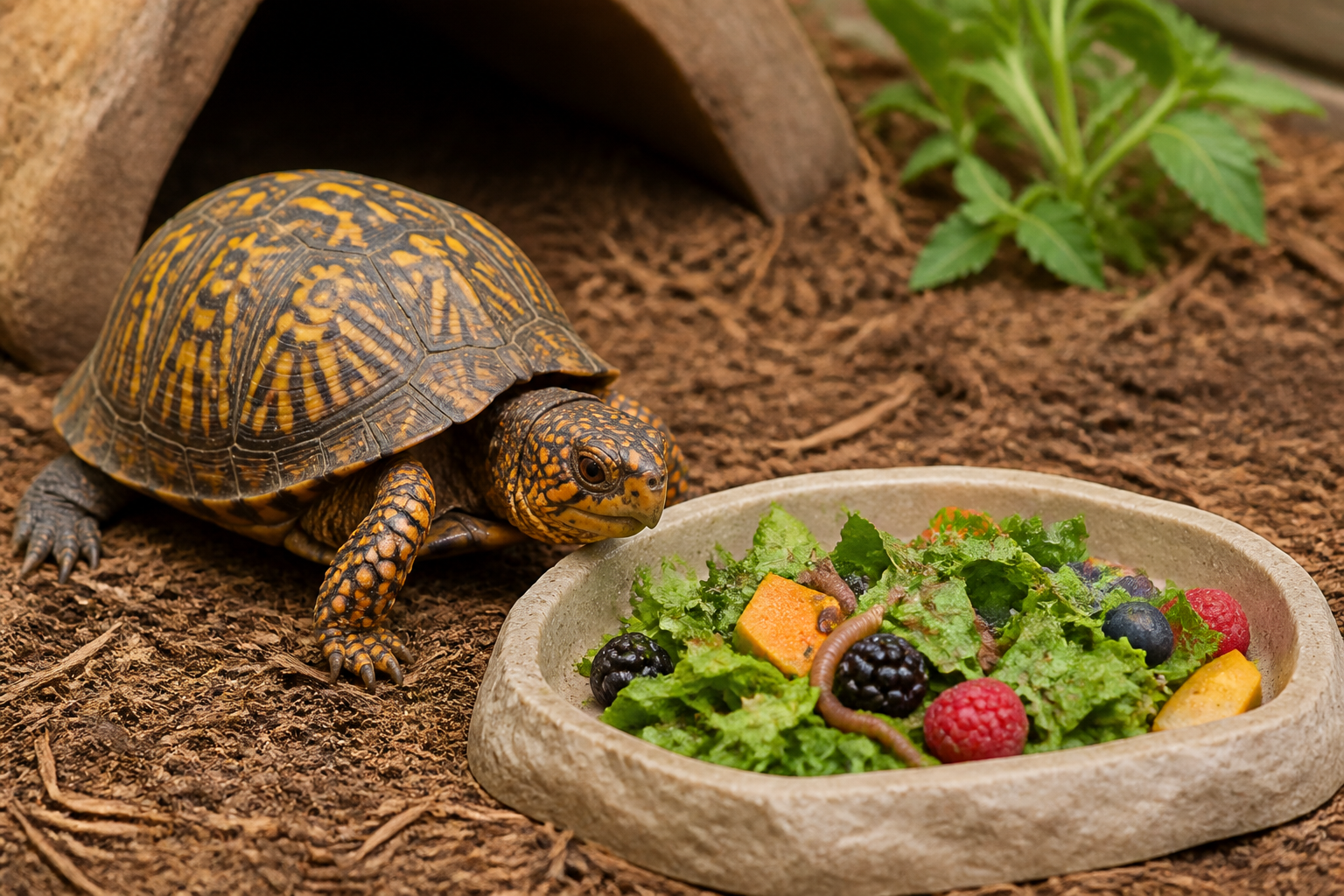
The practical rule for a healthy adult box turtle is roughly half plant matter, a good share of protein, and a smaller share of fruit. Young, fast-growing turtles lean more toward protein, sometimes close to an even split with plants. As they mature, shift the balance toward greens and vegetables so they do not grow too fast or lay down excess fat.
Best plants and vegetables
Make dark leafy greens the base: dandelion greens, collard, mustard greens, endive, and other sturdy leaves. Add colourful vegetables such as squash, bell pepper, grated carrot, and green beans for vitamin variety. Avoid making iceberg lettuce or spinach the staple, as they offer little nutrition or bind calcium. Rotate items so no single food dominates.
A balanced adult meal: mostly greens and vegetables, some protein, and a little fruit as a treat.
Protein sources done right
Good protein options include earthworms, dubia roaches, crickets, black soldier fly larvae, and slugs or snails from a pesticide-free source. Occasional cooked lean meat or a high-quality commercial turtle food can supplement, but live and whole invertebrates are ideal because they encourage natural foraging. Gut-load feeder insects before offering them so the nutrition passes to your turtle.
Fruit, treats, and what to avoid
Small amounts of berries, melon, and soft fruit are excellent for enrichment and can help tempt a picky eater. Keep fruit to a modest share of the diet. Avoid avocado, rhubarb, and anything from a garden treated with pesticides or slug bait, which can be toxic. Dog and cat food are too rich in fat and protein for regular feeding.
Calcium, vitamin A, and lighting
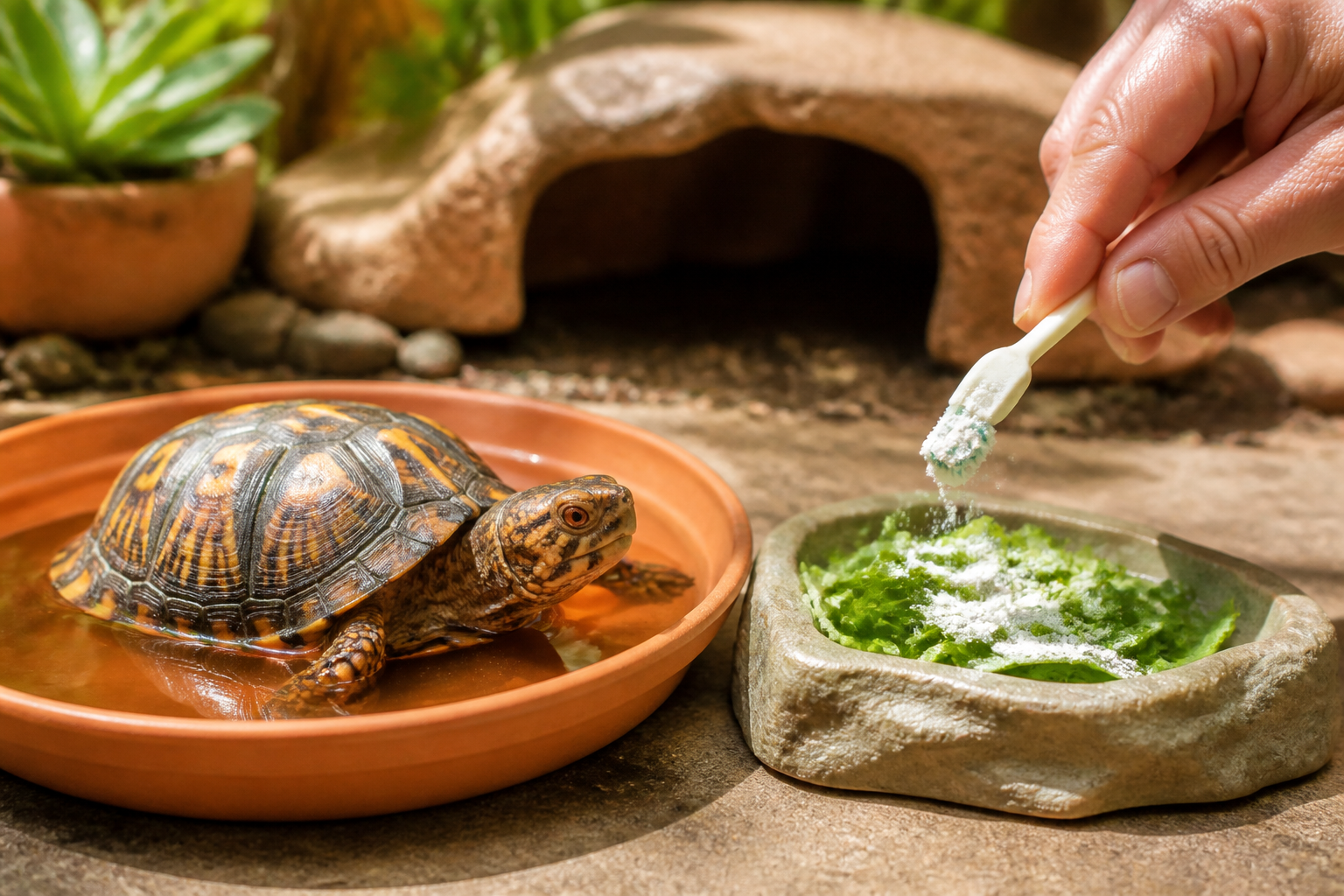
Dust food with a plain calcium supplement a few times a week, and use a light vitamin or vitamin A source on a schedule, since deficiency is common in box turtles. Calcium only works with proper UVB lighting or genuine sunlight, which lets the turtle make vitamin D3 and absorb calcium for a strong, smooth shell. A cuttlebone left in the enclosure lets them self-supplement.
Dust food with calcium and offer regular shallow soaks to support shell health and hydration.
Feeding through the seasons
Box turtles are seasonal animals. In warmer months they eat heartily and forage actively; as temperatures drop, appetite naturally falls, and some keepers brumate their turtles under veterinary guidance. Never let a turtle enter brumation while underweight or sick. If you keep your turtle warm year-round instead, maintain steady feeding but watch weight so it does not creep up.
Living context by region
This guide is written for multi-region English readers (US/UK/AU/NZ/CA/EU and more). Where climate, products, or vet access differ, prefer local veterinary advice and local product labels. Use metric first; keep °F/lb in mind for North American homes.
When to call your vet
-
Signs are getting worse over hours, not better
-
Pain, persistent vomiting/diarrhea, or neurological signs
-
You needed force or guesswork to keep going at home
Common mistakes
-
Waiting because the animal 'still looks okay' while prey species hide pain
-
Changing five variables at once so you cannot tell what helped
-
Copying drug doses from social media
-
Skipping species-appropriate husbandry while buying more gadgets
FAQ
Can box turtles live on vegetables alone?
How often should I feed my box turtle?
Is fruit bad for box turtles?
Why is my turtle's shell getting bumpy?
My highlights & notes
This article is for general education and is not a substitute for professional veterinary advice. If your pet is unwell, please consult a veterinarian.
Worried about your pet?
Peqaboo’s AI helps you track symptoms, understand lab reports, and know when to see a vet.
Get the Peqaboo app