

Perches Matter: Choosing the Right Types and Diameters for Healthy Feet
Perches are not just cage furniture , the wrong ones cause sore, arthritic feet and painful pressure sores. Healthy feet need a variety of natural perches in different diameters and textures, placed at different heights. This guide explains which perches to use, which to avoid, and how to get the sizing right.

Quick answer

Perches Matter: Choosing the Right Types and Diameters for Healthy Feet
Birds stand on their feet all day, so perches directly affect their comfort and long-term health. The single best choice is several natural wood perches of varying diameter and texture, placed at different heights around the cage. Avoid filling a cage with identical smooth dowels or wrapping everything in sandpaper. Variety is the whole point , it exercises the feet and prevents pressure sores.
- Species
- bird
- Category
- environment
- Risk level
- low
- Content focus
- practical owner decisions + mechanism
- When to escalate
- same-day if pain, not eating, breathing issues, or rapid decline
Decide in 60 seconds
| Situation | Do now |
|---|---|
| Mild / stable at home | Follow steps in this guide and monitor for 12–24 hours |
| Not eating, hiding, or clear pain | Same-day vet (species-savvy if exotic) |
| Breathing hard, collapse, continuous distress | Emergency vet now |
| You are unsure after reading | Call a clinic with your notes rather than waiting days |
Why perch variety matters
On a perch that is always the same diameter and perfectly smooth, a bird grips the same spot with the same part of each foot every hour of every day. Over time this causes flat spots, pressure sores and a painful foot condition called bumblefoot, as well as stiffness. Offering several diameters and textures means the feet constantly flex and shift grip, keeping muscles, tendons and skin healthy.
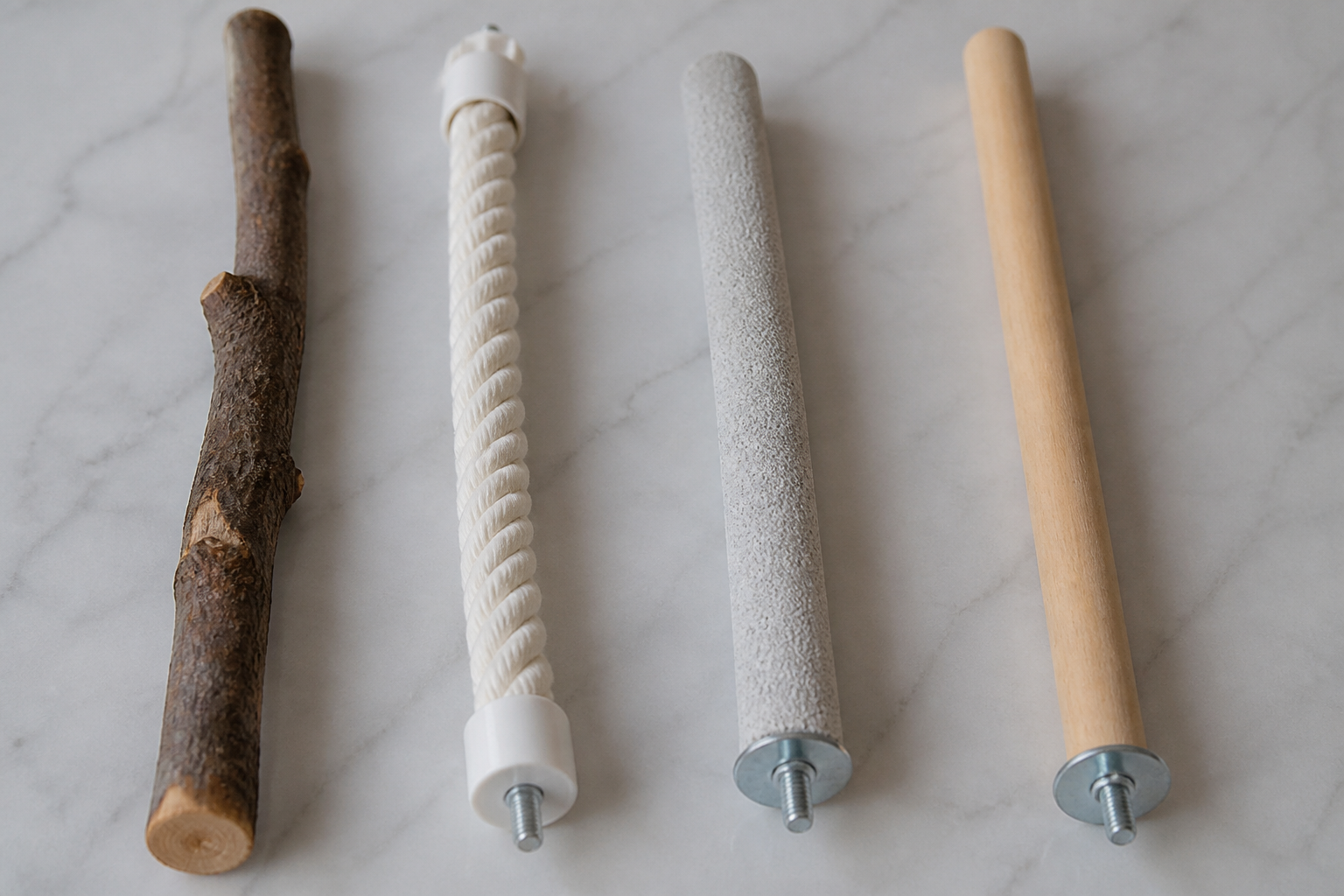
A mix of perch types and diameters exercises the feet; avoid a cage full of identical smooth dowels.
Getting the diameter right
Perch diameter should let a bird's toes wrap roughly three-quarters of the way around, not so thin that the toes fully overlap and not so thick that the foot lies almost flat. Because natural branches vary along their length, a single good branch can offer several diameters at once, which is ideal. When in doubt, offer a range and watch which perches your bird chooses to rest and sleep on.
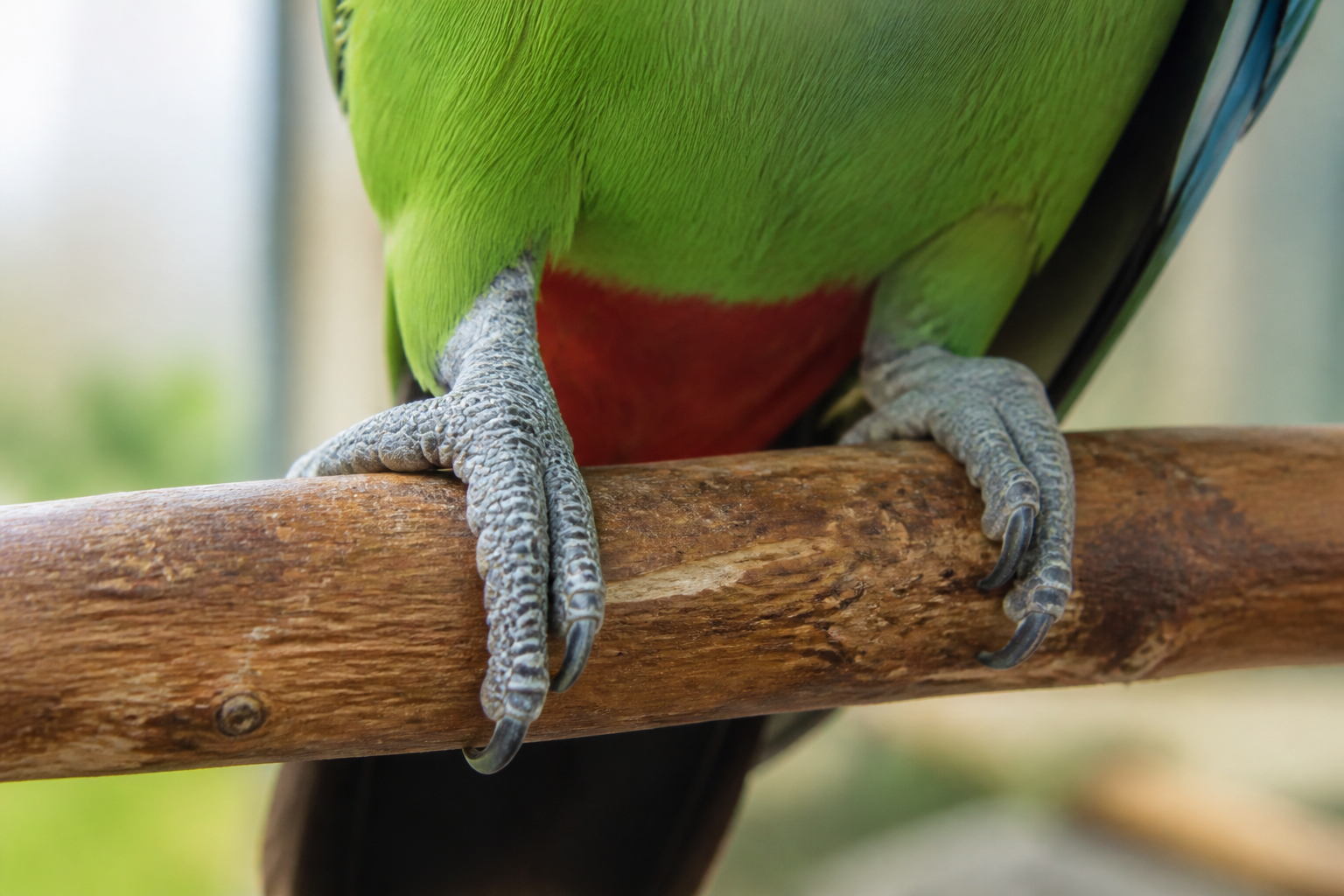
On a correctly sized perch the toes wrap about three-quarters of the way around , not flat, not fully overlapping.
The best perch materials
Natural hardwood branches, from bird-safe trees and free of pesticides, are the best everyday perch , varied, grippy and gentle on the feet. Rope perches add a soft, flexible option many birds enjoy, but trim any frayed threads that could trap a toe. A single mineral or "grooming" perch placed low can help keep nails and beak in trim, but should never be a bird's main or highest perch because the rough surface can damage the soles.
Perches to avoid or limit
Smooth plastic and all-identical wooden dowels are the commonest problem , they give no variety and can be slippery. Sandpaper perch covers, sold to trim nails, actually rub the soles raw and should not be used. Concrete grooming perches are useful in small doses but harmful as a main perch. Also skip placing perches directly over food and water dishes, where droppings will foul them.
Placement and cleaning
Spread perches through the cage at different heights, keeping the middle open for flight, and put the highest, most comfortable perch where the bird will want to sleep. Do not crowd them so tightly that the bird cannot move or flap. Wipe or scrub perches during your weekly clean, and replace natural branches when they become heavily soiled or chewed down. Rotating in a fresh branch also gives a bird welcome enrichment.
Living context by region
This guide is written for multi-region English readers (US/UK/AU/NZ/CA/EU and more). Where climate, products, or vet access differ, prefer local veterinary advice and local product labels. Use metric first; keep °F/lb in mind for North American homes.
When to call your vet
-
Signs are getting worse over hours, not better
-
Pain, persistent vomiting/diarrhea, or neurological signs
-
You needed force or guesswork to keep going at home
Common mistakes
-
Waiting because the animal 'still looks okay' while prey species hide pain
-
Changing five variables at once so you cannot tell what helped
-
Copying drug doses from social media
-
Skipping species-appropriate husbandry while buying more gadgets
FAQ
How many perches does my bird need?
Are sandpaper perches good for trimming nails?
Is standing on one foot a bad sign?
How often should I replace perches?
My highlights & notes
This article is for general education and is not a substitute for professional veterinary advice. If your pet is unwell, please consult a veterinarian.
Worried about your pet?
Peqaboo’s AI helps you track symptoms, understand lab reports, and know when to see a vet.
Get the Peqaboo app