

Molting in Birds: What's Normal, What's Not, and How to Support Feather Growth
Molting is the normal, symmetrical replacement of feathers, and it can leave a bird grumpy and sleepy for weeks. Learn what a healthy molt looks like, how to support feather growth with diet and bathing, and the bald-patch and bleeding signs that mean something is wrong.

Quick answer

Molting in Birds: What's Normal, What's Not, and How to Support Feather Growth
Molting is the normal, gradual replacement of old feathers with new ones, and healthy birds do it in a balanced, symmetrical pattern that never leaves bald patches or bleeding skin. It can make a bird a little grumpy, sleepy and quiet for a few weeks. Support it with good nutrition, warmth and gentle handling. Sudden bald spots, over-preening or bleeding are not normal molting and need a vet.
- A normal molt is gradual and symmetrical , birds never go bald or lose the ability to fly.
- New feathers arrive in "pin" form: shafts wrapped in keratin that the bird preens open.
- Molting raises protein and energy needs, so diet quality matters most during this time.
- Pin feathers on the head are itchy and out of reach, so extra gentle head scratches help.
- Bald patches, bleeding, or frantic feather-pulling are NOT normal and need an avian vet.
- Species
- bird
- Category
- health
- Risk level
- low
- Content focus
- practical owner decisions + mechanism
- When to escalate
- same-day if pain, not eating, breathing issues, or rapid decline
Decide in 60 seconds
| Situation | Do now |
|---|---|
| Mild / stable at home | Follow steps in this guide and monitor for 12–24 hours |
| Not eating, hiding, or clear pain | Same-day vet (species-savvy if exotic) |
| Breathing hard, collapse, continuous distress | Emergency vet now |
| You are unsure after reading | Call a clinic with your notes rather than waiting days |
What a normal molt looks like
Birds replace their feathers on a rolling cycle, usually once or twice a year, often tied to seasonal light and temperature changes. You will see loose feathers on the cage floor and new "pin" feathers pushing through , these look like small waxy quills, because each new feather grows sheathed in keratin. The bird preens these sheaths off, leaving flakes of white dust.
Crucially, a healthy molt is symmetrical and gradual. Your bird keeps enough feathers to stay warm and fly; it never develops bare patches of skin, and it never loses flight feathers all at once. Expect the process to take several weeks, sometimes stretching over a couple of months.

New feathers arrive as waxy pins wrapped in keratin , the bird preens the sheaths off as they grow.
Why your bird acts different during a molt
Growing feathers is hard work, so a molting bird may be quieter, sleep more, be less keen to be handled, and even a bit nippy. Emerging pin feathers, especially on the head and neck, are sensitive and itchy, and the bird cannot preen its own head. Some birds go off their usual routine or sing less. This is normal as long as the bird is still eating, drinking and passing normal droppings.
How to support feather growth
Feathers are mostly protein, so nutrition is the biggest lever.
- Feed quality protein and a balanced diet. A formulated pellet base plus vegetables, with some egg food or other protein sources as your vet advises, supports strong feather growth. An all-seed diet produces poor feathers.
- Keep humidity and bathing up. Regular misting or shallow bathing keeps skin comfortable and helps sheaths loosen.
- Provide warmth and rest. A molting bird spends energy on feathers, so avoid chills and keep a calm routine with enough sleep.
- Handle gently. Respect the "leave me alone" signals and avoid grabbing over tender pin feathers.
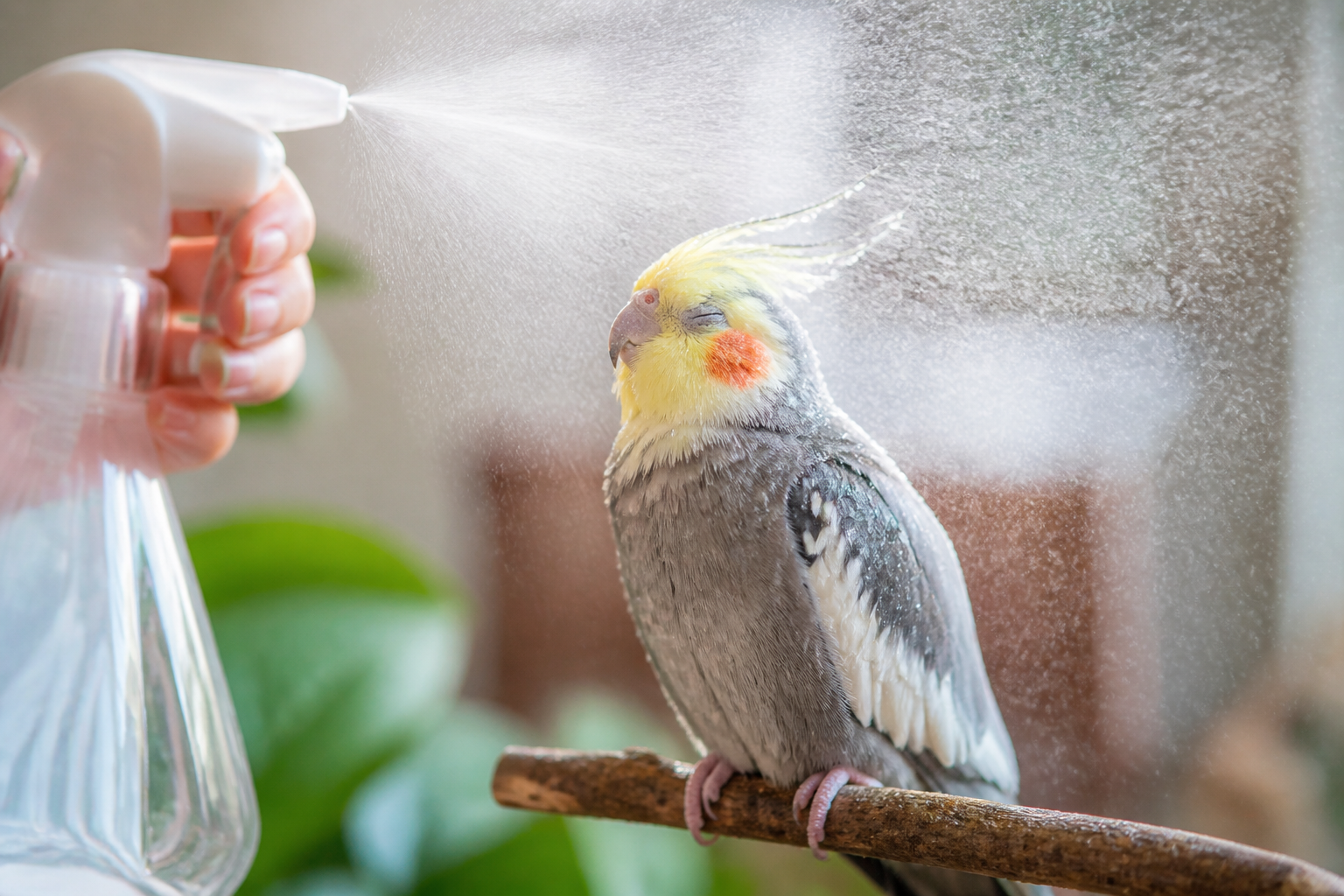
Regular misting or bathing keeps molting skin comfortable and helps itchy feather sheaths loosen.
When molting is NOT the explanation
Not every feather problem is a molt. Be suspicious if you see bare patches of skin, especially in spots the bird can reach with its beak; broken, chewed or barbered feathers; feathers that never fully grow in; constant scratching; or any bleeding. These point to feather-destructive behaviour, parasites, skin infection, hormonal issues or illness rather than a normal molt.
Living context by region
This guide is written for multi-region English readers (US/UK/AU/NZ/CA/EU and more). Where climate, products, or vet access differ, prefer local veterinary advice and local product labels. Use metric first; keep °F/lb in mind for North American homes.
When to call your vet
-
Signs are getting worse over hours, not better
-
Pain, persistent vomiting/diarrhea, or neurological signs
-
You needed force or guesswork to keep going at home
Common mistakes
-
Waiting because the animal 'still looks okay' while prey species hide pain
-
Changing five variables at once so you cannot tell what helped
-
Copying drug doses from social media
-
Skipping species-appropriate husbandry while buying more gadgets
FAQ
How often do birds molt?
Is it normal for my bird to be cranky and sleepy while molting?
Should I feed extra protein during a molt?
What is a blood feather and why does it matter?
My highlights & notes
This article is for general education and is not a substitute for professional veterinary advice. If your pet is unwell, please consult a veterinarian.
Worried about your pet?
Peqaboo’s AI helps you track symptoms, understand lab reports, and know when to see a vet.
Get the Peqaboo app