

Hormonal Bird Behaviour: Regurgitating, Nesting and Aggression Decoded
Regurgitating on you, shredding paper, guarding a corner and sudden biting are often hormones, not naughtiness. Learn to read the seasonal breeding drive, and adjust light, diet, cage set-up and how you touch your bird to calm it down , plus the signs that mean it needs a vet.

Quick answer

Hormonal Bird Behaviour: Regurgitating, Nesting and Aggression Decoded
When an adult bird starts regurgitating on a favourite person, shredding paper into a corner, getting territorial and biting harder than usual, it is usually a hormonal breeding cycle, not a behaviour problem. These urges are driven by long days, rich food, cosy dark nooks and certain kinds of petting. You can dial them down by shortening "daylight", cutting soft warm foods, removing nest-like spaces and changing how you touch your bird. Persistent egg-laying, straining or a swollen belly is a medical matter for an avian vet.
- Regurgitating food for you is courtship , flattering, but a sign the bird sees you as a mate.
- Long light hours, warm mushy food, and dark hidey-holes all switch breeding hormones on.
- Petting down the back, under wings or near the tail is sexual stimulation , stick to head and neck.
- Chronic egg-laying drains calcium and can cause life-threatening egg binding , that is a vet issue.
- Species
- bird
- Category
- behavior
- Risk level
- medium
- Content focus
- practical owner decisions + mechanism
- When to escalate
- same-day if pain, not eating, breathing issues, or rapid decline
Decide in 60 seconds
| Situation | Do now |
|---|---|
| Mild / stable at home | Follow steps in this guide and monitor for 12–24 hours |
| Not eating, hiding, or clear pain | Same-day vet (species-savvy if exotic) |
| Breathing hard, collapse, continuous distress | Emergency vet now |
| You are unsure after reading | Call a clinic with your notes rather than waiting days |
Why hormones flare
Birds are seasonal breeders wired to reproduce when conditions look ideal: long days, plentiful rich food, a mate, and a safe dark cavity to nest in. A centrally heated home with 14 hours of light, a bowl of warm soft food and a cosy hut can accidentally signal "perfect breeding season" all year. Understanding this makes the behaviour predictable rather than baffling , you are managing biology, not disobedience.
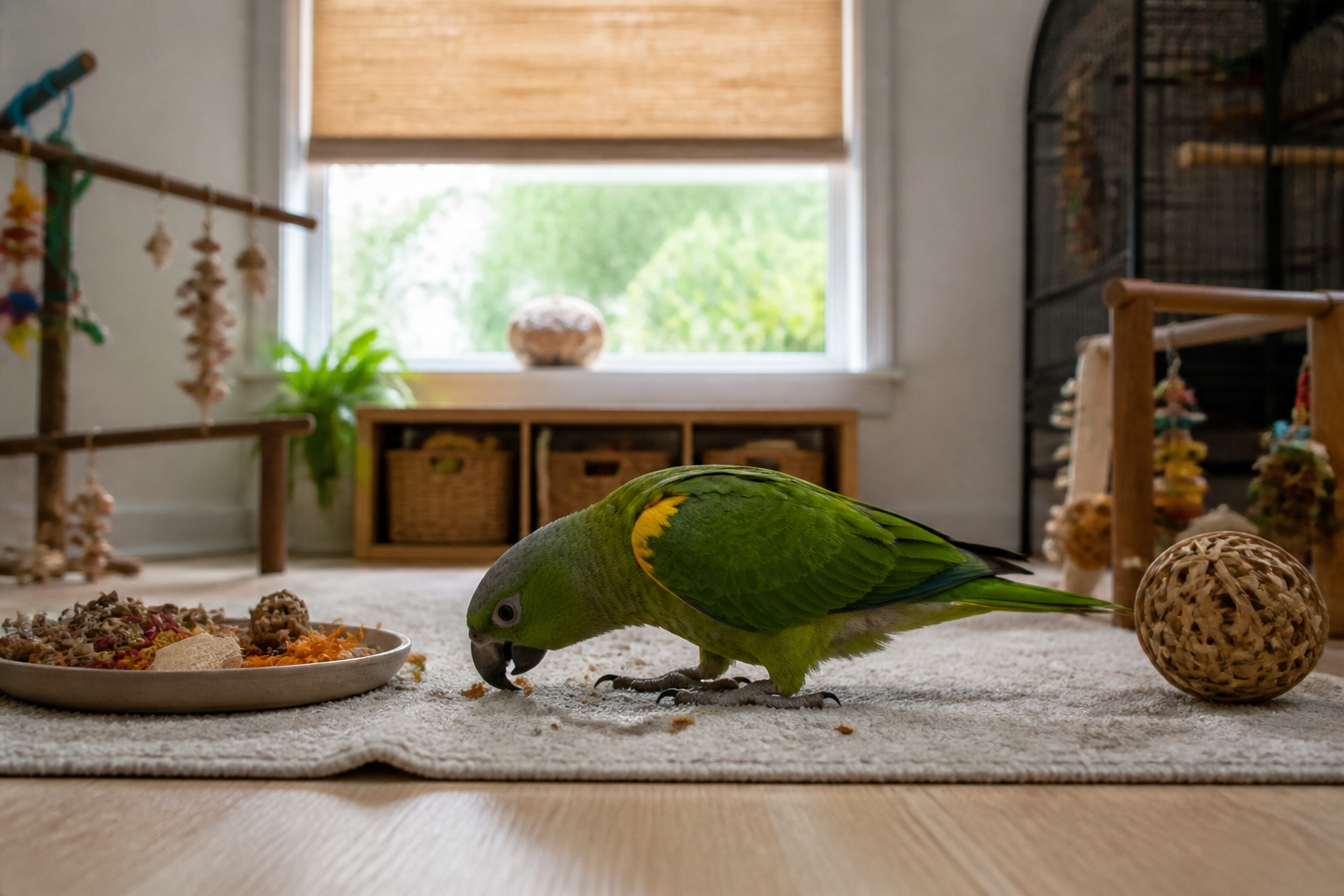
The common hormonal signs
Look for a cluster of these appearing together, often in spring or after a change: regurgitating (head bobbing then bringing up food for you or a toy), shredding paper and burrowing into corners or under furniture, guarding a cage, box or person, a wing-drooping or tail-lifting display, masturbating on toys or your hand, and a shorter fuse leading to sudden bites.
Managing light and sleep
The single most powerful lever is darkness. Give your bird 12 or more hours of genuine, uninterrupted dark sleep , a covered cage or a quiet dark room , to mimic short non-breeding days. Long, bright evenings under household lighting are a strong breeding trigger.
Twelve or more hours of quiet darkness plus foraging redirects a hormonal bird's energy.

Adjusting food and cage set-up
Rich, warm, soft foods mimic the abundant conditions of breeding season, so scale back extra warm mushy foods and heavy amounts of high-fat seed while hormones are high, keeping a balanced pellet-based diet as the core. Ask your avian vet before making big diet changes. Then strip out the nest cues: remove snuggle huts, tents, boxes and dark tent-like beds, block off cosy dark corners, and discourage burrowing under sofas and into drawers.
Taking away huts, boxes and dark corners removes the nest cues that switch hormones on.
Changing how you handle a hormonal bird
Where and how you pet matters. Stroking down the back, along the flanks, under the wings or near the vent is sexual stimulation to a bird , limit affection to the head and neck during hormonal spells. Avoid letting your bird nest in your shirt, cuddle in dark spaces, or treat your hand as a mate. Redirect that energy into foraging, training and flight or flapping exercise.
When to expect it to pass
Managed well, a hormonal phase often settles over a few weeks as light, food and handling changes take effect. If aggression is severe, laying is chronic, or you cannot get the behaviour down, an avian vet can rule out medical drivers and, in stubborn cases, discuss hormone-suppressing options.
Living context by region
This guide is written for multi-region English readers (US/UK/AU/NZ/CA/EU and more). Where climate, products, or vet access differ, prefer local veterinary advice and local product labels. Use metric first; keep °F/lb in mind for North American homes.
When to call your vet
-
Signs are getting worse over hours, not better
-
Pain, persistent vomiting/diarrhea, or neurological signs
-
You needed force or guesswork to keep going at home
Common mistakes
-
Waiting because the animal 'still looks okay' while prey species hide pain
-
Changing five variables at once so you cannot tell what helped
-
Copying drug doses from social media
-
Skipping species-appropriate husbandry while buying more gadgets
FAQ
Is regurgitating the same as vomiting?
Do only female birds get hormonal?
Will neutering or "the injection" fix it?
My single bird has no mate , why is it still hormonal?
My highlights & notes
This article is for general education and is not a substitute for professional veterinary advice. If your pet is unwell, please consult a veterinarian.
Worried about your pet?
Peqaboo’s AI helps you track symptoms, understand lab reports, and know when to see a vet.
Get the Peqaboo app