

Building a Bird First-Aid Kit: What Every Owner Should Keep on Hand
Birds hide illness and crash fast, so a ready kit buys you time to reach a vet. This checklist covers the essentials , towel, styptic powder, gauze, a warm carrier , what each item is for, and, just as important, what to leave out and never do at home.

Quick answer

Building a Bird First-Aid Kit: What Every Owner Should Keep on Hand
A bird first-aid kit is really a stabilise-and-transport kit: its job is to control bleeding, keep your bird warm and calm, and get you to an avian vet fast. Keep a small towel, styptic powder, gauze, blunt-tip scissors, tweezers and a warm travel carrier together in one box, and know your nearest bird-savvy clinic before you ever need it.
- Birds hide illness until they are very sick, so "looks a bit off" can be an emergency.
- The kit stabilises and transports; it does not replace a vet.
- Styptic powder stops nail and beak bleeds but must never touch skin wounds.
- Warmth is medicine for a sick bird: a chilled, fluffed-up bird is deteriorating.
- Species
- bird
- Category
- first_aid
- Risk level
- medium
- Content focus
- practical owner decisions + mechanism
- When to escalate
- same-day if pain, not eating, breathing issues, or rapid decline
Decide in 60 seconds
| Situation | Do now |
|---|---|
| Mild / stable at home | Follow steps in this guide and monitor for 12–24 hours |
| Not eating, hiding, or clear pain | Same-day vet (species-savvy if exotic) |
| Breathing hard, collapse, continuous distress | Emergency vet now |
| You are unsure after reading | Call a clinic with your notes rather than waiting days |
The core kit: what to include
Start with a clean, dedicated box you can grab in seconds. Inside, keep a small soft towel for gentle restraint, several gauze pads and self-adhesive bandage, blunt-tip scissors, fine tweezers or needle-nose forceps, and cotton buds. Add styptic powder or a styptic pencil for bleeding nails and cracked beak tips, a small torch to check the mouth and eyes, and a needle-free syringe for offering water.
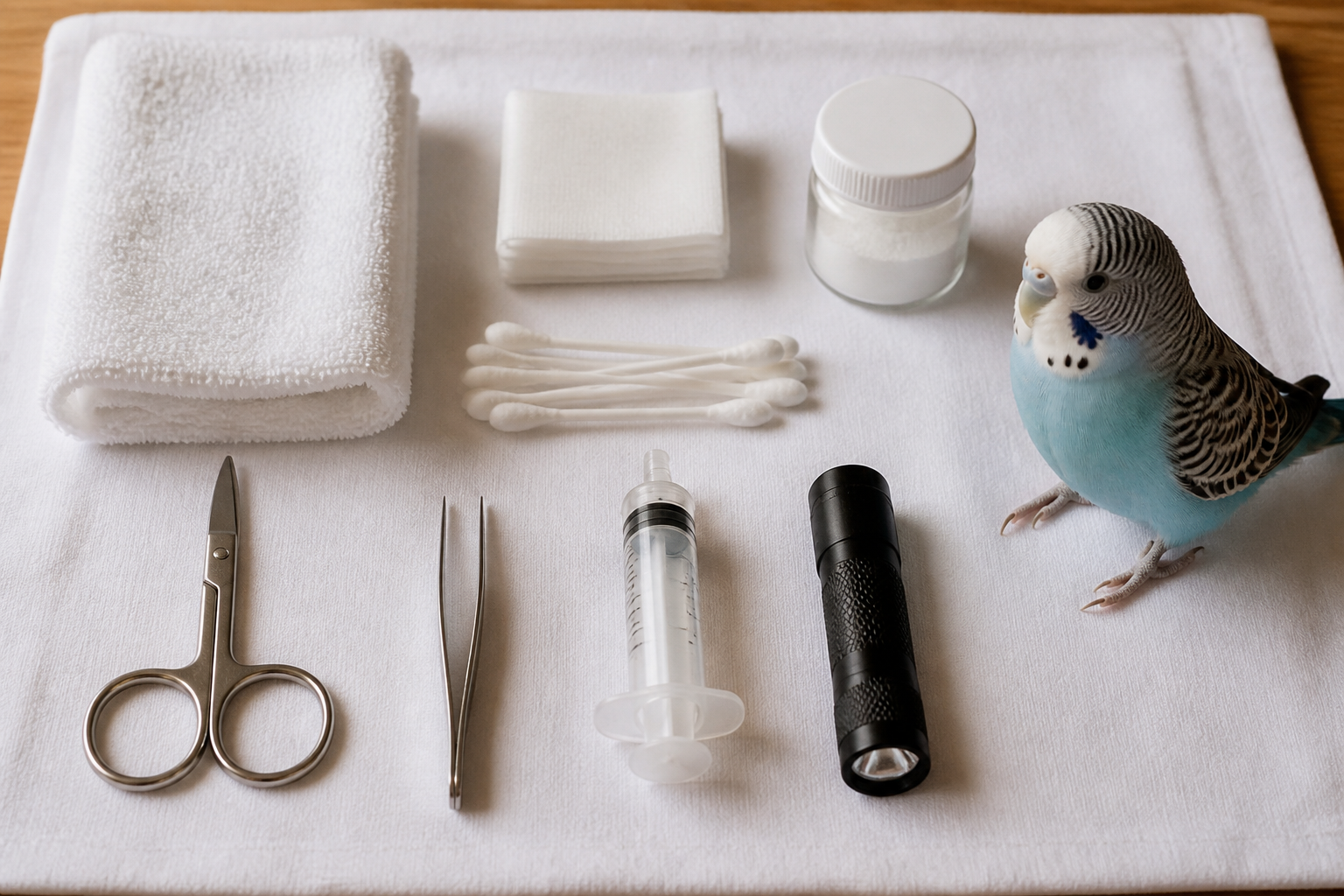
A core bird kit fits in one small box: towel, gauze, styptic powder, blunt scissors, tweezers.
Include a digital kitchen scale that reads in single grams; sudden weight loss is one of the earliest warning signs in birds. Round it out with saline for flushing debris from eyes, a supply of your bird's usual pellets, and a printed card with your avian vet's number, the nearest 24-hour clinic, and your bird's species and normal weight.
Warmth and transport: the parts that save lives
The most important item is a way to keep a sick bird warm and enclosed. A small travel carrier lined with a towel, kept dark and quiet, lowers stress and stops a weak bird injuring itself. Keep a heat source ready: a small pet-safe heat pad set on low under half the carrier, or a hot-water bottle wrapped in a towel, so the bird can move toward or away from the warmth.
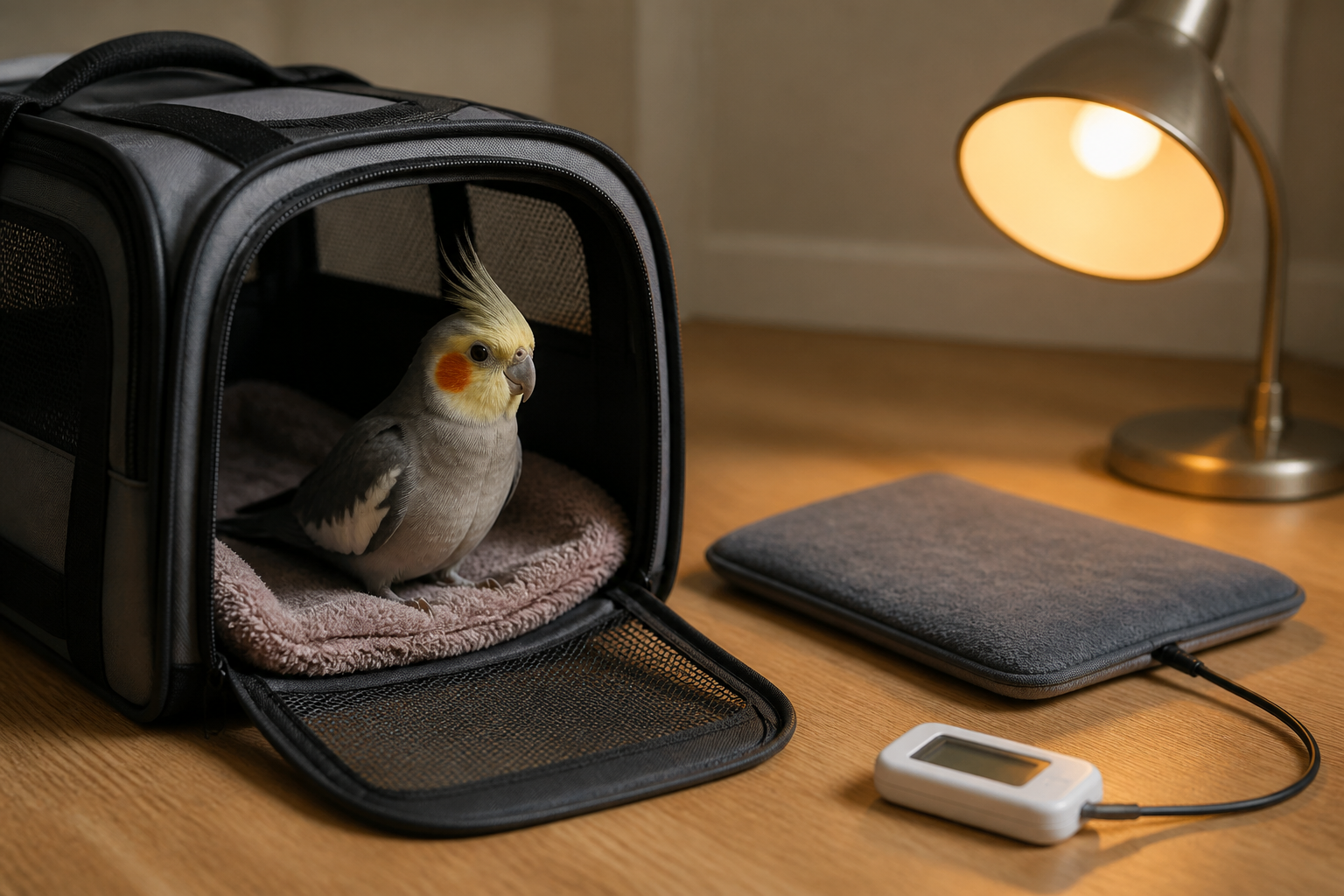
A warm, dark carrier is the single most useful thing to have ready for a sick or hurt bird.
Hong Kong and Taiwan flats can get cold and damp on winter nights, and air-conditioning chills birds fast in summer, so do not assume "room temperature" is warm enough for an unwell bird. A poorly bird should sit around 29 to 32 degrees Celsius while you arrange the vet trip.
What to leave out , and never do
Skip human medicines entirely. Do not give paracetamol, ibuprofen, antibiotics, or anything from your own cabinet; doses safe for people can kill a bird. Leave out hydrogen peroxide and strong antiseptics near the mouth or eyes. Never give food or water by syringe to a bird that is weak, gasping or barely responsive, because it can inhale the liquid.
Do not try to splint a broken wing or leg yourself, and do not pull out a broken bleeding feather at home unless a vet has shown you how; done wrong it causes more damage and bleeding. Your job is first aid and fast transport, not treatment.
Living context by region
This guide is written for multi-region English readers (US/UK/AU/NZ/CA/EU and more). Where climate, products, or vet access differ, prefer local veterinary advice and local product labels. Use metric first; keep °F/lb in mind for North American homes.
When to call your vet
-
Signs are getting worse over hours, not better
-
Pain, persistent vomiting/diarrhea, or neurological signs
-
You needed force or guesswork to keep going at home
Common mistakes
-
Waiting because the animal 'still looks okay' while prey species hide pain
-
Changing five variables at once so you cannot tell what helped
-
Copying drug doses from social media
-
Skipping species-appropriate husbandry while buying more gadgets
FAQ
Can I use human antiseptic cream on my bird?
How do I stop a bleeding nail or beak?
Is styptic powder safe on skin cuts?
How often should I check the kit?
My highlights & notes
This article is for general education and is not a substitute for professional veterinary advice. If your pet is unwell, please consult a veterinarian.
Worried about your pet?
Peqaboo’s AI helps you track symptoms, understand lab reports, and know when to see a vet.
Get the Peqaboo app