

Calcium for Birds: Why Cuttlebone, Mineral Blocks and D3 Matter
Calcium keeps a bird's bones, nerves and eggs healthy, but it only works alongside vitamin D3. This guide explains why calcium matters, the role of cuttlebone, mineral blocks and sunlight, who is most at risk, and the deficiency signs that mean a trip to the avian vet.

Quick answer

Calcium for Birds: Why Cuttlebone, Mineral Blocks and D3 Matter
Calcium is essential for a bird's bones, muscles, nerves and egg formation, but it only works properly when the bird also has enough vitamin D3 to absorb it. Seed-heavy diets are low in calcium, so many pet birds benefit from a cuttlebone or mineral block, a good base diet, and safe access to sunlight or avian UVB light. Laying females are especially at risk of deficiency.
- Calcium needs vitamin D3 to be absorbed; without D3, dietary calcium is wasted.
- All-seed diets are low in calcium and a common cause of deficiency.
- Cuttlebone and mineral blocks provide calcium plus useful beak-conditioning.
- Egg-laying hens have very high calcium demands and are most at risk.
- Species
- bird
- Category
- nutrition
- Risk level
- medium
- Content focus
- practical owner decisions + mechanism
- When to escalate
- same-day if pain, not eating, breathing issues, or rapid decline
Decide in 60 seconds
| Situation | Do now |
|---|---|
| Mild / stable at home | Follow steps in this guide and monitor for 12–24 hours |
| Not eating, hiding, or clear pain | Same-day vet (species-savvy if exotic) |
| Breathing hard, collapse, continuous distress | Emergency vet now |
| You are unsure after reading | Call a clinic with your notes rather than waiting days |
Why calcium matters so much
Calcium does far more than build bone. It is essential for muscle contraction, nerve signalling, blood clotting and, in females, forming eggshells. When a bird does not get enough, its body pulls calcium from its own bones, weakening them. Low blood calcium can cause muscle tremors, weakness, seizures and, in laying hens, egg-binding , a life-threatening emergency. Because a seed-based diet is naturally low in calcium, deficiency is one of the more common nutritional problems seen in pet birds.

Cuttlebone, mineral blocks and dietary sources
A cuttlebone (the internal shell of a cuttlefish) clipped inside the cage is a classic, safe calcium source that birds nibble at will, and it helps keep the beak trimmed. Mineral blocks offer calcium along with other minerals. Position them at perch height within easy reach.
Clip a cuttlebone and mineral block within easy reach at perch height.
Dietary calcium matters just as much. A formulated pellet base supplies balanced calcium, and dark leafy greens like kale, bok choy and dandelion greens are good fresh sources. Some owners offer well-cooked, crushed eggshell in tiny amounts. Avoid relying on seeds alone, and never give a calcium supplement long-term without avian-vet guidance, as too much can also cause problems.
The vitamin D3 connection
Here is the part owners often miss: calcium is useless without vitamin D3, which the body needs to absorb it. Birds make D3 in their skin and preen glands with exposure to UVB light, so a bird kept indoors behind glass all day may be calcium-deficient even on a decent diet, because ordinary window glass filters out most UVB.
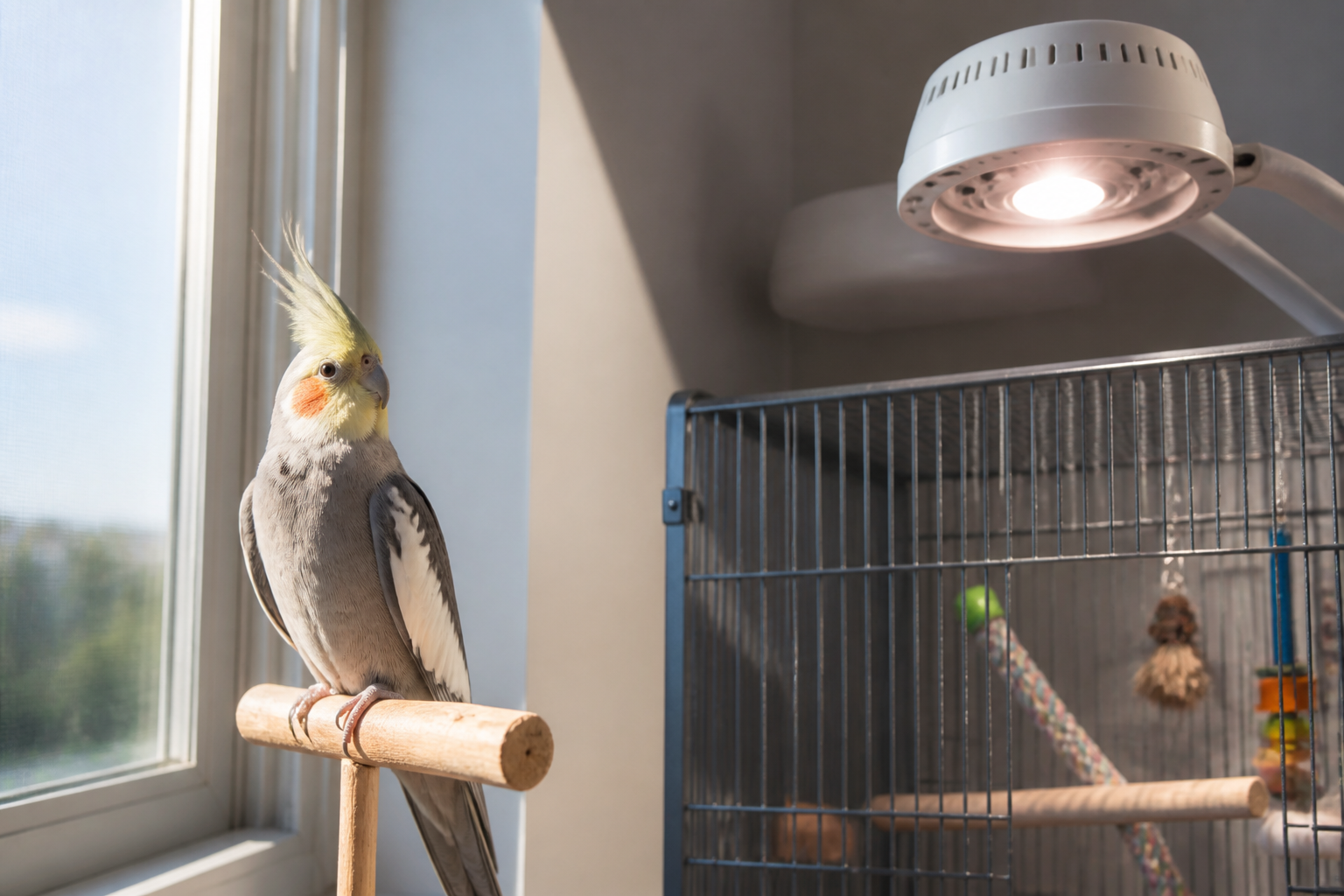
Safe sunlight or an avian UVB lamp helps birds use the calcium they eat.
Safe options include supervised access to natural sunlight (never through glass, and always with shade available and protection from overheating, which matters in a hot, humid climate) or a proper avian UVB lamp fitted and replaced per the manufacturer's guidance. A complete pellet diet also usually includes D3. Discuss the right approach for your species and setup with an avian vet.
Living context by region
This guide is written for multi-region English readers (US/UK/AU/NZ/CA/EU and more). Where climate, products, or vet access differ, prefer local veterinary advice and local product labels. Use metric first; keep °F/lb in mind for North American homes.
When to call your vet
-
Signs are getting worse over hours, not better
-
Pain, persistent vomiting/diarrhea, or neurological signs
-
You needed force or guesswork to keep going at home
Common mistakes
-
Waiting because the animal 'still looks okay' while prey species hide pain
-
Changing five variables at once so you cannot tell what helped
-
Copying drug doses from social media
-
Skipping species-appropriate husbandry while buying more gadgets
FAQ
Does my bird really need a cuttlebone?
Why does calcium need vitamin D3?
Can I give too much calcium?
Which birds are most at risk of calcium deficiency?
My highlights & notes
This article is for general education and is not a substitute for professional veterinary advice. If your pet is unwell, please consult a veterinarian.
Worried about your pet?
Peqaboo’s AI helps you track symptoms, understand lab reports, and know when to see a vet.
Get the Peqaboo app