

How to Control Algae: Light, Nutrients, and Cleanup Crews
Algae is normal in every aquarium, but blooms mean something is out of balance. This guide shows how to control it by tuning light duration, cutting excess nutrients, and adding the right cleanup crew, plus how to tell which type of algae you actually have.

Quick answer
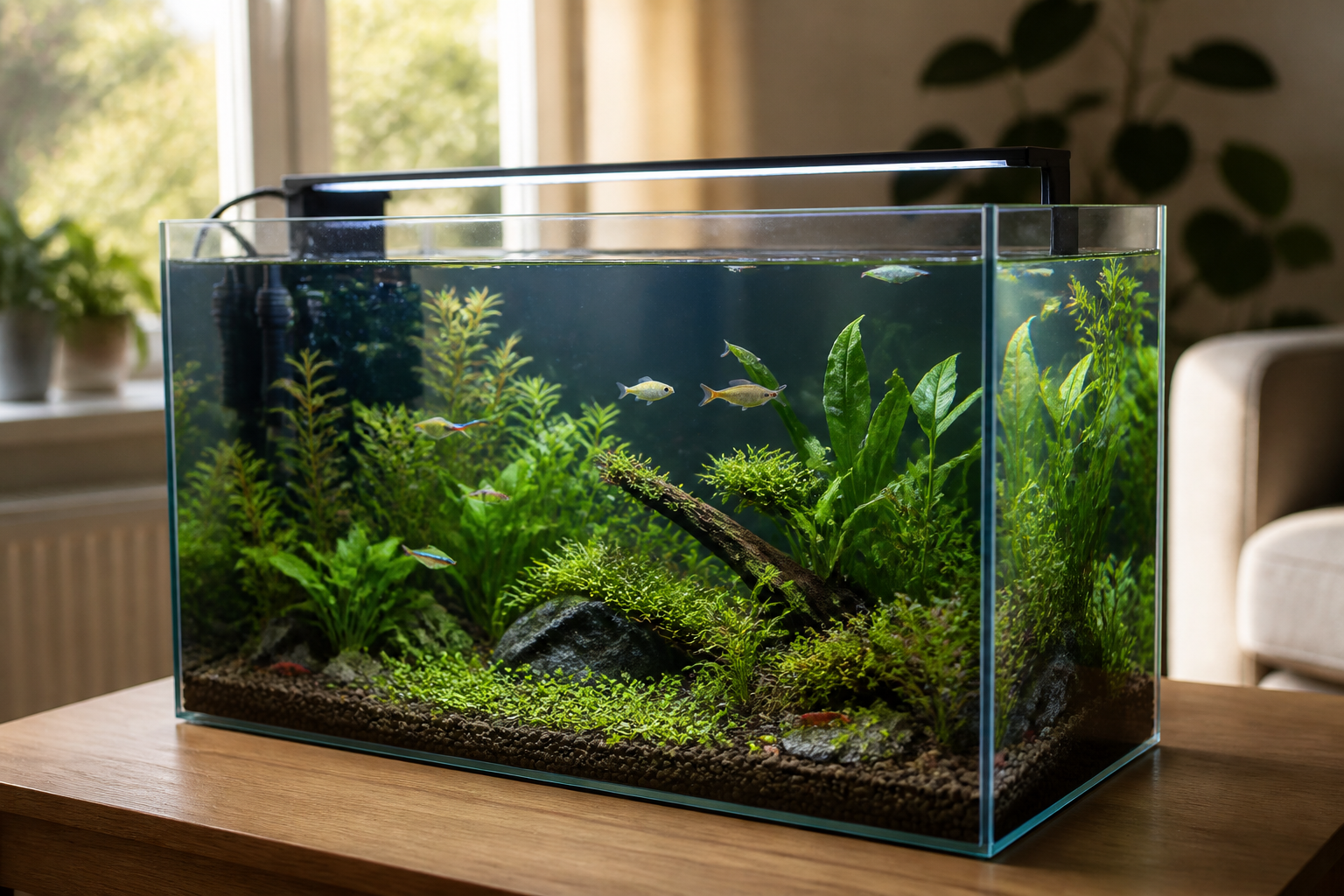
How to Control Algae: Light, Nutrients, and Cleanup Crews
Algae grows when there is more light and nutrients than your plants and livestock can use. To control it, shorten your lighting to 6-8 hours a day, keep nitrate and phosphate down with regular water changes and careful feeding, and add algae-eating shrimp or snails. There is no instant cure, but this trio fixes almost every tank within a few weeks.
- Species
- fish, shrimp
- Category
- environment
- Risk level
- low
- Content focus
- practical owner decisions + mechanism
- When to escalate
- same-day if pain, not eating, breathing issues, or rapid decline
Decide in 60 seconds
| Situation | Do now |
|---|---|
| Mild / stable at home | Follow steps in this guide and monitor for 12–24 hours |
| Not eating, hiding, or clear pain | Same-day vet (species-savvy if exotic) |
| Breathing hard, collapse, continuous distress | Emergency vet now |
| You are unsure after reading | Call a clinic with your notes rather than waiting days |
Why algae appears
Every healthy aquarium has some algae, it is part of a living system. Problems start when the balance tips. The three drivers are light (too many hours or too intense), nutrients (nitrate and phosphate from overfeeding, overstocking, or infrequent water changes), and low competition (few live plants to soak up those nutrients). A brand-new tank in its first 6-8 weeks almost always goes through an algae phase while the system matures, this is normal and usually settles on its own.
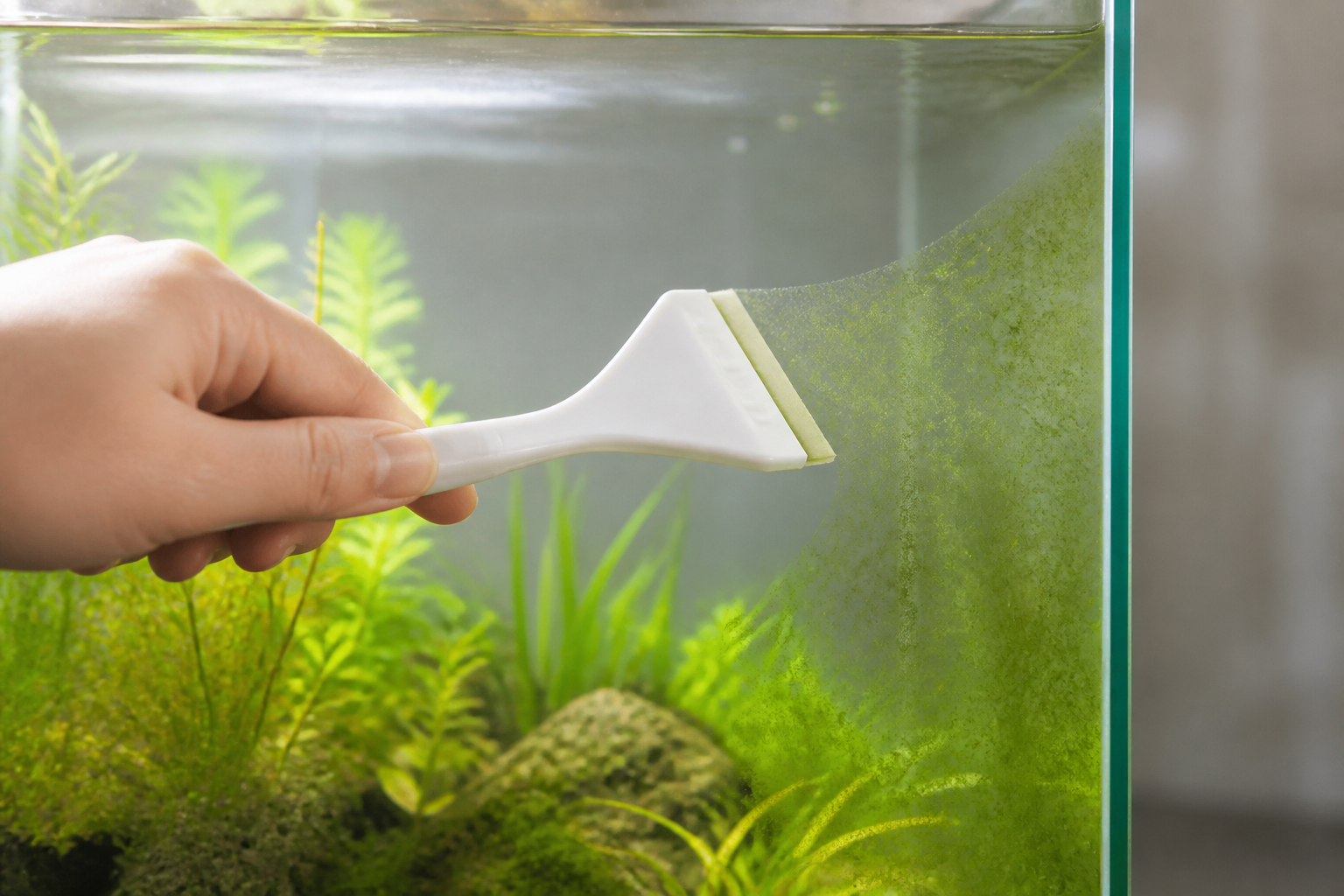
Step 1: Dial back the light
Light is the easiest lever. Put your lights on a timer and limit them to 6-8 hours a day. Avoid placing the tank in direct sunlight from a window, which feeds algae relentlessly and heats the water. If your light unit has a brightness setting, running it lower can help low-tech tanks. A consistent daily cycle matters more than long hours.
Manual scraping removes visible film fast, but only lasting control comes from fixing light and nutrients.
Step 2: Cut the nutrients
Overfeeding is the number one cause of nutrient-driven algae. Feed only what your fish finish in about two minutes, once or twice a day, and remove uneaten food. Do a 20-30% water change weekly to export nitrate and phosphate. Rinse filter media in old tank water so you do not kill the beneficial bacteria, but do clean it, a clogged filter traps decaying waste that feeds algae.
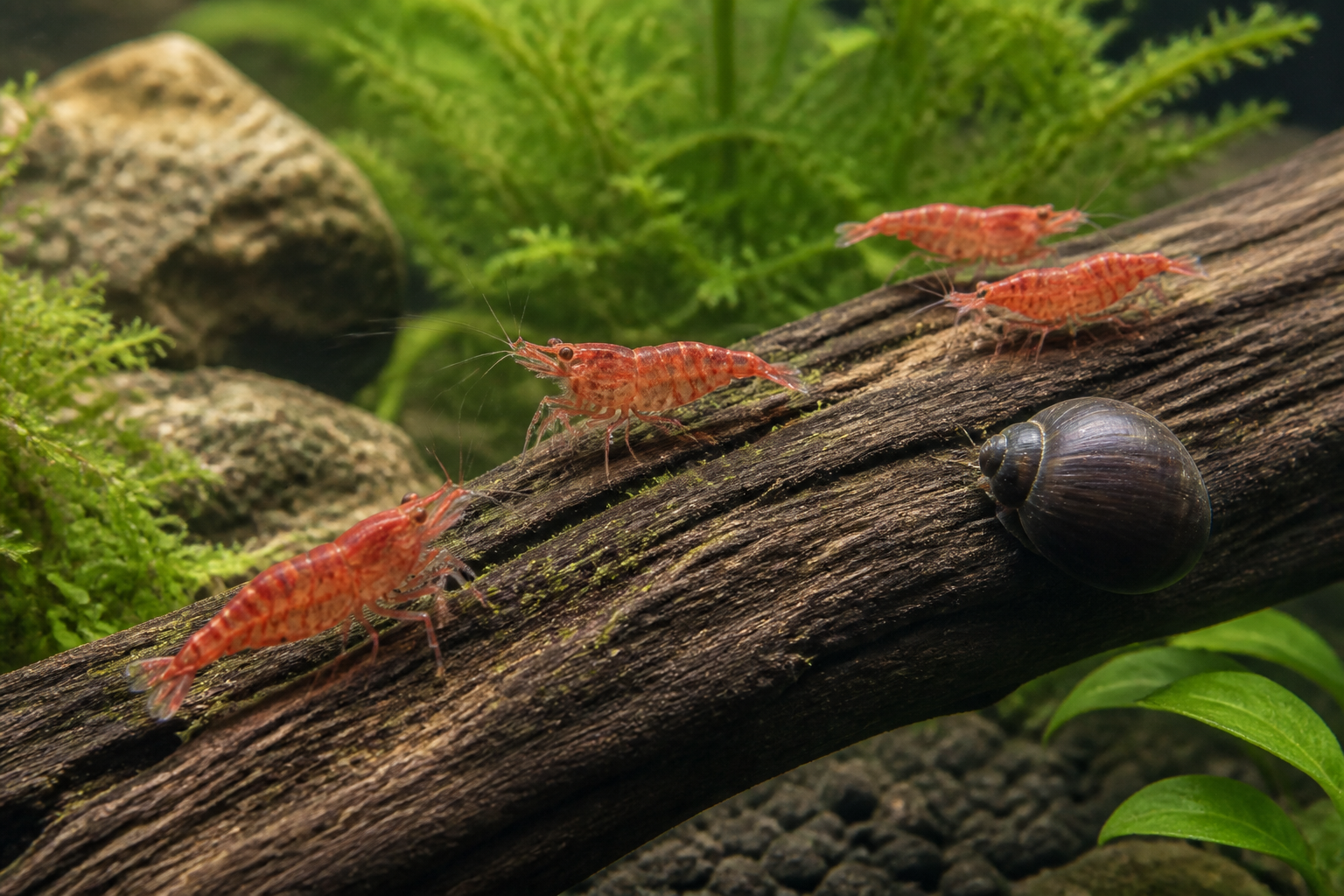
Step 3: Add a cleanup crew
The right grazers keep surfaces clean while you fix the underlying balance. Nerite snails are excellent on glass and hardscape and will not breed and overrun a freshwater tank. Amano and cherry shrimp graze soft algae and biofilm. Otocinclus catfish handle diatom films on plants. Match the crew to your tank size and never rely on them alone, they supplement good husbandry rather than replace it.
A cleanup crew grazes algae daily, but it supplements good husbandry, it does not replace it.
Know your algae
Green film on glass is the most common and easiest, just scrape and improve light or nutrients. Brown diatom dust is normal in new tanks and fades as the tank matures. Green water (a pea-soup bloom of free-floating algae) usually follows sunlight or a nutrient spike and often needs a few days of total blackout plus water changes. Black beard algae, a stubborn dark tufting algae, points to fluctuating CO2 or high nutrients and may need spot-treatment. Stringy green hair algae almost always means too much light or nutrients.
Living context by region
This guide is written for multi-region English readers (US/UK/AU/NZ/CA/EU and more). Where climate, products, or vet access differ, prefer local veterinary advice and local product labels. Use metric first; keep °F/lb in mind for North American homes.
When to call your vet
-
Signs are getting worse over hours, not better
-
Pain, persistent vomiting/diarrhea, or neurological signs
-
You needed force or guesswork to keep going at home
Common mistakes
-
Waiting because the animal 'still looks okay' while prey species hide pain
-
Changing five variables at once so you cannot tell what helped
-
Copying drug doses from social media
-
Skipping species-appropriate husbandry while buying more gadgets
FAQ
Will algae hurt my fish or shrimp?
Should I use an algae-killing chemical?
How long until I see improvement?
Is a little algae actually okay?
My highlights & notes
This article is for general education and is not a substitute for professional veterinary advice. If your pet is unwell, please consult a veterinarian.
Worried about your pet?
Peqaboo’s AI helps you track symptoms, understand lab reports, and know when to see a vet.
Get the Peqaboo app