

The Teenage Cat: Behavior Changes From 6 to 18 Months
Between six and eighteen months, cats hit a lively teenage phase: more energy, more testing of boundaries, and sometimes more attitude. This overview explains what is normal, what a young cat needs, and which changes are worth a vet's attention rather than just patience.

Quick answer
The Teenage Cat: Behavior Changes From 6 to 18 Months
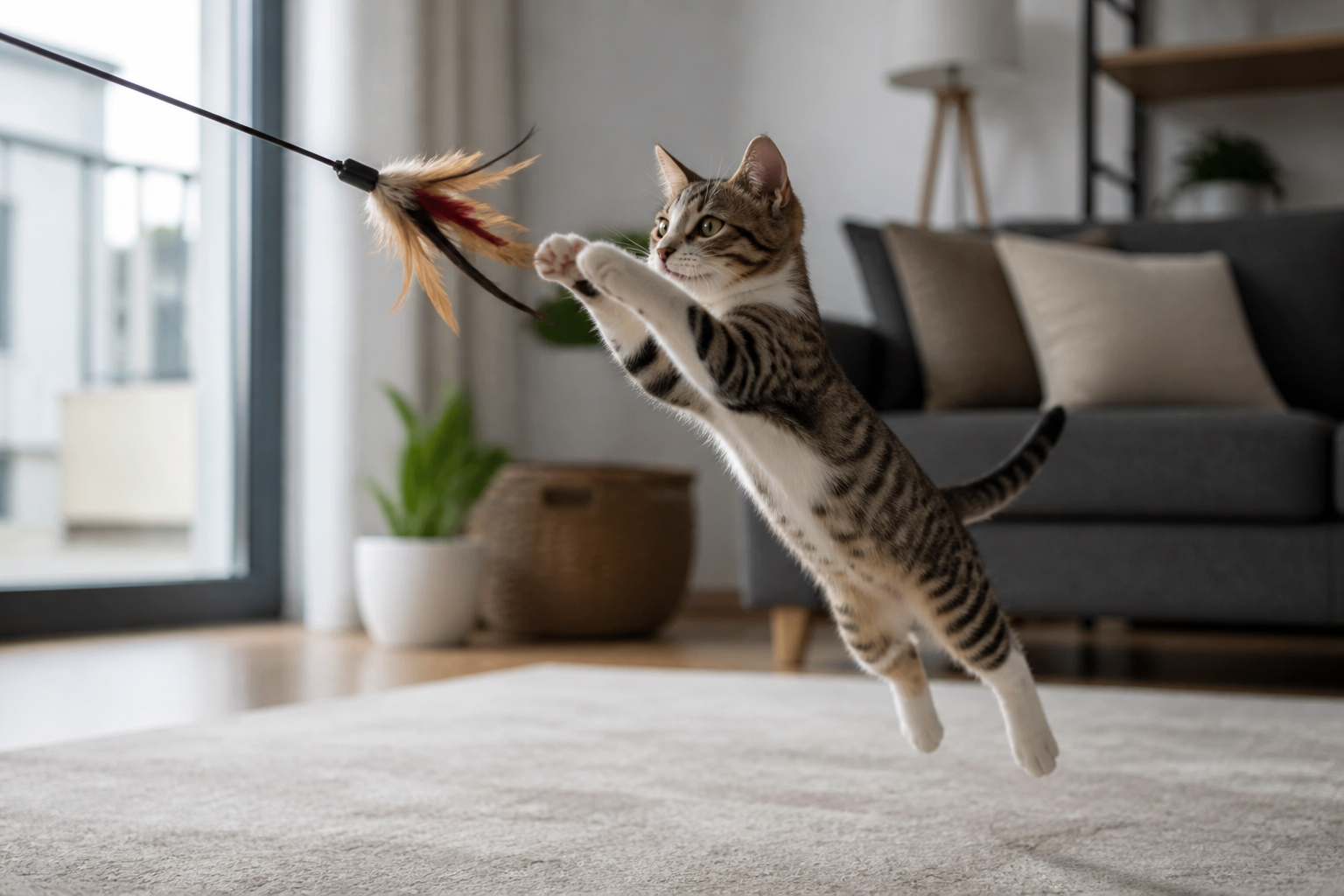
From roughly six to eighteen months, cats are adolescents , no longer kittens, not yet settled adults. Expect bursts of energy, bolder exploration, boundary-testing, and, if not neutered, hormone-driven behaviours like roaming, spraying or calling. Most of this is normal and eases with maturity, consistent routines, plenty of play, and neutering. Sudden or extreme changes still deserve a vet check.
- Species
- cat
- Category
- life_stage
- Risk level
- low
- Content focus
- practical owner decisions + mechanism
- When to escalate
- same-day if pain, not eating, breathing issues, or rapid decline
Decide in 60 seconds
| Situation | Do now |
|---|---|
| Mild / stable at home | Follow steps in this guide and monitor for 12–24 hours |
| Not eating, hiding, or clear pain | Same-day vet (species-savvy if exotic) |
| Breathing hard, collapse, continuous distress | Emergency vet now |
| You are unsure after reading | Call a clinic with your notes rather than waiting days |
What the teenage stage looks like
Adolescence in cats is a stretch of high energy and growing independence. Your once-cuddly kitten may become more aloof one week and clingy the next, race around the flat at night, pounce hard during play, and generally act like it has energy to burn. This is developmentally normal. Physically, cats keep growing and filling out through much of this period, with larger breeds maturing later.
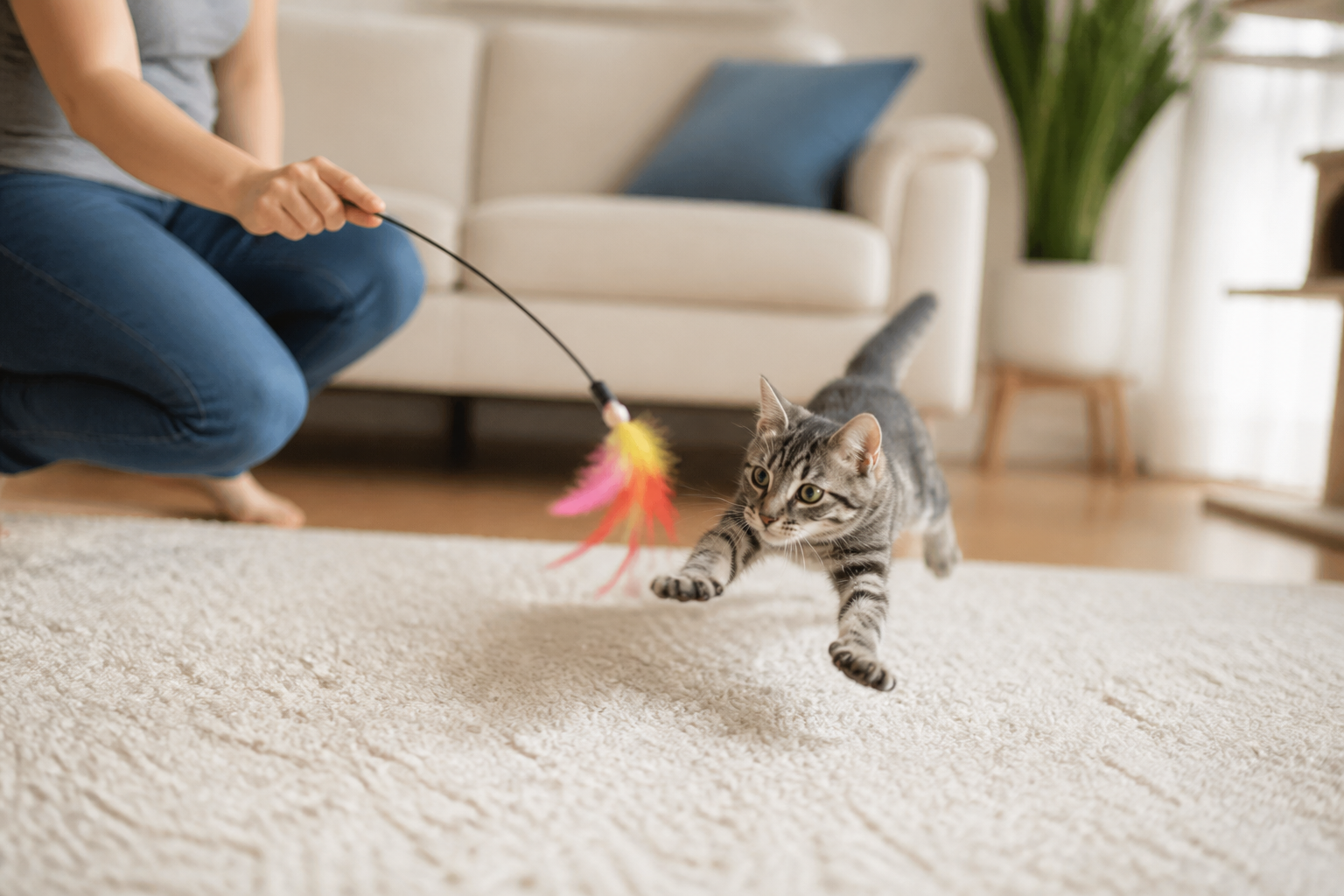
Daily interactive play is the best outlet for an adolescent cat's surging energy.
Energy, play and boredom
A bored teenage cat invents its own entertainment, often at 3am or on your curtains. Channel that energy with at least two daily interactive play sessions that let your cat stalk, chase and pounce, ideally ending in a catch and a small meal to mimic the natural hunt-eat-groom-sleep cycle. Rotate toys to keep novelty, and provide climbing and scratching outlets so the energy has somewhere legitimate to go.
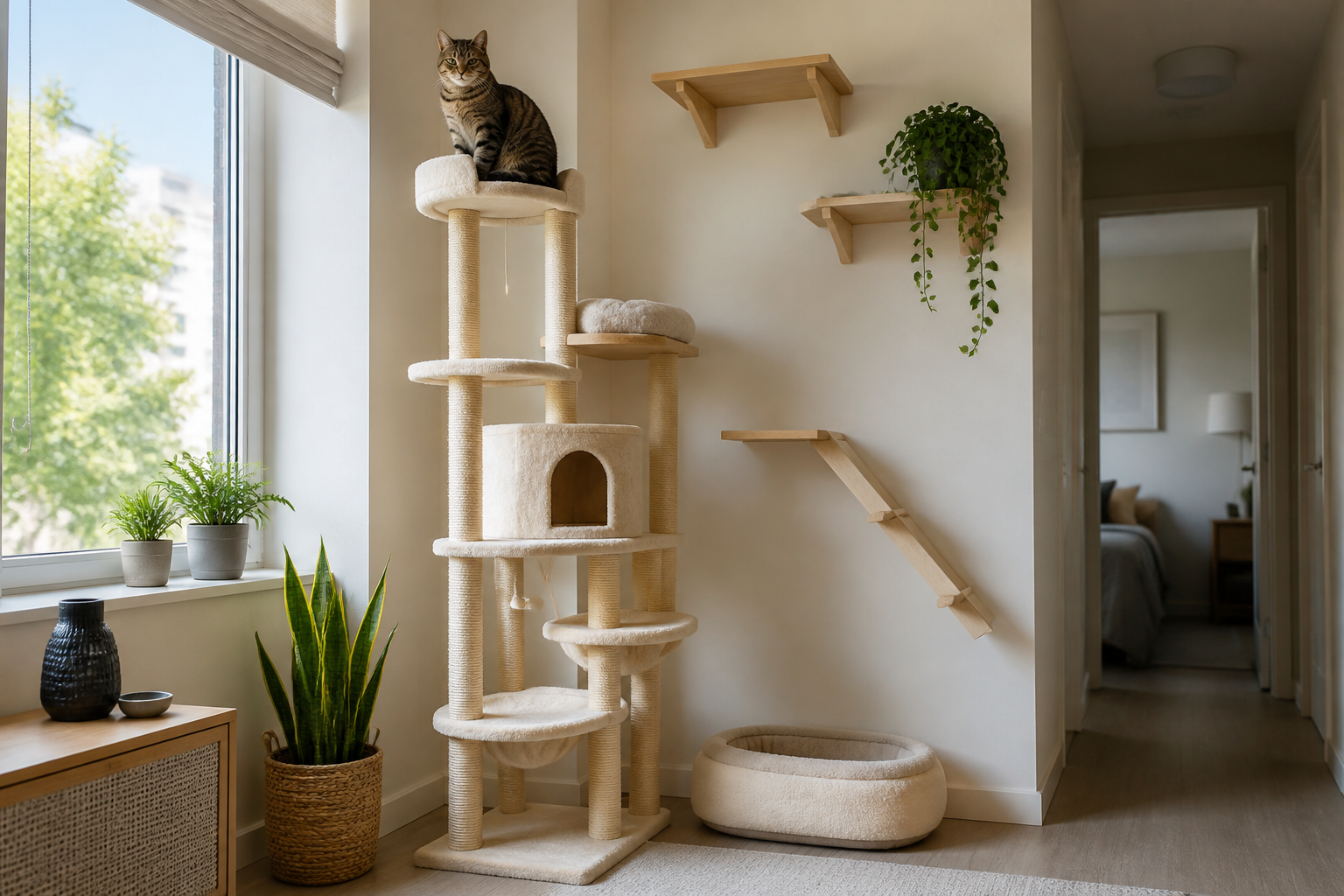
Vertical space and climbing outlets matter even more in a small flat with a restless teenage cat.
Hormones and neutering
If your cat is not yet neutered, adolescence is when hormonal behaviours appear: urine spraying, loud calling in females, restlessness, attempts to escape outdoors, and sometimes aggression. Neutering greatly reduces or prevents these, along with unwanted litters and some health risks. Timing is a conversation to have with your vet, but many are done around this stage.
Boundaries without punishment
This is a key age for gentle, consistent boundaries. Never hit, shout at, or squirt your cat , it damages trust and can worsen behaviour. Instead redirect: offer a toy when teeth or claws come out on hands, reward calm behaviour, and make off-limits surfaces less appealing while giving an appealing alternative nearby. Consistency from everyone in the household matters more than any single correction.
Living with a teenage cat in a flat
In a compact high-rise flat, a restless young cat feels the lack of space keenly. Build upward with a tall cat tree, shelves or window perches, and secure your windows and balcony , adolescent cats are agile and curious, and falls from height are a real risk in tower blocks. A well-enriched small home beats a large empty one.
Living context by region
This guide is written for multi-region English readers (US/UK/AU/NZ/CA/EU and more). Where climate, products, or vet access differ, prefer local veterinary advice and local product labels. Use metric first; keep °F/lb in mind for North American homes.
When to call your vet
-
Signs are getting worse over hours, not better
-
Pain, persistent vomiting/diarrhea, or neurological signs
-
You needed force or guesswork to keep going at home
Common mistakes
-
Waiting because the animal 'still looks okay' while prey species hide pain
-
Changing five variables at once so you cannot tell what helped
-
Copying drug doses from social media
-
Skipping species-appropriate husbandry while buying more gadgets
FAQ
When do cats grow out of the teenage phase?
Is night-time hyperactivity normal?
My teenage cat has started spraying , what does it mean?
Should I still play with a cat this age even if it seems independent?
My highlights & notes
This article is for general education and is not a substitute for professional veterinary advice. If your pet is unwell, please consult a veterinarian.
Worried about your pet?
Peqaboo’s AI helps you track symptoms, understand lab reports, and know when to see a vet.
Get the Peqaboo app