

Egg Binding
Also known as: Dystocia, Preovulatory egg stasis, Postovulatory egg stasis, Egg stasis
In short
Egg binding, or dystocia, is a serious reproductive emergency in birds and reptiles where eggs or yolks become trapped in the reproductive tract. This guide explains the differences between preovulatory and postovulatory stasis, key clinical signs, diagnostic tests, and the medical and surgical treatments your veterinarian will use to save your pet's life.
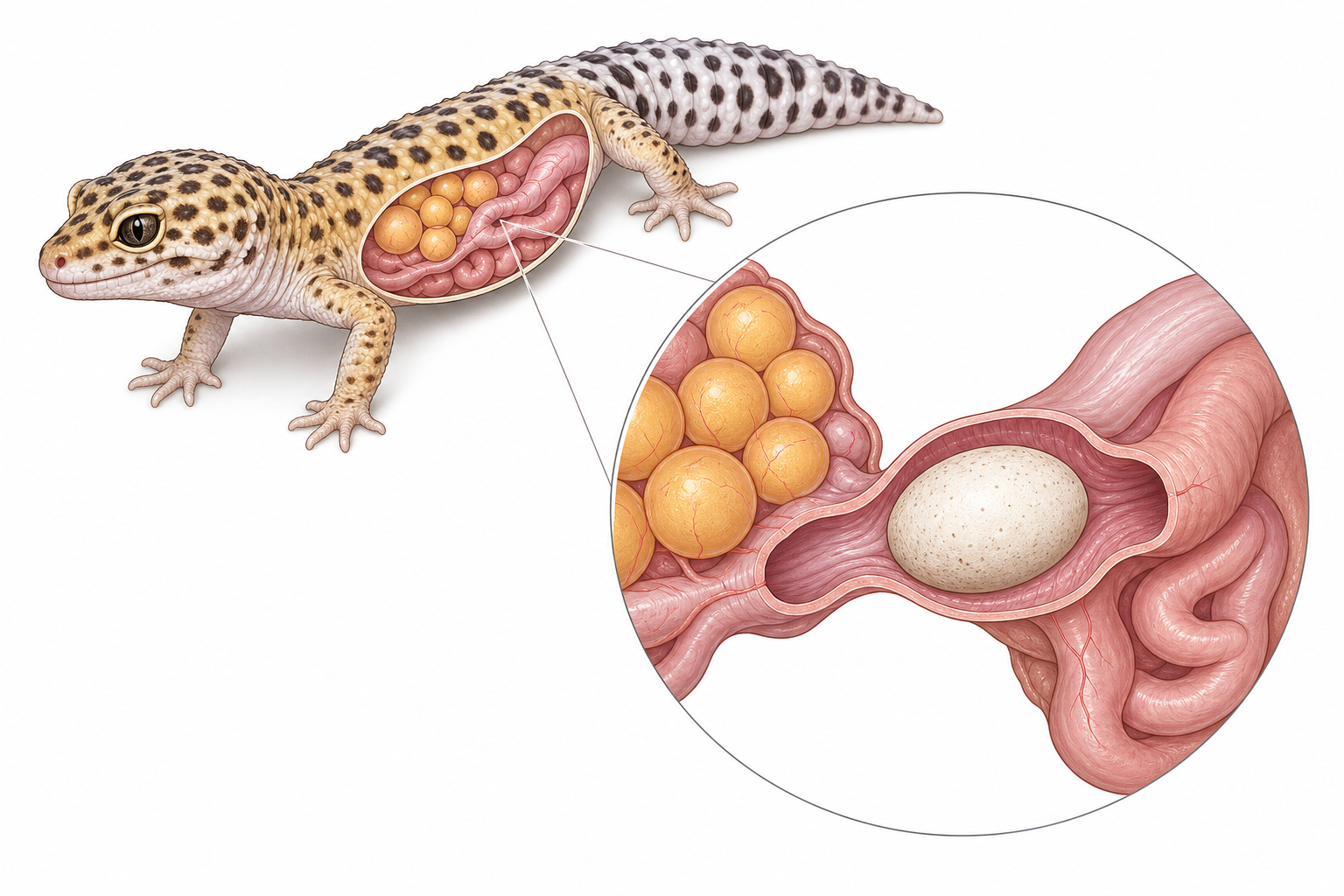
TL;DR. Egg binding is a critical, potentially life-threatening reproductive emergency in birds and reptiles where eggs or undeveloped yolks become trapped within the body, requiring rapid veterinary intervention to prevent systemic failure.
Egg binding occurs when an egg becomes physically trapped within the oviduct, requiring medical or surgical intervention.
What is it?
Egg binding, scientifically referred to as dystocia or egg stasis, is a serious reproductive disorder affecting female birds and reptiles. The condition occurs when the animal is unable to pass eggs or undeveloped yolks through her reproductive tract at a normal rate. Because birds and reptiles possess unique anatomical structures compared to mammals, reproductive complications can quickly escalate into systemic, life-threatening emergencies.
To understand egg binding, it is helpful to divide the condition into two distinct forms based on where the reproductive process has stalled:
- Preovulatory Egg Stasis: In this form, the reproductive cycle halts before the yolks are released from the ovary. The follicles (yolks) develop on the ovary but fail to ovulate into the oviduct. These retained yolks can remain on the ovary, occasionally rupturing into the abdominal cavity and causing severe, life-threatening inflammation known as yolk peritonitis.
- Postovulatory Egg Stasis: This is the classic form of egg binding. Here, ovulation has occurred, and the eggs (or fetuses, in the case of live-bearing reptiles) have successfully entered the oviduct. However, due to physical obstructions, metabolic exhaustion, or structural abnormalities, the eggs become stuck within the oviduct and cannot be expelled through the cloaca.
Because birds and reptiles are exotic species, veterinary medicine relies on specialized anatomical knowledge and careful clinical extrapolation. While both groups of animals lay eggs, their reproductive strategies differ significantly. Birds have a rapid, highly resource-intensive laying cycle and typically possess only a single functional ovary and oviduct (usually the left). Reptiles possess bilateral reproductive tracts (both left and right sides are functional) and have a much slower metabolic rate, meaning they may carry retained eggs for longer periods before showing obvious signs of distress. Regardless of the species, when the normal passage of reproductive material stalls, immediate veterinary care is required.
Causes & risk factors
Egg binding is rarely caused by a single isolated factor. Instead, it is typically the result of a combination of nutritional deficiencies, environmental shortcomings, and physical abnormalities.
One of the most common metabolic causes of egg binding is calcium deficiency (hypocalcemia). Calcium is the primary mineral required to build a strong eggshell. More importantly, calcium ions are the essential chemical triggers that allow the smooth muscles of the oviduct to contract. If a female animal's calcium levels are depleted—often due to chronic egg-laying or a poor diet—her oviduct muscles will suffer from inertia, leaving her physically unable to push the egg out.
Environmental and husbandry factors play an equally critical role, particularly in reptiles. Reptiles are ectothermic, meaning they rely entirely on external heat sources to regulate their body temperature and fuel their metabolic processes. If their enclosure is too cold, their muscles cannot function efficiently enough to expel an egg. Furthermore, a lack of proper ultraviolet (UVB) lighting prevents the animal's body from synthesizing active Vitamin D3, which is required to absorb calcium from their food.
Other common risk factors include:
- Inadequate nesting sites: If a female reptile or bird does not have access to a safe, quiet, and appropriate substrate or nesting box, she may voluntarily hold onto her eggs. This prolonged retention eventually leads to stasis.
- Egg abnormalities: Eggs that are abnormally shaped, oversized, double-yolked, or soft-shelled can easily become physically wedged in the oviduct.
- Anatomical obstructions: Pelvic fractures, oviduct strictures, masses, or cloacal inflammation can physically block the exit pathway.
- General weakness: Obesity, lack of exercise, muscle atrophy, or concurrent systemic diseases leave the animal with insufficient energy to complete the labor process.
Because there are no specific breed predispositions recorded for this condition, any reproductively active female bird or reptile must be considered at risk.
Signs to watch for
Recognizing the signs of egg binding can be challenging, as prey species like birds and reptiles naturally hide illness until they are in severe distress. Owners must closely monitor their animals during the breeding season for any subtle changes in behavior or posture.

Abdominal distension and a sudden loss of energy are common signs of egg binding in reptiles.
Key symptoms of egg binding include:
- Inability to pass eggs (Cardinal): The animal has exceeded her normal gestation or laying window, or is actively straining without producing an egg.
- Yolks retained on the ovary (Common): While the yolks themselves are internal, this condition presents as progressive abdominal swelling, severe lethargy, and a loss of appetite.
- Oviducts full of eggs (Common): Multiple eggs back up in the reproductive tract, causing visible abdominal distension or hard, palpable lumps in the lower abdomen.
- Abnormally shaped or oversized eggs (Occasional): These may be partially visible at the cloaca or felt during a gentle physical examination.
Species-Specific Warning Signs
In birds, egg binding is a rapid emergency. A bound bird will often sit on the bottom of her cage, appear weak, and show a characteristic "penguin-like" posture with her legs spread wide. You may observe tail bobbing with every breath, which indicates that the retained egg is pressing against her abdominal air sacs, making it difficult to breathe. Straining, a swollen abdomen, and droppings stuck to the feathers around the vent are also common.
In reptiles, the signs develop more slowly but are no less serious. A bound lizard, snake, or turtle may initially show hyperactive nesting behaviors, such as frantic digging. As she becomes exhausted, this behavior transitions into profound lethargy, depression, and a total refusal to eat (anorexia). You may notice swelling in the rear half of the body, and in snakes, you may see distinct, sequential bulges along the lower third of the body.
How vets diagnose it
Your veterinarian will begin with a thorough review of your pet's husbandry, diet, and reproductive history, followed by a gentle physical examination. Because the tissues of a bound animal are fragile, vets must handle them with extreme care to avoid rupturing an egg internally.
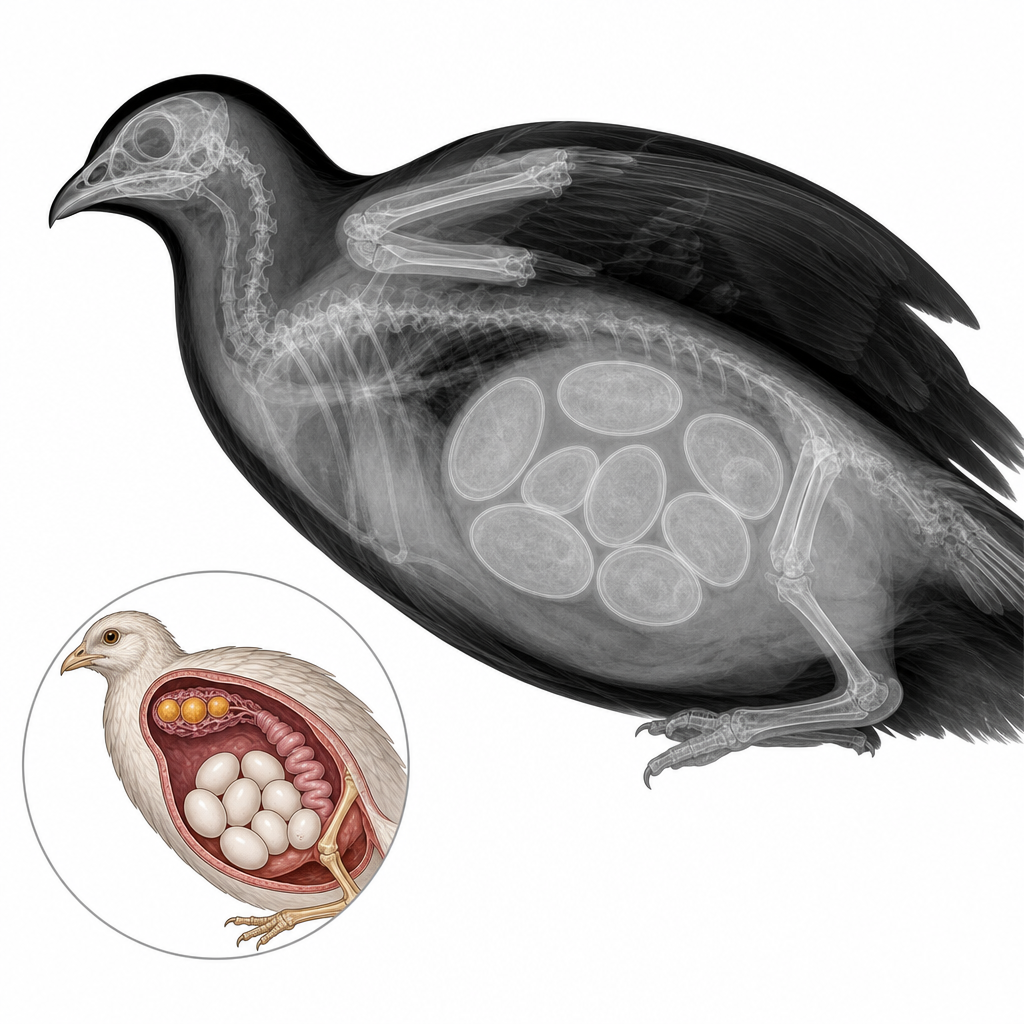
Radiography is the primary diagnostic tool used to confirm the presence, size, and position of retained eggs.
To confirm a diagnosis and determine the safest course of treatment, your vet will utilize specific diagnostic tests:
- Radiography (X-rays): This is the primary diagnostic tool for postovulatory egg binding. Calcified eggshells show up clearly on an X-ray, allowing the vet to determine the number, size, shape, and exact location of the trapped eggs. However, if the eggs are poorly calcified or if the animal is suffering from preovulatory egg stasis (where only soft yolks are present on the ovary), X-rays may only show a generalized soft-tissue mass. In these cases, ultrasound imaging is highly valuable to visualize the fluid-filled follicles.
- Oviduct Biopsy and Culture: If your vet suspects that an underlying infection or tissue disease caused the egg binding, or if the oviduct appears compromised, they may perform a biopsy or collect a culture from the oviduct or cloaca. This helps identify specific bacterial pathogens and ensures that the correct antibiotics are selected to treat or prevent systemic infections.
Treatment options
Treatment for egg binding ranges from conservative environmental support to intensive medical therapy or emergency surgery. The chosen path depends on the stability of the patient, the location of the eggs, and whether a physical obstruction is present.
First-Line Support and Husbandry Adjustments
Before administering medications, your vet will often stabilize the patient. For reptiles, this means rehydrating them with fluids and placing them in a temperature-controlled environment at the high end of their preferred optimal temperature zone. For birds, this involves warm, humidified oxygen therapy and quiet isolation. Providing a suitable, private nesting area can sometimes prompt the animal to pass the egg naturally once she is warm and hydrated.
Medical Management
If there is no physical obstruction blocking the tract, medical therapy may be attempted to stimulate natural contractions.
- Calcium Salts (Mineral Supplement / Essential Cation Nutrient): Because calcium is vital for muscle function, your vet will often administer injectable calcium salts first. This primes the uterine and oviduct muscles, ensuring they have the chemical strength to contract.
- Oxytocin (Hormonal Agent): Once calcium levels are supported, your vet may administer oxytocin to induce uterine contractions. This hormone must be used with extreme caution. As noted in a leading veterinary drug handbook:
"May have to repeat in several hours, but there is a risk of oviduct rupture if cloaca is obstructed or eggs cannot pass for other reasons." [4]
If the cloaca is blocked, or if the egg is physically too large to pass, giving oxytocin can cause the oviduct to tear, leading to fatal internal bleeding or peritonitis. Therefore, oxytocin is only used after a physical obstruction has been ruled out via X-rays and physical exam.
Surgical Management
When medical therapy fails, or if there is evidence of physical obstruction or tissue damage, surgery is required. As detailed in a prominent veterinary surgery textbook:
"Surgical management of dystocia is indicated when husbandry changes and medical management have failed to relieve the dystocia or if there is evidence..." [2]
Depending on the health of the animal and whether you plan to breed her in the future, the vet will perform one of two primary surgeries:
- Salpingotomy: This procedure involves making an incision directly into the oviduct to carefully remove the trapped eggs, after which the oviduct is sutured closed. This preserves the animal's reproductive tract for future breeding. However, in certain species, this can be highly complex. For example, in snakes:
"In snakes, the tract is very long and if the entire oviduct contains eggs or feti that must be removed, it is often necessary to make several celiotomy approaches. Generally, 3-5 eggs can be manipulated out of a single salpingotomy incision." [3]
- Ovariosalpingectomy: If the oviduct is severely damaged, infected, or ruptured, or if you wish to prevent future life-threatening episodes of egg binding, the vet will perform an ovariosalpingectomy (the avian or reptilian equivalent of a spay). This involves removing both the ovary and the oviduct. This surgery is highly challenging when the animal is in a reproductive state, as the blood vessels supplying these organs become massive. The surgical reference notes:
"When the ovary is active, as with preovulatory egg stasis, the ligament is stretched out and it is easy to apply hemostatic clips to the vessels supplying the ovary. Two clips are applied to each vessel and the vessel is transected between the clips. The process is continued until all vessels are clipped and the ovary with its multitude of yolk follicles is removed." [1]
While ovariosalpingectomy renders the animal sterile, it is often the safest long-term choice to protect her life.
Prognosis
The prognosis for egg binding is generally good if the condition is recognized early and treated before the animal becomes severely debilitated.
If a salpingotomy is performed successfully and early in the course of the disease, the animal's reproductive viability can be preserved. However, if the reproductive tract has suffered irreparable damage, or if the patient is a chronic egg-layer, an ovariosalpingectomy is curative and carries an excellent long-term prognosis for survival and quality of life, though it does prevent future breeding.
It is important to note that because of the vast diversity among exotic species, long-term prognosis data for some specific reptiles and birds is limited. Success rates are heavily dependent on how quickly the owner identifies the signs of distress and seeks specialized veterinary care.
Prevention
Preventing egg binding relies almost entirely on excellent husbandry and dietary management. Because these animals are highly sensitive to their environments, keeping their habitats optimized is the best defense against reproductive disorders.
- Provide Balanced Nutrition: Ensure your pet receives a diet rich in essential vitamins and minerals. For reptiles, this means dusting prey or greens with high-quality calcium supplements. For birds, a balanced pellet-based diet is far superior to a seed-only diet, which is notoriously deficient in calcium.
- Optimize Lighting and Temperature: Provide appropriate UVB lighting for reptiles and ensure bulbs are replaced according to the manufacturer's schedule (usually every 6 to 12 months), as they stop producing UV light long before they burn out. Maintain the correct thermal gradient in your reptile's enclosure so they can thermoregulate effectively.
- Offer Suitable Nesting Sites: Always provide a designated nesting box or dig medium (such as damp sand or soil) for female reptiles during the breeding season, even if they have not been housed with a male. Female reptiles can produce infertile clutches of eggs and will become bound if they cannot find a suitable place to bury them.
- Manage Chronic Laying in Birds: If you have a female bird that lays eggs continuously, consult your vet about environmental modifications. Reducing daylight hours, removing nesting boxes or toys that trigger hormonal behavior, and avoiding petting your bird on the back can help shut down her reproductive cycle.
When to call your vet
Egg binding is a high-urgency medical emergency (Urgency Level 4/5). If you suspect your bird or reptile is egg-bound, do not wait to see if she will pass the egg on her own.
Contact your veterinarian immediately if you observe any of the following red flags:
- Active straining or pumping of the tail without producing an egg
- Extreme lethargy, weakness, or sitting on the bottom of the cage (birds)
- A swollen, firm, or distended abdomen
- Open-mouthed breathing or heavy tail-bobbing with respiration
- A visible egg or pink tissue protruding from the cloaca (prolapse)
- Sudden weakness or paralysis in the legs, which occurs when a trapped egg presses on the sciatic nerves
Sources
- Current Techniques in Small Animal Surgery, 5th Edition, pp. 716-717.
- Plumb's Veterinary Drug Handbook, p. 2715.
My highlights & notes
Signs & symptoms
How it is diagnosed
- Oviduct biopsy and culture
- Radiography
Treatment approaches
Treatment must be prescribed by a licensed veterinarian based on your pet. Specific drug doses are intentionally not shown here.
Frequently asked questions
What is Egg Binding?
Egg binding, or dystocia, is a serious reproductive emergency in birds and reptiles where eggs or yolks become trapped in the reproductive tract. This guide explains the differences between preovulatory and postovulatory stasis, key clinical signs, diagnostic tests, and the medical and surgical treatments your veterinarian will use to save your pet's life.
What are the symptoms of Egg Binding?
Inability to pass eggs、Oviducts full of eggs、Yolks retained on the ovary、Abnormally shaped or oversized eggs
How is Egg Binding diagnosed?
Oviduct biopsy and culture、Radiography
How is Egg Binding treated?
Treatment must be prescribed by a licensed veterinarian based on your pet. Specific drug doses are intentionally not shown here.
Sources
- Current Techniques in Small Animal Surgery, 5th Edition (VetBooks.ir) · p. 717
- Current Techniques in Small Animal Surgery, 5th Edition (VetBooks.ir) · p. 716
- Current Techniques in Small Animal Surgery, 5th Edition (VetBooks.ir) · p. 717
- Plumb · p. 2715
This article is for general education and is not a substitute for professional veterinary advice. If your pet is unwell, please consult a veterinarian.
Worried about your pet?
Peqaboo’s AI helps you track symptoms, understand lab reports, and know when to see a vet.
Get the Peqaboo app