

Flystrike in Rabbits: A Summer Emergency You Can Prevent
Flystrike happens when flies lay eggs on a rabbit and maggots hatch into the skin within hours. It is agonising, fast and can be fatal, but it is largely preventable. Learn the risk factors, how to check daily, and exactly what to do if you see maggots.

Quick answer
Flystrike (myiasis) is when flies lay eggs on a rabbit — usually on a damp or soiled rear — and maggots hatch and eat into the skin, sometimes within hours. It is a genuine emergency that can kill quickly. If you see maggots on your rabbit, get to a vet immediately. The good news: with daily checks and good hygiene, flystrike is largely preventable.

Flystrike happens when flies lay eggs on a rabbit and maggots hatch into the skin within hours.
Why flystrike is so dangerous
Flies are attracted to moisture, urine, soft droppings and wounds. They lay eggs in the fur, and in warm weather those eggs can hatch into maggots in a matter of hours. The maggots burrow into the skin and release toxins, and a rabbit can go from apparently fine to critically ill extremely fast. This speed is why flystrike is treated as a same-hour emergency, not a wait-and-see problem.
In the hot, humid summers of Hong Kong and Taiwan, fly activity is high for months, so the risk window is long and vigilance needs to be constant.
Which rabbits are most at risk
Any rabbit can be struck, but some are far more vulnerable: overweight rabbits that cannot reach to clean their bottom; rabbits with dental disease or arthritis that cannot groom; those with chronic soft stools or urine leakage; and rabbits with any wound or skin fold that stays damp. If your rabbit has a permanently mucky rear, that is a medical red flag to investigate the underlying cause with your vet, not just to clean up.
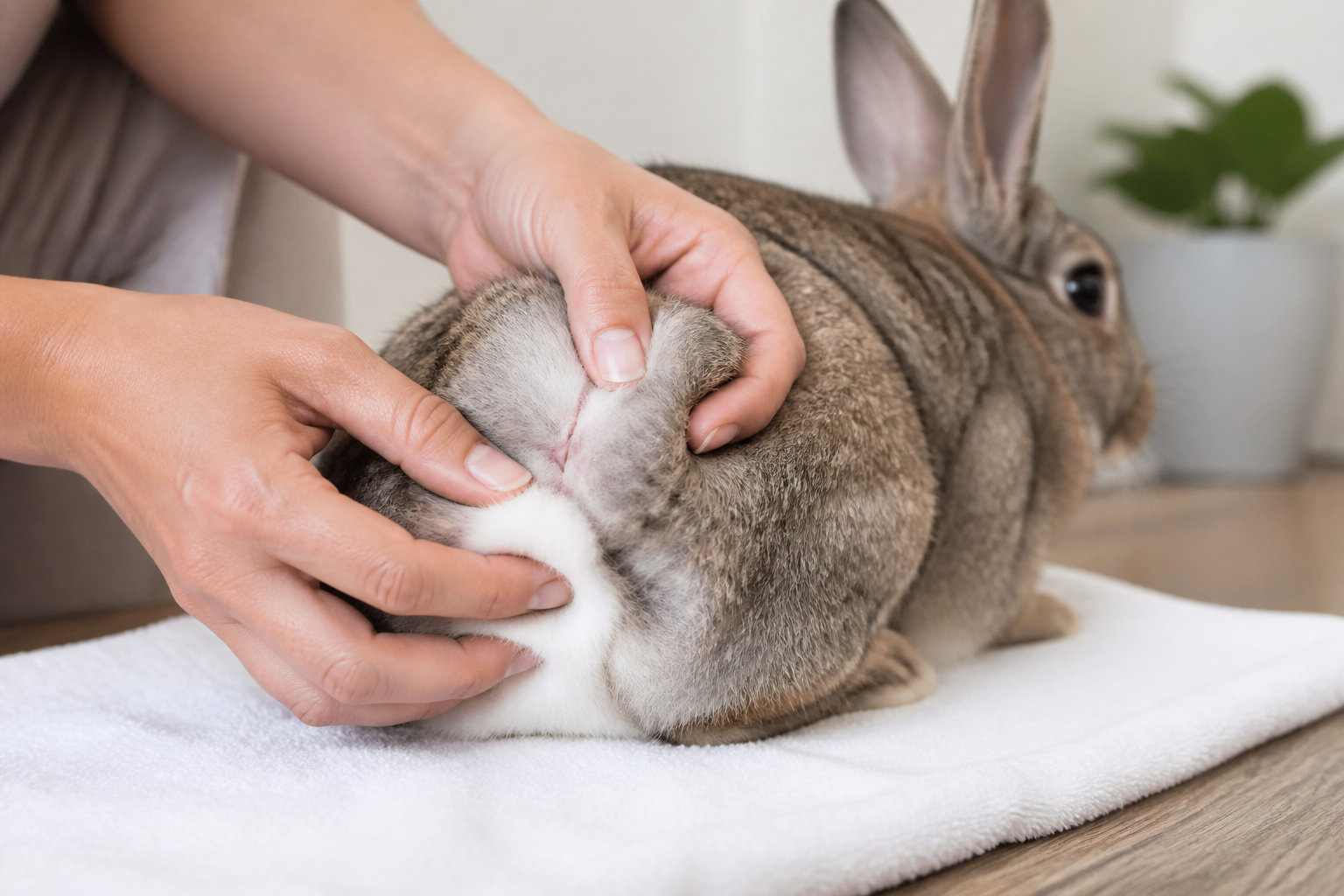
Check the rear and belly at least twice daily in warm weather — soiled, damp fur is what attracts flies.
How to check your rabbit
Make a daily habit, twice daily in hot weather, of gently checking the back end, tail base and belly. Part the fur and look at the skin. You are looking for: any wetness or soiling, tiny pale fly eggs (like small grains) clustered in the fur, small cream-coloured maggots, or reddened, sore skin. Also note any smell, which can indicate infection. Keeping the rear clean and dry is the single most protective habit.
Preventing flystrike
Prevention is a stack of small habits:
- Keep the enclosure spotless: remove soiled bedding and uneaten fresh food daily, and clean the litter tray often.
- Keep your rabbit at a healthy weight so it can groom its own rear.
- Address the causes of a mucky bottom — soft stools, dental pain or arthritis — with your vet.
- Fit fly screens on windows and keep enclosures out of direct sun and in a cool, ventilated spot.
- Gently clean and fully dry any soiling straight away; never leave the rear damp.

A spotless, dry, well-ventilated enclosure in a cool spot is your first line of defence.
Recovery after treatment
Rabbits treated promptly can recover well, but they need follow-up care: wound management, pain relief, keeping them eating, and fixing the underlying reason the rear was dirty. Expect follow-up vet visits and keep the environment scrupulously clean during healing.
Quick FAQs
How fast can flystrike develop? Very fast — eggs can hatch into maggots within hours in warm weather, which is why daily checks and immediate vet care matter so much.
Can indoor rabbits get flystrike? Yes. Flies get indoors easily, especially in summer, so indoor rabbits still need daily rear checks and good hygiene.
Should I bathe my rabbit to prevent it? Avoid full baths, which stress rabbits and leave fur damp. Spot-clean and thoroughly dry any soiling instead, and fix the cause.
What makes my rabbit high risk? Being overweight, having dental or joint pain, chronic soft stools, or urine leakage all stop a rabbit grooming its rear and sharply raise the risk.