Egg Binding in Birds: Warning Signs of a Life-Threatening Emergency | Peqaboo
HealthBird5 min read
Egg Binding in Birds: Warning Signs of a Life-Threatening Emergency
Egg binding is when a hen cannot pass an egg, and in small birds it can be fatal within hours. This guide shows the warning signs, the safe first steps at home, and why every laying hen needs an avian vet fast, not a wait-and-see approach.
Compiled from veterinary literature and clinical references· Updated 2026-07-18·How we create this
Quick answer
Egg binding is when a female bird cannot pass an egg that is stuck in her reproductive tract. In small birds like budgies, canaries and finches it is a genuine emergency that can be fatal within hours. Signs include straining, sitting fluffed and low on the cage floor, a wide-legged stance, tail-bobbing, weakness and sometimes a swelling near the vent. Keep her warm and humid and get to an avian vet urgently — do not try to remove the egg yourself.
Egg binding is when a hen cannot pass an egg, and in small birds it can be fatal within hours.
What egg binding is and why it happens
Normally a hen passes an egg within a day or so of it forming. Egg binding happens when that egg gets stuck. Common contributors include calcium deficiency (often from an all-seed diet), which weakens the muscles needed to push and the shell itself, as well as first-time or excessive laying, cold, obesity, dehydration, and a malformed or oversized egg. Chronic egg-layers — hens that lay clutch after clutch — are at particular risk because it drains their calcium reserves.
Warning signs to watch for
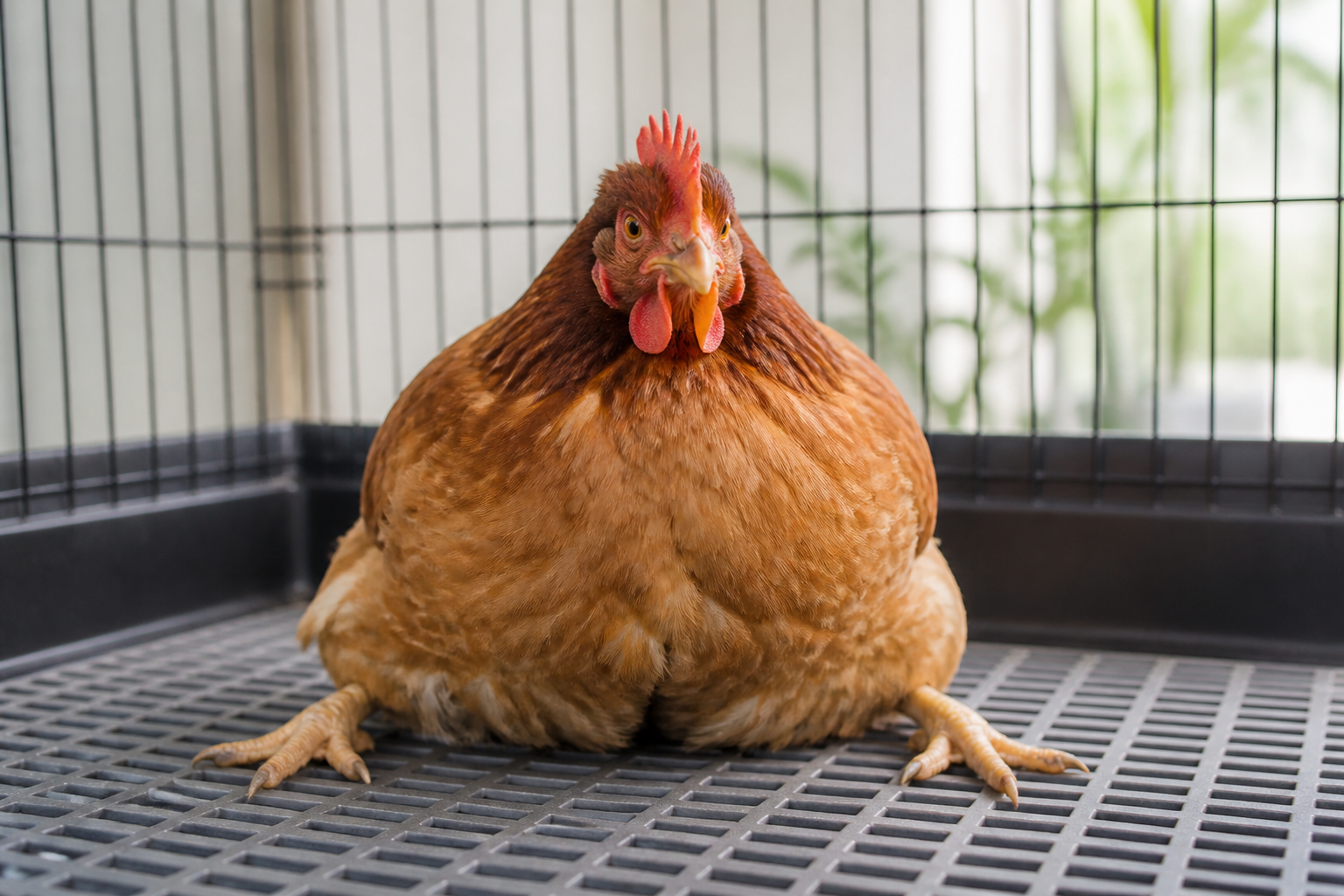
A hen in trouble usually looks obviously unwell. Watch for straining or repeated tail-pumping without producing an egg, sitting fluffed up and hunched, often on the cage floor rather than a perch, and a wide-based, slightly waddling stance.
A straining hen often sits low and wide-legged, fluffed up and tail-bobbing.
Other signs include weakness, being unable to perch or standing on both feet with drooping wings, laboured or tail-bobbing breathing, a swollen abdomen or a swelling near the vent, and not eating or passing droppings (a stuck egg can block droppings too). Any of these in a female bird should be treated as an emergency.
Safe first aid while you reach the vet
You cannot safely remove a stuck egg at home, and trying can break it inside her, which is often fatal. What you can do is buy a little time.
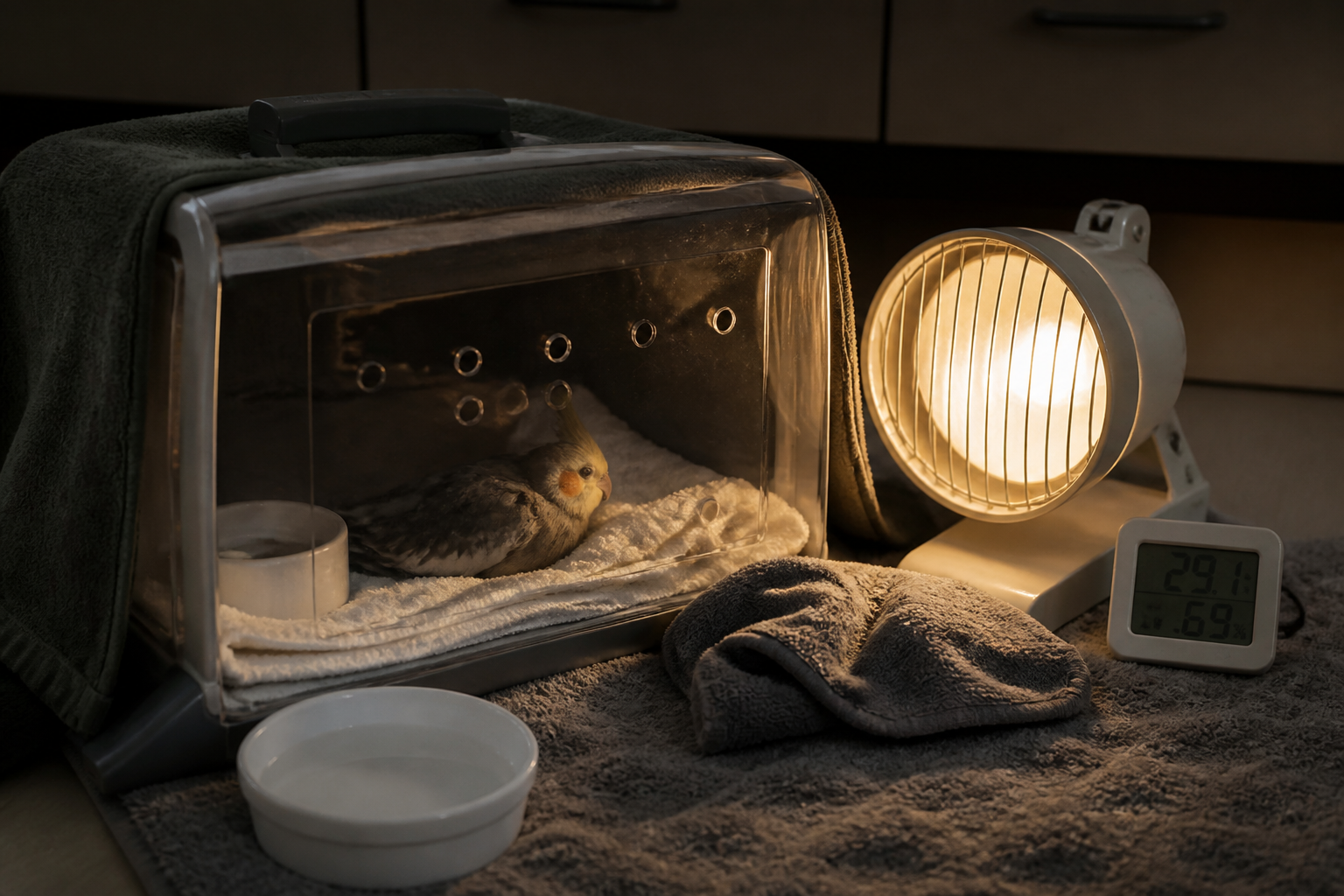
Warmth and humidity. Move her to a warm space around 28-30°C, and raise the humidity — a warm, moist environment relaxes the muscles. A carrier near a source of gentle warmth works.
Keep her calm and quiet. Dim the light and reduce handling and noise.
Offer warmth from below if you can do it safely, but never apply direct heat or pressure to her abdomen.
Do not give home remedies, oils into the vent, or any medication or calcium without veterinary direction.
Warmth and humidity buy a little time, but egg binding still needs a vet urgently.
After the emergency
At the clinic, a vet may provide warmth, fluids, calcium and other support, and in some cases will need to help pass or remove the egg. Recovery care usually focuses on rest, warmth and correcting the underlying cause, especially diet. For hens that lay repeatedly, your vet can discuss longer-term options to reduce laying, which protects her from repeat episodes and the calcium drain that comes with them.
Quick FAQs
Can a single female bird with no mate get egg bound?
Yes. Female birds lay eggs without a male present, so any hen can become egg bound, even a lone pet.
How long can a bird be egg bound before it is dangerous?
In small birds, it can become dangerous within hours. Treat straining without producing an egg, or a weak hen on the cage floor, as an immediate emergency.
Should I try to help the egg out with oil or by massaging?
No. Home attempts can break the egg internally or injure her. Provide warmth and humidity only, and get to an avian vet.
How can I stop my bird laying so many eggs?
Your avian vet can advise on diet, light cycles, removing nest sites and, in some cases, medical options to manage chronic egg-laying safely.
My highlights & notes
This article is for general education and is not a substitute for professional veterinary advice. If your pet is unwell, please consult a veterinarian.
Worried about your pet?
Peqaboo’s AI helps you track symptoms, understand lab reports, and know when to see a vet.