

How to Read Your Dog's Blood Test Results: An Owner's Guide
By Peqaboo Team
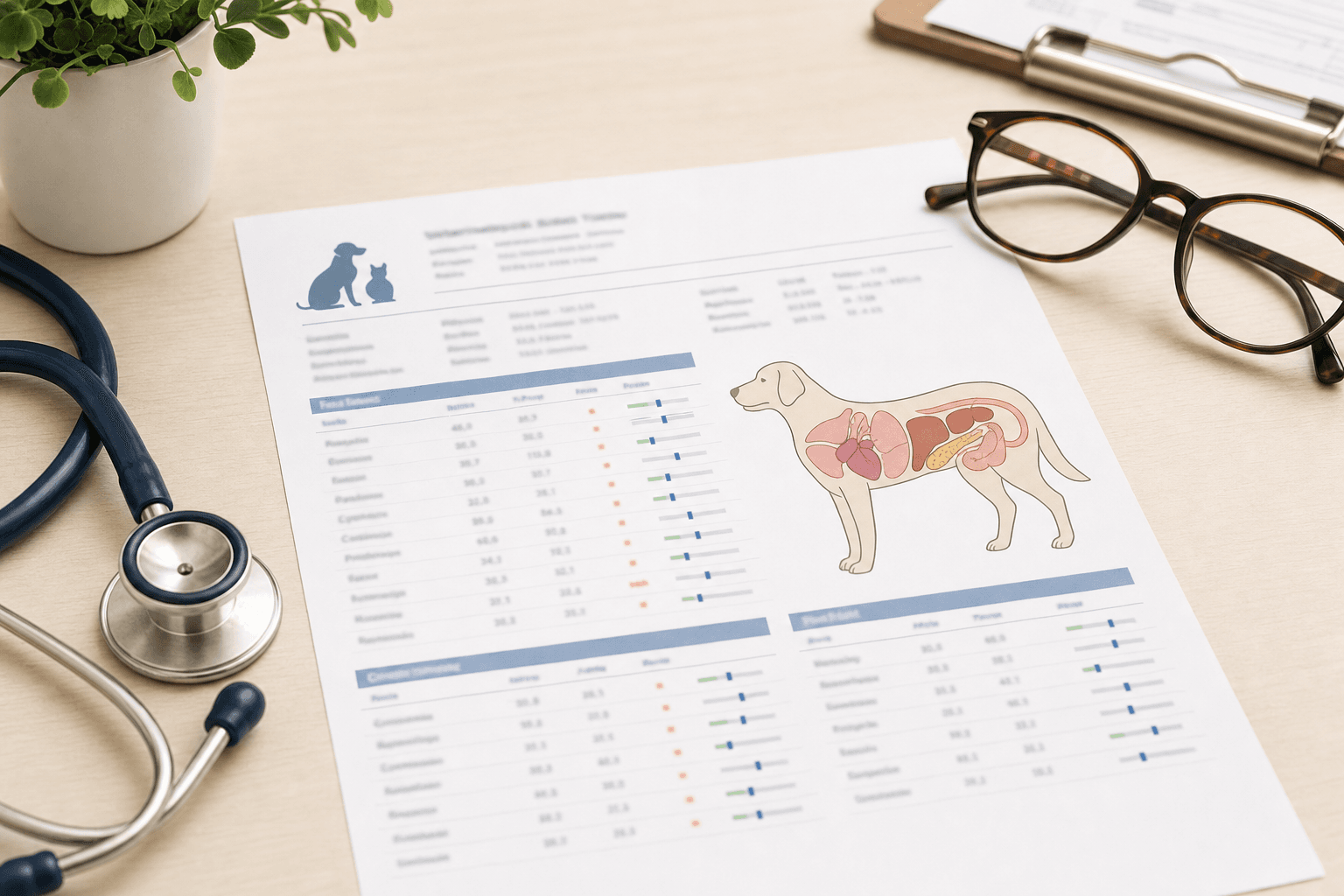
TL;DR. Dog bloodwork usually consists of a CBC (cells: red, white, platelets) and a chemistry panel (organs: liver, kidneys, protein, glucose, electrolytes). A value outside the reference range is a clue, not a diagnosis: hydration, stress, recent food, and lab method all shift numbers. Trends across tests matter more than one snapshot. Always let your vet interpret, but understanding the structure means you can ask better questions and actually remember what was said.
Your vet hands you two pages of abbreviations and says "mostly fine, liver's a little elevated, we'll recheck in a month." On the drive home you realize you have no idea what that meant, and the internet is about to make it worse. This guide is the middle path: enough understanding to read the report calmly, without pretending to replace the person who trained a decade to interpret it.
The two panels that make up most bloodwork
The CBC (complete blood count) counts and measures blood cells:
- RBC, HGB, HCT: red blood cells, hemoglobin, and hematocrit. Low values suggest anemia (blood loss, destruction, or under-production). High can mean dehydration.
- WBC: white blood cells, the immune system. High with infection or inflammation (and stress), low with some viral diseases or marrow problems.
- Neutrophils, lymphocytes, monocytes, eosinophils: the white-cell breakdown. Eosinophils, for example, often rise with parasites or allergies.
- PLT: platelets, the clotting crew. Low platelets deserve attention before any surgery.
The chemistry panel measures what the organs are releasing into or clearing from the blood:
- ALT, ALP, AST, GGT, bilirubin: the liver group. Mild elevations are extremely common and often benign; patterns and magnitude matter.
- BUN and creatinine (plus SDMA): the kidney group. Both rise when kidneys under-clear, but BUN alone also rises with dehydration or a high-protein meal. SDMA flags kidney decline earlier than creatinine.
- Glucose: blood sugar. Persistently high with glucosuria points to diabetes; stress alone can spike it, especially in cats.
- Total protein, albumin, globulin: hydration, liver production, gut and kidney losses, and immune activity all show up here.
- Electrolytes (Na, K, Cl, Ca, Phos): the balance chemistry. Deviations often say more about hydration, hormones, or kidneys than about the electrolyte itself.
 The report is written for clinicians. Understanding the structure makes it readable for owners too.
How to actually read the report
1. Find the reference ranges. Every lab prints its own, and they differ between labs and machines. A value is only "high" relative to the range printed next to it.
2. Look at magnitude. A liver enzyme 10 percent above range and one at five times the range are different conversations. Small excursions in an otherwise healthy dog are often rechecked, not treated.
3. Look for patterns, not soloists. Vets read groups: BUN and creatinine and SDMA together, not BUN alone. ALT with ALP and bilirubin, not ALT in isolation. One flagged value with a normal supporting cast is usually a shrug; a coordinated group shift is a finding.
4. Context is half the result. Fasted or not, stressed or calm, medications, age, and breed all move numbers. Sighthounds run high hematocrit; puppies run high ALP because growing bone produces it. This is why self-diagnosis from a table of ranges goes wrong.
5. Trends beat snapshots. A creatinine that is technically in range but has climbed steadily across three annual tests is more meaningful than a single mildly flagged value. This is the strongest argument for annual wellness bloodwork: it buys you a personal baseline.
Common owner questions about flagged values
"The liver values are high." The most common flagged finding in middle-aged dogs, and the widest range of causes: from benign age-related change and dental disease inflammation to medications, endocrine disease, or actual liver disease. Expect your vet to consider magnitude, pattern, symptoms, and possibly a recheck in four to six weeks before escalating.
"The kidneys are borderline." Kidney values only leave the reference range after a substantial share of function is lost, which is why early markers like SDMA and urine concentration checks exist. Borderline kidney numbers plus dilute urine is a "monitor closely" situation worth taking seriously.
"White cells are up." Infection, inflammation, and plain stress all raise them. The white-cell breakdown tells your vet which story is more likely.
 Senior wellness bloodwork catches problems years before symptoms show.
Get a plain-language explanation before the follow-up call
The gap in the system is simple: the report is written for clinicians, the consult lasts ten minutes, and you remember half of it. Peqaboo's Lab Report Analysis closes that gap. Upload a photo or PDF of any veterinary lab report and the AI translates it into plain language: what each flagged value measures, what commonly causes it to move, which findings cluster together, and which questions are worth asking your vet. Reports stay in your pet's record, so the next test automatically becomes a trend line instead of another isolated snapshot.
To be direct about the boundary: it explains and organizes, it does not diagnose or replace your vet's interpretation. Owners use it before the follow-up call to arrive with informed questions, and after it to double-check they understood the plan.
FAQ
What is normal bloodwork for a dog? There is no universal normal: every lab prints its own reference ranges, and breed, age, and fasting state shift values. "Normal" means within that lab's range, in context, as judged by your vet.
Why does my vet want to repeat the blood test? Rechecks separate a real trend from a one-off blip caused by stress, hydration, or lab variation. A repeat in four to six weeks is standard practice for mild unexplained elevations, not a sign something was missed.
How often should dogs get blood tests? A common rhythm: annually for healthy adults, twice yearly for seniors, and before any anesthesia. Dogs on long-term medications need periodic monitoring panels for the organs those drugs pass through.
Can I interpret my dog's bloodwork myself? You can understand it, and this guide plus an AI explanation gets you far. Interpreting it (deciding what it means for treatment) requires the clinical exam, history, and experience your vet brings. The best outcomes come from informed owners and vets working from the same understanding.
Never leave a lab report unread again
Next report you receive, photograph it and run it through Lab Report Analysis in the Peqaboo app. Walk into the follow-up knowing what ALT means for your dog specifically, and what you want to ask. Download Peqaboo and keep every result where trends can actually be seen.