

Dog Bad Breath: What It Really Means and How to Check Teeth at Home
By Peqaboo Team
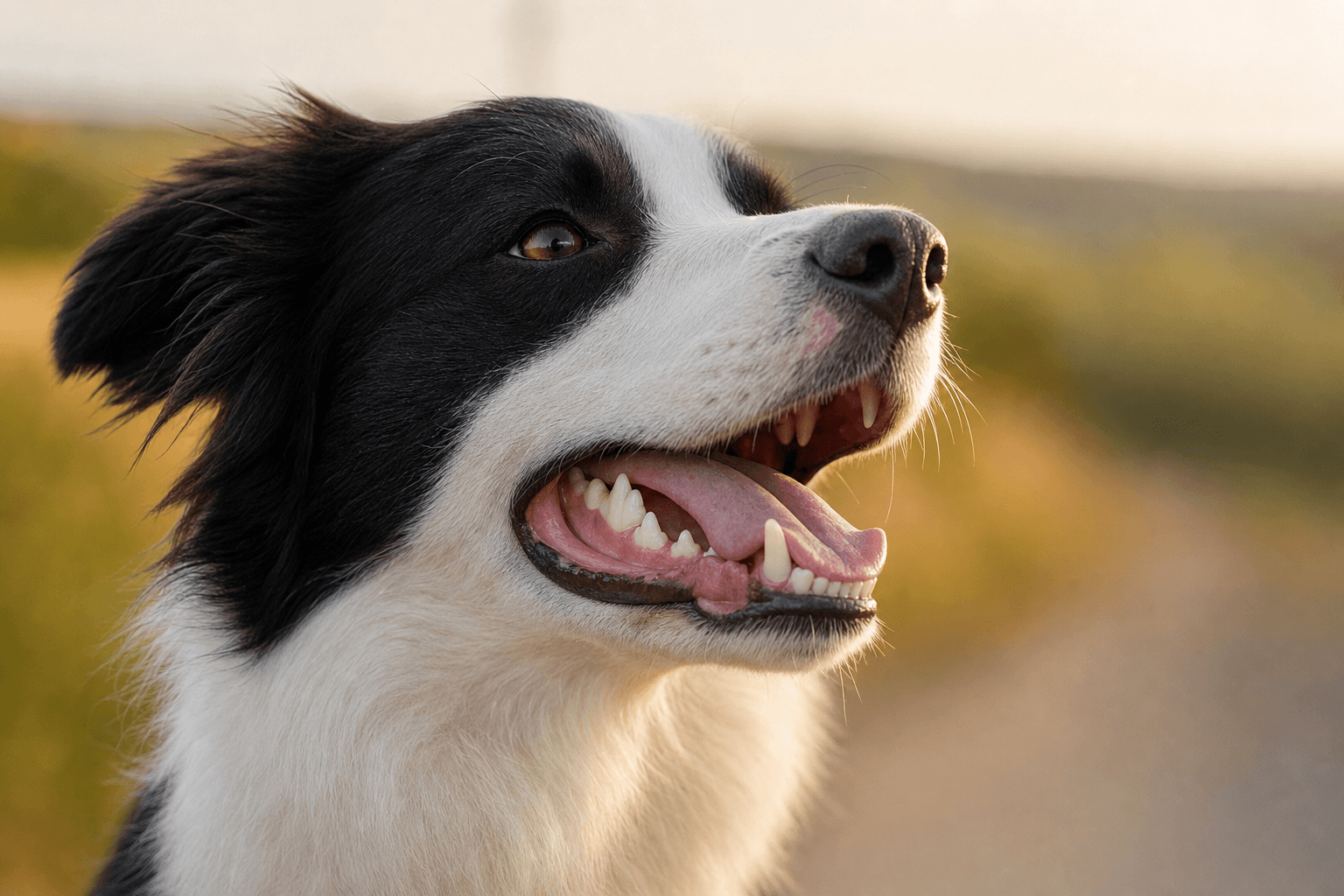
TL;DR. Persistent bad breath in a dog almost always means dental disease, not "dog breath." By age three, the majority of dogs already have some periodontal disease. A 60-second monthly check of gums and teeth catches it early, when treatment is simple and cheap. Sweet, ammonia-like, or rotten smells each point to different problems, and some of them are not about the mouth at all.
"Dog breath" has such a reputation that most owners treat it as part of owning a dog. It is not. A healthy dog's breath is neutral. When it turns genuinely unpleasant and stays that way, something is producing that smell, and the most common producer is bacterial plaque quietly destroying the tissue around the teeth.
Dental disease is the most common medical condition vets see in adult dogs, and also one of the most invisible to owners: it happens above the gumline where nobody looks, in a patient who cannot complain and will keep eating through remarkable amounts of oral pain.
What the smell is telling you
Not all bad breath is the same, and the differences matter.
- Rotten or sulfurous: the classic periodontal smell. Bacteria under the gumline produce volatile sulfur compounds. This is by far the most common cause.
- Sweet or fruity: can accompany diabetes, especially with increased drinking and urination. Worth a vet visit on its own.
- Ammonia or urine-like: associated with kidney disease, because waste products the kidneys should clear end up affecting breath. Vet visit.
- Sudden foul smell with drooling or pawing at the mouth: think stuck object, broken tooth, or abscess. Vet promptly.
If the smell comes with any body-wide signs (drinking more, eating less, losing weight, lethargy), skip the home checks and book the vet: breath is sometimes the first visible sign of disease elsewhere.
 Healthy gums are salmon pink with a crisp edge along white crowns; know this baseline and changes become obvious.
The 60-second home dental check
Do this monthly. Pick a calm moment, lift the lips gently, and look. No forcing: if your dog resists, do one side today and the other tomorrow.
Gums. Healthy gums are salmon pink with a clean, tight edge along the teeth. Warning signs: a red line along the gumline, puffy or bleeding gums, gums pulling back from the teeth (exposed roots).
Teeth. Look for yellow-brown tartar buildup, especially on the big cheek teeth near the back: they accumulate tartar first and owners almost never look there. Check for cracked, worn, or discolored (grey or purple) teeth.
Anything extra. Lumps on the gums, ulcers, a tooth that seems loose, blood spots on chew toys.
Behavior clues between checks. Chewing on one side, dropping food, going to the bowl then backing away, no longer enjoying chew toys, head shyness. Dogs rarely stop eating from dental pain; they adapt, and the disease progresses.
Grades of dental disease, in plain terms
Vets typically grade periodontal disease from 1 to 4:
- Gingivitis only. Red gum edge, no bone loss. Fully reversible with a cleaning and home care.
- Early periodontitis. Up to a quarter of bone support lost. Managed well if caught now.
- Moderate. Up to half the support gone. Extractions become likely.
- Advanced. More than half lost. Multiple extractions, higher cost, and chronic pain your dog has been silently living with.
The whole game is catching things at grade 1 or 2. The difference between those and grade 4 is often just two or three years of nobody looking.
 Daily brushing is the gold standard; chews and additives are helpers, not substitutes.
What actually works at home
- Brushing is the gold standard. Daily is ideal, three times a week is the minimum that meaningfully helps. Use dog toothpaste (human toothpaste contains xylitol and fluoride, both harmful). Start slow: paste on finger, then finger brush, then a soft brush, over a couple of weeks.
- Dental chews help, with limits. Look for a VOHC (Veterinary Oral Health Council) seal. They reduce plaque; they do not remove established tartar.
- Water additives and dental diets are supporting acts. Useful in a routine, useless as the whole plan.
- What does not work: hard bones and antlers crack teeth, and "anesthesia-free cleaning" only polishes the visible crown while disease continues under the gumline.
Once tartar has mineralized onto the tooth, no amount of brushing removes it. That requires a professional cleaning under anesthesia, where the vet can scale under the gumline and X-ray roots. It is routine, and far cheaper early than late.
A photo is a surprisingly good screen
Between monthly looks and annual vet exams, there is a middle layer: the Peqaboo app includes a Dental Check feature where you photograph your dog's teeth and the AI screens the image for visible warning signs: tartar accumulation, gum redness and recession, and suspicious spots, mapped tooth by tooth. It will not see below the gumline (nothing but a dental X-ray can), but it is very good at the thing owners struggle with: noticing gradual change. A dated photo record makes "the tartar on the left upper molar has grown since March" a fact instead of a feeling, and helps you decide when it is time to book the professional cleaning.
FAQ
Why does my dog's breath smell so bad suddenly? A sudden change points to something acute: an object stuck in the mouth, a broken or abscessed tooth, or something rotting that was eaten. Check the mouth if your dog allows, and see a vet promptly if the smell persists more than a day or comes with drooling or pawing.
Do greenies and dental chews really work? VOHC-approved chews measurably reduce plaque and tartar accumulation. They complement brushing; they cannot replace it, and they do nothing for tartar that has already hardened.
How much does dog teeth cleaning cost? It varies widely with location, dog size, and how much disease is found; extractions and dental X-rays raise it substantially. This is the financial argument for early detection: a grade 1 cleaning costs a fraction of a grade 4 mouth reconstruction.
Is bad breath ever normal in dogs? Briefly after a fishy meal, yes. Persistently, no. Ongoing bad breath has a cause, and the most likely one is progressive dental disease that will not fix itself.
Look under the lip this week
Lift the lip, look at the back teeth, and take a photo while you are there. Run it through Dental Check in the Peqaboo app for a tooth-by-tooth screen, and start the dated record your future vet visits will build on. Download Peqaboo and turn "dog breath" from a joke into an early warning system.